IMPACT OF EV TAXES ON EMISSIONS

Vietnam plans to extend tax incentives for EVs until 2030
Vietnam plans to extend its special consumption tax cut on electric vehicles until the end of 2030, aiming to significantly boost EV sales and contribute to its net-zero emissions target. This move follows a substantial increase in EV adoption after the initial tax reduction in 2022, with annual sales skyrocketing.

Increase in renewable energy curbs emissions growth in 2025, IEA says
Global emissions growth slowed in 2025. Solar power expansion in developing nations helped balance emissions increases in advanced economies. India saw emissions fall for the first time in normal economic conditions. China also recorded lower emissions due to leading solar capacity additions. The United States experienced an emissions rise.

Direct vs indirect taxes: Key differences and how they impact taxpayers and prices in India
If you are confused by personal finance terms, jargon and calculations, here’s a series to simplify and deconstruct these for you. In the 99th part of this series, Riju Mehta explains the difference between the two types of taxes.

Prolonged West Asia conflict to impact India's automobile sector, says FADA President
The Federation of Automobile Dealers Associations warns of potential challenges for India's auto sector. A prolonged conflict in West Asia could impact vehicle exports and the supply of crucial commodities like oil and aluminium. While the domestic market shows resilience, industry leaders are closely monitoring global developments.

Automakers give the green light to CAFE III proposals, norms to come into effect from April 2027
Indian carmakers have agreed to new fuel efficiency rules, CAFE 2027. These norms will limit CO2 emissions for passenger cars starting April 1, 2027. The industry body SIAM finds the guidelines balanced. Automakers will improve fleet emissions annually until 2031-32. The government will issue the final notification soon. There is broad industry consensus on the draft.

EU’s CBAM expansion to impact Indian engg, auto parts, machinery exports: GTRI
India's exports of engineering goods, auto parts, and machinery to Europe face potential carbon tax hikes as the EU expands its Carbon Border Adjustment Mechanism. Starting 2028, the CBAM will cover a wider range of manufactured industrial goods, including stricter rules for recycled materials. This move could significantly impact Indian manufacturers exporting to the bloc.
- Go To Page 1

EU's proposed CBAM expansion may impact Indian exporters: GTRI
The European Union is set to broaden its Carbon Border Adjustment Mechanism, which could lead to a spike in carbon tax expenses for Indian goods shipped to Europe. Exporters in India must quickly adapt by enhancing their emissions tracking and implementing decarbonisation strategies.
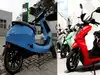
Ola Electric vs Ather Energy: Which stock looks better after a stellar surge of up to 70% in April?
Ola Electric shares have rebounded sharply, surging 68% in under 10 sessions, while Ather Energy gained 16% over the same period. Despite the recovery, Ola remains down 75% from its Rs 157 peak and nearly 50% below its issue price. In contrast, Ather Energy has surged 172% from its IPO price within a year of listing.

Doug Field, Apple and Tesla veteran, quits as Ford’s EV, tech chief
Doug Field, a former Tesla and Apple executive leading Ford’s EV and tech efforts, will leave next month after nearly five years. Hired to modernise the automaker, he drove cultural and talent shifts despite EV setbacks. Ford is restructuring teams as it prepares major product and technology launches in coming years.

World’s first 100% electric cruise ship revealed — can carry 1,900 guests at sea
A German company has unveiled the first all-electric cruise ship. This massive vessel, named Project Vision, will carry 1,900 guests. It aims to significantly cut emissions, offering a cleaner way to travel. The ship is expected to be operational by 2031. This innovation could transform the cruise industry, making sea travel more sustainable for the future.

Reviewing draft fuel efficiency norms, will discuss with members on implementation timeline: SIAM
Auto industry body SIAM is reviewing the draft CAFE III fuel efficiency norms and will discuss manufacturer readiness for the implementation timeline with members. President Shailesh Chandra declined to comment on proposed incentives for small cars, citing differing views among manufacturers. SIAM advocates for an enabling environment for EV adoption rather than mandates.
New EV policy crafted with 'citizen-first' approach: Delhi transport minister
Delhi's draft Electric Vehicle Policy 2.0, designed with a "citizen-first approach," offers purchase and scrapping incentives for EVs, aiming for a seamless transition to electric mobility. The policy includes 100% road tax and registration fee exemptions for EVs under Rs 30 lakh, prioritizing benefits for middle and lower-income groups without financial strain.

No addition of petrol, diesel vehicles to delivery, ride aggregator fleets in Delhi: Draft EV policy
Delhi EV polocy: The nationak capital is set to electrify its transport sector. New petrol and diesel vehicles will not join delivery and ride aggregator fleets starting this year. From 2027, only electric auto-rickshaws will be registered. Incentives are offered for electric three-wheelers to encourage adoption. This policy targets high-usage vehicles to reduce pollution.

TVS' ethanol-powered models ready, rollouts to be in phases, says Sudarshan Venu, CMD of TVS Motor Company
India's E20 ethanol blending milestone has yielded significant foreign exchange savings and rural economic strengthening. TVS Motor's CMD, Sudarshan Venu, highlights the need for ecosystem alignment for E25 and beyond, emphasizing ethanol's complementary role with EVs for a multi-technology transition.

CAFE-III to kick in from April 2027; Govt unlikely to extend implementation date: Official
New fuel efficiency rules for car makers will take effect from April 1 next year. The government is not planning to extend the deadline for CAFE III standards. Auto companies are discussing the new norms. A high-level meeting is scheduled for April 16 to finalize the rules. The new framework includes flexible compliance and carbon credit trading.

Ather Energy shares rally 8% while Eicher Motors, Hero MotoCorp shares drop up to 4%. Here's why
Delhi's draft EV Policy 2026-2030 aims to boost electric two-wheeler registrations from FY29, offering significant subsidies and tax exemptions. This move is expected to accelerate EV adoption and curb pollution. The policy's incentives are already impacting stock markets, with EV manufacturers seeing gains while traditional bike-makers face declines.

Delhi promoting EVs, Karnataka taxing them, says BJP leader Bharath Bommai
Bharath Bommai criticizes Karnataka's new road tax on electric vehicles. He states this policy contrasts with Delhi's efforts to promote EVs. Bommai argues Karnataka's decision hinders clean mobility and the middle class. He contrasts this with Delhi's actions to clear EV subsidies and build charging infrastructure. Bommai believes Karnataka is moving backward while Delhi is advancing EV adoption.

Delhi to ban new petrol two-wheelers from 2028: Govt proposes 100% tax relief for EVs up to ₹30L; Check major benefits for citizens switching to EVs
The Delhi government has released the draft Electric Vehicle Policy 2026-2030 for public feedback. Key proposals include banning new petrol two-wheeler registrations from 2028 and three-wheelers from 2027, along with 100% road tax and registration fee exemption for electric cars priced up to ₹30 lakh. The policy aims to reduce air pollution and accelerate clean mobility.

100% road tax waiver for electric cars priced up to Rs 30 lakh till Mar 2030: Delhi's draft EV policy
Delhi's new electric vehicle policy offers significant benefits. Electric cars priced at Rs 30 lakh or less will receive full road tax and registration fee exemptions until March 2030. Strong hybrid EVs get a 50 percent exemption. From 2027, only electric three-wheelers will be registered. This policy aims to boost EV adoption and improve air quality.

Porsche loses speed on a curvy road
Porsche AG's sales dropped significantly in the first quarter. China saw a steep decline in luxury spending, impacting deliveries. Model changes and reduced demand for electric cars in the US also contributed. The company is now reassessing its strategy, planning job cuts and considering new high-end models.

CAFE-3 draft eases emission norms, nudges automakers toward EV and hybrid shift
New emission rules for vehicles will be implemented in 2027. The Bureau of Energy Efficiency has eased some targets for smaller cars. Manufacturers must improve fleet efficiency yearly. This will encourage more hybrid and electric vehicle sales. Penalties will apply for non-compliance. Credits can offset fines. The rules aim for better fuel efficiency on Indian roads.

Karnataka government ignores protests, notifies lifetime tax on EVs, spares two-wheelers
Karnataka has introduced a new lifetime road tax for electric cars, jeeps, and buses, excluding two-wheelers. This move aims to generate an additional Rs 250 crore for the state government. The decision has drawn criticism from Union Minister Pralhad Joshi and the EV industry, who fear it could increase crude oil imports and hinder climate goals.

UK awards $510 million to Tata's Agratas for Somerset EV battery gigafactory
Here are some details on the announcement from the UK's Advanced Propulsion Centre (APC), with the funding forming part of a broader 470 million pound grant:

Delhi EV registrations rise 29%, petrol vehicles retain dominance
Delhi's electric vehicle registrations surged by 29 percent in 2025-26. Petrol vehicle registrations also increased, showing a mixed market. Experts anticipate further EV growth due to new policies and incentives. The government is promoting electric mobility with scrappage benefits and tax exemptions. Overall vehicle demand in Delhi saw robust growth.

UK awards $510 million to Tata's Agratas for Somerset EV battery gigafactory
Britain is providing 380 million pounds to Agratas, the battery division of India's Tata Group. This funding supports a new electric vehicle battery gigafactory in Somerset. The plant will boost domestic EV battery production and strengthen supply chains for zero-emission transport. It is set to be Britain's largest EV battery facility.

EV demand rises over fuel price hike concern due to West Asia war: BMW Gr India President & CEO
The conflict in West Asia is driving demand for luxury electric vehicles in India. Customers are concerned about rising fuel prices. BMW Group India reports a significant increase in EV sales. This trend is expected to continue, strengthening EV demand further. The company is prepared to meet this growing interest.

BS-VII likely from 2027; stricter emission norms to cover CNG vehicles, EV battery rules on radar
New emission rules for cars, buses, and trucks are expected from 2027. These Bharat Stage VII norms will target more pollutants. The government is also looking at minimum endurance for electric vehicle batteries. This aims to improve battery life and performance as electric vehicle use grows across India.

Clean mobility surge: EV, hybrid & CNG cars capture nearly 30% of India’s auto market in FY26
Indian buyers are increasingly choosing cleaner vehicles. Electric, hybrid, and CNG car sales surged last fiscal year, outpacing the industry average. These vehicles now represent almost a third of the market. This trend offers relief to the government amid oil import challenges. Lower running costs and environmental concerns are driving this shift. New models are also boosting demand.
Load More