GLOBAL ECONOMY
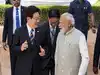
India, Korea can give new direction to multilateralism amid mounting challenges: South Korean Prez Lee
South Korean President Lee Jae Myung envisions a strengthened special strategic partnership with India, focusing on trade, technology, critical minerals, defence, and shipbuilding. He highlighted shared values and the need for close cooperation amidst geopolitical uncertainty, aiming to deepen comprehensive ties for mutual growth and innovation.

Mixed geopolitical signals making market moves hard to decode: Seth R Freeman
Global equity markets, led by the US, have recovered strongly, reaching new highs despite ongoing geopolitical tensions. However, volatile oil prices, influenced by conflicting US-Iran relations, are a major concern, impacting the global economy and investor sentiment. This uncertainty makes market navigation difficult, with potential effects on food prices.

Increase in renewable energy curbs emissions growth in 2025, IEA says
Global emissions growth slowed in 2025. Solar power expansion in developing nations helped balance emissions increases in advanced economies. India saw emissions fall for the first time in normal economic conditions. China also recorded lower emissions due to leading solar capacity additions. The United States experienced an emissions rise.

War crisis revives stagflation dangers for global economy
Global business surveys this week will reveal the escalating impact of seven weeks of Middle East conflict on growth and inflation. Initial data from Australia to the US is expected to show deterioration, particularly in Europe, raising concerns about potential stagflation. Policymakers are cautiously awaiting these figures to inform interest rate decisions.
IMF, World Bank meetings show limits in mitigating shocks, reliance on US for solutions
Global finance leaders met amid Middle East war news. They acknowledged their limited ability to counter economic damage from frequent geopolitical shocks. Reliance on U.S. leadership for crisis resolution is no longer assured. The IMF and World Bank pledged aid to developing nations. Officials expressed frustration with ongoing economic calamities.

Charting the Global Economy: IMF trims world growth projections
The International Monetary Fund has lowered its global growth forecast for 2026. This adjustment comes as the war in the Middle East has caused a significant oil price shock. The IMF also anticipates higher inflation due to rising energy and food costs.
- Go To Page 1

War revives stagflation dangers for global economy
Global economic outlook faces uncertainty as seven weeks of Middle East conflict impact growth and inflation. Business surveys from Australia to the US will reveal the extent of deterioration, with stagflation risks looming. Policymakers grapple with responses amid persistent global uncertainty, while inflation data and interest rate decisions from various nations are closely watched.

'Want to see Strait of Hormuz opened; no privatisation, no tolls': Australian PM Anthony Albanese
In a post on X, following his participation in a virtual Leaders' Summit on the Strait of Hormuz co-hosted by French President Emmanuel Macron and UK Prime Minister Keir Starmer, Albanese said 49 countries had come together with a "consistent approach" focused on ensuring freedom of navigation.

India replaces China in US smartphone supply chain, captures 40% share: Report
India has emerged as a key supplier of smartphones to the United States, meeting about 40 per cent of the demand that was earlier fulfilled by China, according to a recent report by McKinsey & Company.
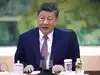
Xi's in company of slew of world leaders while Trump fights allies
President Xi Jinping is hosting global leaders in Beijing. This surge in diplomacy highlights China's growing influence. Nations seek stability and open economies from Beijing. This comes as the US faces international criticism. Leaders are visiting China for stronger global partnerships. This diplomatic activity contrasts with US foreign policy.

How 50 days of the Iran war led to the loss of $50 billion worth of oil
Global oil markets have lost over 500 million barrels since the Iran conflict began, worth nearly $50 billion. Supply disruptions across the Gulf have tightened inventories and hit exports sharply. Despite partial ceasefire signals and Strait of Hormuz reopening, analysts expect recovery to be slow, with lasting energy market shocks.

Let oil prices hurt: IMF cautions against govt shielding consumers
The IMF is urging governments to let fuel prices rise, warning that broad subsidies and price caps worsen global energy shocks. Allowing price signals to function encourages demand reduction, which is crucial for market stabilization. Targeted cash transfers are recommended to cushion consumers without distorting global markets.

China says economy grew 5% on-year in Q1, beating forecasts
China's economic growth topped expectations in the first quarter of the year, official data showed Thursday, even as the global economy reels from the fallout of war in the Middle East. NBS data also showed Thursday that retail sales grew 1.7 percent on-year in March, missing a Bloomberg forecast of 2.4 percent.

IMF chief warns of 'tough times' if oil prices stay high
IMF chief Kristalina Georgieva warned Wednesday of difficult times ahead for the global economy if war in the Middle East is unresolved and oil prices stay high, adding that inflation risks could seep into food prices. "We are concerned about risks for inflation moving into food prices should the delivery of fertilizers at a reasonable price (not be) restarted soon," Georgieva said.
World Bank launches ‘Water Forward’ plan to expand global water access for 1 billion people
The World Bank has unveiled a new initiative called 'Water Forward'. This program aims to provide secure water access to one billion people within the next four years. It will expand reliable water services and strengthen systems against droughts and floods. Partnerships with other development banks will help achieve this ambitious goal.
UN development chief says $6 billion investment could save 32 million people from war-induced poverty
A $6 billion investment in targeted cash payments or energy subsidies could prevent 32 million people from falling into poverty due to war-driven energy price hikes, according to the UN Development Program. This intervention, alongside ending the conflict and resuming trade, is crucial to reversing development setbacks and avoiding a larger economic crisis.

IMF chief says rapid economic recovery still possible if war ends soon
The global economy could rebound quickly from the Middle East war shock if the conflict ends within weeks, IMF Managing Director Kristalina Georgieva said. However, a prolonged war may worsen the outlook.
IMF cuts global growth outlook for 2026, warns of potential recession if Iran war worsens
The International Monetary Fund has cut its global growth outlook, warning the economy could near recession if the Middle East conflict keeps oil above $100. It now sees 3.1% growth in 2026, but this could drop to 2.5% or even 2.0% in a severe scenario, alongside rising inflation, with emerging markets hit hardest while India remains a relative bright spot.

IMF cautions countries against broad fuel subsidies to deal with war-driven energy shock
Global finances face new pressure from the Middle East conflict. Rising energy prices and interest rates strain economies. The IMF advises against fuel subsidies, favoring direct cash aid. Countries must manage higher energy costs to reduce consumption. Global government debt is projected to reach 100% of GDP by 2029, the highest since World War Two.
IMF raises India FY27 GDP growth forecast to 6.5% even as the world stumbles through conflict
The International Monetary Fund (IMF) has slightly raised India’s growth forecast for FY27 to 6.5%, up 0.1 percentage point from its January estimate, and expects growth to hold steady at the same level in FY28, even as it flags rising geopolitical risks from the war in the Middle East.
How a US blockade near the Strait of Hormuz could work and the impact ahead for the global economy
A United States blockade of Iranian ports is set to disrupt global oil prices. This move raises concerns about international law and its effectiveness in pressuring Iran. Experts warn of significant challenges in enforcing the blockade. The restrictions could impact the flow of essential goods, leading to higher prices for consumers worldwide.
Trump's Naval blockade of Hormuz is an economic warfare, harms global economy
America threatens a naval blockade in the Strait of Hormuz. This marks a move from diplomacy to economic warfare. The US aims to cut Iran's oil revenue. This strategy seeks to force Iran back to negotiations. However, it carries significant risks of escalation. Global energy markets and international relations face potential instability.
Trump’s Hormuz blockade risks piling pain on Asia allies, China
America's move to blockade the Strait of Hormuz threatens Asia's energy-dependent nations. This action could lead to higher oil prices and impact global economic growth. Asian countries are seeking alternative energy sources and implementing measures to manage the situation. The situation's impact on global markets remains uncertain.

China, Iran ‘weaponised’ global economy to counter US: report
Global economic competition intensifies as China and Iran use supply chains and trade routes for strategic advantage. This challenges the United States' former economic dominance. Nations are now investing in domestic production to build economic defenses. This shift signals a new global economic order driven by geopolitical realities. The US faces vulnerabilities in key industries.
Lessons learned in 70s have made US, world economies less vulnerable to oil shocks
The world economy is experiencing a significant oil price surge reminiscent of the 1970s. However, countries are now better prepared. Decades of efforts have increased energy efficiency and reduced reliance on Middle Eastern oil. New energy sources and stockpiles provide a buffer. While challenges remain for consumers and businesses, the global economy is less vulnerable to this shock than before.

Charting the global economy: War fuels inflation, saps sentiment
Surging fuel costs from the Iran war are driving a rapid increase in global inflation and a significant drop in consumer confidence.
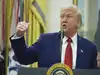
Falling trust in America is a Pandora’s box for the global economy
The TACO trade, a bet on Trump backing down from market-rattling actions, seems outdated as his Iran war and global policy shifts create unpredictability. Despite this, capital still flows to the US, drawn by its markets and the AI revolution, even as allies hedge their bets.
Load More