

Listen to this article in summarized format
×
Subscribe to

Unlock AI Briefing and Premium Content
New Year Offer 24 Hours Left
Subscribe NowAlready a member? Sign In
What's Included
- Exclusive Stories
- Daily ePaper Access
- Smart Market Tools
- Curated Investment Ideas
- Ad-lite Experience
Subscription

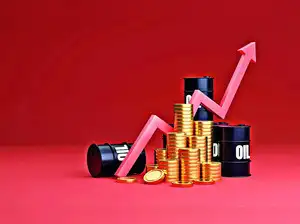
New York: The cumulative global impact of seven weeks of war in the Middle East will begin to emerge in the coming week, in a second round of business surveys from multiple countries.
Whether the twin blows affecting growth and inflation seen in purchasing manager indexes after the first month of the Iran conflict intensified during month two will be a key focus.
The initial take for April in economies from Australia to the US will be published on Thursday. Among those covered by Bloomberg forecasts, indexes in Germany, France, the euro zone and the UK are all anticipated to show broad deterioration, while the American indicators are seen little changed.
Ultimately, the numbers may point to the degree that stagflation is lurking. That ominous term - evoking the noxious mix of surging prices and stalling growth of the 1970s - was cited by Chris Williamson, chief business economist at PMI-compiler S&P Global, when summing up risks highlighted by the overall global measure in March.
The survey numbers follow a week of bleak stock-taking in Washington, where finance chiefs were warned by the International Monetary Fund of a range of potential outcomes that included a near-recession for the world. Notwithstanding the current Middle East ceasefire, the damage to growth and inflation can't be easily undone.
"Even if the war ends tomorrow, it would take quite some time for the recovery to kick in," IMF Managing Director Kristalina Georgieva told Bloomberg Television. "The impact is already baked in."
For all the gloom, multiple policymakers remain cautious about how to respond. European Central Bank chief economist Philip Lane described how he and his colleagues may treat reports such as the PMIs when they set interest rates later this month.
"We will have a rich set of survey data," Lane said in Washington. "Of course, the people who are answering those surveys are looking at the same world we are looking at." And for now, not many will have a decisive idea about what's going to happen, he added.
ECB officials will also get French business confidence on Thursday and Germany's closely watched Ifo business climate gauge on Friday. Their Federal Reserve peers will see the University of Michigan's sentiment index, also at the end of the week.
(You can now subscribe to our Economic Times WhatsApp channel)
Whether the twin blows affecting growth and inflation seen in purchasing manager indexes after the first month of the Iran conflict intensified during month two will be a key focus.
The initial take for April in economies from Australia to the US will be published on Thursday. Among those covered by Bloomberg forecasts, indexes in Germany, France, the euro zone and the UK are all anticipated to show broad deterioration, while the American indicators are seen little changed.
Ultimately, the numbers may point to the degree that stagflation is lurking. That ominous term - evoking the noxious mix of surging prices and stalling growth of the 1970s - was cited by Chris Williamson, chief business economist at PMI-compiler S&P Global, when summing up risks highlighted by the overall global measure in March.
The survey numbers follow a week of bleak stock-taking in Washington, where finance chiefs were warned by the International Monetary Fund of a range of potential outcomes that included a near-recession for the world. Notwithstanding the current Middle East ceasefire, the damage to growth and inflation can't be easily undone.

"Even if the war ends tomorrow, it would take quite some time for the recovery to kick in," IMF Managing Director Kristalina Georgieva told Bloomberg Television. "The impact is already baked in."
For all the gloom, multiple policymakers remain cautious about how to respond. European Central Bank chief economist Philip Lane described how he and his colleagues may treat reports such as the PMIs when they set interest rates later this month.
"We will have a rich set of survey data," Lane said in Washington. "Of course, the people who are answering those surveys are looking at the same world we are looking at." And for now, not many will have a decisive idea about what's going to happen, he added.
ECB officials will also get French business confidence on Thursday and Germany's closely watched Ifo business climate gauge on Friday. Their Federal Reserve peers will see the University of Michigan's sentiment index, also at the end of the week.
Add  as a Reliable and Trusted News Source
as a Reliable and Trusted News Source Add Now!
(You can now subscribe to our Economic Times WhatsApp channel)

















 ETPrime Membership