
EXOMOON
The Search for an Exomoon: Have We Finally Found One?
Astronomers are actively searching for exomoons, the elusive counterparts to our Solar System's moons, with promising candidates like the one around Kepler 1625 b emerging. Despite theoretical expectations and sophisticated detection methods, confirming these distant celestial bodies remains a significant challenge. New telescopes and advanced techniques are expected to bring the first definitive exomoon discovery closer.

Is Europa, Jupiter's ocean moon, the final haven for life once the sun dies? Here's what a recent study shows
In approximately 4.5 billion years, as the sun transforms into a red giant and engulfs Earth, Jupiter's moon Europa may offer a temporary refuge. Research suggests Europa's icy shell will sublimate, potentially creating a fleeting water vapor atmosphere lasting up to 200 million years. This could provide a brief window for habitable conditions and detectable biosignatures.

NASA may have found fastest planetary system we have ever seen. Check key details
Scientists have discovered a potentially record-breaking fast planetary system, with a star and possible exoplanet moving at around 1.2 million miles per hour. This super-Neptune world orbits a low-mass star detected using gravitational microlensing. The star's speed may exceed the Milky Way's escape velocity, possibly sending it into intergalactic space.

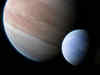
'First known exomoon may have been discovered'
The observations measured the momentary dimming of starlight as a planet passed in front of its star, called a transit.
Over 100 exoplanets that may host habitable moons identified
Terrestrial (rocky) planets are prime targets in the quest to find life because some of them might be geologically and atmospherically similar to Earth.
- Go To Page 1
Over 100 planets with life-hosting moons identified
Washington, June 15 (IANS) Researchers have identified more than 121 giant planets that potentially host moons capable of supporting life.
Load More

