
2015 NUCLEAR ACCORDS
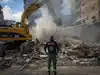
Allies fear a rushed US-Iran framework deal could backfire, leaving technical deadlock
US-Iran war news: European allies express concern over a potentially hasty U.S. deal with Iran. They fear an inexperienced American team might secure a superficial agreement on Iran's nuclear program and sanctions relief. This could lead to prolonged, complex follow-up talks. The U.S. White House rejects these criticisms, stating President Trump prioritizes American interests. Talks are ongoing, focusing on uranium stockpiles and sanctions.
A $100 billion question sits at the heart of US-Iran deal talks
Billions of dollars earned by Iran from oil sales remain frozen in foreign banks due to US sanctions. These funds are now a key issue in high-stakes US-Iran talks. Iran wants access to at least six billion dollars. The US has denied any agreement to unfreeze these assets. This standoff gives both nations leverage in potential deals.

US military says it will blockade Iranian ports starting Monday after ceasefire talks ended without agreement
U.S. President Donald Trump on Sunday said the U.S. Navy would begin a blockade of ships linked to Iranian ports in the Strait of Hormuz after ceasefire talks with Iran in Pakistan failed. The U.S. Central Command said the blockade would start Monday but still allow vessels not heading to Iranian ports to pass through the route.

The Hormuz blockade is a throwdown the US can't win
A commentary argues that US President Donald Trump may be underestimating Iran’s leverage in the Strait of Hormuz, warning that a blockade is more likely to deepen conflict than force concessions. It says energy blockades are acts of war, slow to take effect, and risk collapsing the fragile ceasefire while hurting the global economy.
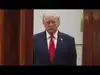
After unsuccessful US-Iran talks, what next for Trump?
President Donald Trump faces tough choices after US-Iran peace talks falter. A proposed blockade of the Strait of Hormuz could escalate tensions and global economic worries. Analysts question the strategy, citing risks to US forces and potential voter backlash. Iran's Revolutionary Guards issue a stern warning.
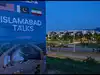
Getting unrealistic in Islamabad
Fifteen hours of talks in Islamabad between Iran and the US did not resolve the ongoing conflict. Divergent objectives and Israeli interference made meaningful resolution unlikely. A fragile ceasefire is in place, but its endurance is uncertain. The negotiations focused on Iran's nuclear program and its ballistic missile capabilities. Both sides have non-negotiable points, creating a challenging path forward.
- Go To Page 1

Pakistan in the room of ceasefire but not running the game
Islamabad has emerged as the venue for fresh US-Iran talks after a Pakistan-brokered ceasefire, with senior American envoys arriving to push for an end to the six-week Middle East conflict. President Donald Trump has deputed Vice President JD Vance, envoy Steve Witkoff and Jared Kushner for the negotiations scheduled on Saturday.
Iran rules out restrictions on enrichment programme: Nuclear chief
The head of Iran's nuclear energy agency on Thursday ruled out any restrictions on the country's enrichment of uranium, saying the demand by the United States and Israel "will not come true". During last June's 12-day war, Israel and the United States hit Iran's nuclear programme, claiming to have obliterated its ability to enrich uranium.

Trump confirms receiving Iran's proposal to end war, says "not good enough"
America's President Donald Trump received a proposal from Iran to end the West Asia conflict. He called it a significant step but not good enough. Iran rejected a US ceasefire deal. Instead, Tehran unveiled its own 10-point plan. This plan aims for a permanent end to the war.

You thought Trump's ratings were in free fall? JD Vance’s numbers are drawing even more attention
Vice President JD Vance faces a sharp drop in voter approval. Recent polls show a significant increase in disapproval, impacting his standing. This decline coincides with a fall in his chances for the 2028 Republican presidential nomination. Prediction markets reflect this shift, though betting odds still position him as a contender. Upcoming events will shape his future political trajectory.
Hormuz to ‘open naturally’, Iran will be hammered ‘very hard’: Trump sends mixed signals on war
Donald Trump Speech Highlights: President Donald Trump has revealed the progress of America's military campaign against Iran. He stated that Iran's navy is gone and its air force is in ruins. Trump warned of further intensified actions in the coming weeks. The US offensive, named Operation Epic Fury, has significantly weakened Iran's military capabilities. The President accused Tehran's leadership of killing its own citizens.
Iran warns US, Israel against attempting ground operations in new threat to 'enemies'
Iran's top military commander issued a stern warning to the U.S. and Israel against a ground offensive, vowing no enemy troops would survive such an escalation. This comes despite U.S. President Trump suggesting the conflict is nearing completion, while American troop deployments raise concerns about potential land incursions.
'Delivered a powerful speech': US Secretary of State Rubio says Trump was 'clear about objectives in Iran'
US Secretary of State Marco Rubio on Wednesday (local time) praised US President Donald Trump for delivering a "powerful" address outlining Washington's objectives toward Iran amid escalating tension in West Asia.
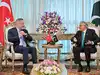
Mediators gather in Pakistan for talks on ending the month long Israel-Iran war
Top diplomats from Saudi Arabia, Turkey, and Egypt are in Pakistan to discuss the Middle East conflict. The talks aim to foster dialogue between the US and Iran. Meanwhile, strikes and missile launches continue across the region. Iran has eased some restrictions on ships in the Strait of Hormuz.

Iran-backed Houthis launch attacks on Israel, while US Marines arrive in Middle East
The Middle East war intensifies as Houthi rebels launch missiles at Israel. Thousands of U.S. Marines have arrived in the region. Regional powers are meeting to discuss an end to the fighting. The conflict threatens global trade and energy supplies. Iran and the U.S. continue to exchange strikes. Diplomatic efforts are underway, but tensions remain high.

Israel flags first Yemen missile threat in expanding West Asia war
Yemen launched a missile toward Israel, a first. Sirens sounded near Beer Sheba and Israel's nuclear center. Iran and Hezbollah continued firing. Attacks on Red Sea vessels disrupted shipping. Israel struck Iran's nuclear facilities. Iran vowed retaliation. The conflict intensifies with potential Houthi involvement, impacting global shipping and food security. Diplomatic efforts continue amid rising tensions.

The other Ether-blend solution: How DME could ease India’s LPG crisis
India is embarking on an innovative journey by mixing dimethyl ether (DME) with cooking gas to lessen its dependency on imported LPG. This strategy utilizes the current LPG infrastructure, offering a smart and practical solution for enhancing energy independence.

Ali Larijani killed in US-Israeli strike, Iran confirms; key architect of regime’s security policy dies at 67
Veteran Iranian politician Ali Larijani has been killed in a U.S.-Israeli airstrike. Larijani, a key figure in Iran's security and nuclear policy, died on the outskirts of Tehran. He was a longtime confidant of Ayatollah Ali Khamenei. Larijani held significant positions including speaker of parliament and head of the Supreme National Security Council.

Who is Ali Larijani, and is Iran’s security head dead or alive? Larijani net worth, family, background and Israel’s statement. Top official's handwritten note social media post raises doubts over Israeli claims
Ali Larijani, Iran’s Supreme National Security Council secretary, is reported killed in Israeli strikes, though Iran has not confirmed. Larijani’s social media post complicates reports. He has held key roles in Iran’s government, including nuclear negotiator and parliament speaker. His death would mark a major shift in Iran’s leadership amid conflict.

From nuclear negotiator to foreign minister: Who is Seyed Abbas Araghchi, the voice of Iran?
Araghchi is currently the most visible diplomatic voice of Tehran. Since becoming Iran’s foreign minister in 2024, he has taken charge of explaining Iran’s strategy to the world while navigating one of the most dangerous Middle East crises in decades. His role goes far beyond routine diplomacy. He speaks for Iran on nuclear policy, coordinates international alliances, and frames Tehran’s response to Israeli and US military pressure. Seyed Abbas Araghchi has spent more than three decades inside Iran’s foreign policy establishment. Born in Tehran in December 1962, he gradually built a reputation as one of Iran’s most disciplined diplomats. Today he serves as Iran’s foreign minister, representing Tehran on the global stage during a period of heightened conflict and international scrutiny.

Global Market | From Pandemic Crash to War Spike: A history of crude’s biggest surges
Global oil prices have surged above $100 per barrel following a US military strike on Iran, reigniting fears of supply disruptions. This escalation revives memories of past price volatility, including the Russia-Ukraine war's impact in 2022 and the pandemic-induced crash in 2020, underscoring the market's sensitivity to geopolitical events.
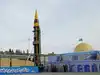
Eliminating Iran's ballistic missiles could be difficult
U.S. and Israeli forces are targeting Iran's ballistic missile capabilities, a challenging objective given the weapons' underground production sites and Iran's ability to smuggle components. Despite airstrikes, completely eliminating the arsenal and know-how is difficult, as Iran has a diverse range of missiles and has proven adept at rebuilding its program.

US mission in Iran is to destroy missiles, navy and deny Tehran nuclear weapons, Pentagon chief says
America's mission in Iran targets Tehran's missile capabilities and naval forces. The Pentagon chief detailed Operation Epic Fury, aimed at dismantling Iran's offensive missiles and preventing nuclear weapon acquisition. This operation, ordered by President Donald Trump, is described as the most precise aerial operation ever. The focus remains on destroying Iranian missiles and their production.
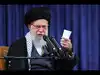
Ayatollah Ali Khamenei's death brings Ayatollah Ruhollah Khomeini's grandson into focus
Iran faces a crucial decision to select a new Supreme Leader following the death of Ayatollah Ali Khamenei. Hassan Khomeini, grandson of the revolution's founder, emerges as a prominent contender. He is seen as a moderate voice within the clerical establishment. His potential leadership could shape Iran's future direction and its engagement with the world.
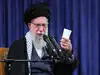
Iran's supreme leader Ayatollah Ali Khamenei in dates
Ayatollah Ali Khamenei had been Iran's hardline spiritual guide and top political authority since 1989, when he succeeded Ayatollah Ruhollah Khomeini as supreme leader. - June 4, Upon the death of Khomeini, he is elected supreme leader just a year after the end of the war with Iraq (1980-1988).

As Ayatollah Ali Khamenei dies in US-Israel strikes, how will Iran elect its next leader? All you need to know about country’s succession process
Iran's Supreme Leader Ayatollah Ali Khamenei has died following joint US-Israel strikes. A temporary leadership council, including the President and judiciary chief, has assumed duties. The Assembly of Experts, a body of clerics, is tasked with selecting a new supreme leader. Khamenei, who was in power for almost 37 years, was killed in joint strikes carried out by Israel and the United States.
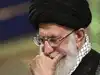
Khamenei killed in US-Israeli strikes: Iran’s supreme leader dies at 86 after 36 years in power
Ayatollah Ali Khamenei, who ruled Iran for 36 years and shaped it into a leading anti-U.S. force in the Middle East, has died at 86 in air strikes by Israel and the United States that destroyed his compound in Tehran, Iranian state media reported. His death follows decades of confrontation over Iran’s nuclear program and failed diplomatic efforts.
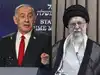
Iran-Israel war: Khamenei 'is no longer' alive, claims Israel's Netanyahu
Israeli Prime Minister Benjamin Netanyahu stated that Iran's Supreme Leader Ayatollah Ali Khamenei may have been killed. Netanyahu announced strikes on Khamenei's compound and other targets. Explosions were reported in Tehran. An official previously said Khamenei was moved to a secure location. Israel launched a pre-emptive attack.

Iran would be outgunned in any war with the US but could still inflict considerable pain
Iran braces for possible U.S. military action in the Middle East. While Iran is outmatched, it retains missile capabilities to strike U.S. bases and allies. The Strait of Hormuz remains a critical point of vulnerability. Regional allies express concern about escalating conflict and its impact on global oil trade. Iran's nuclear program also remains a point of contention.
Load More

