

Listen to this article in summarized format
×
Subscribe to

Unlock AI Briefing and Premium Content
New Year Offer 24 Hours Left
Subscribe NowAlready a member? Sign In
What's Included
- Exclusive Stories
- Daily ePaper Access
- Smart Market Tools
- Curated Investment Ideas
- Ad-lite Experience
Subscription

 AP
AP
Kingshuk Chatterjee
Kingshuk Chatterjee is professor of history, University of Calcutta
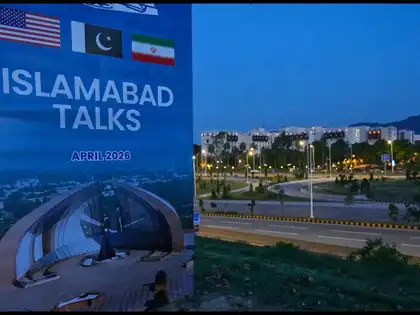
15 hours of talks in Islamabad could not readily resolve the 5-week-long-and-running conflict between Israel-US and Iran. Given divergent objectives of the three combatant states, chances of any meaningful resolution of all - or, indeed any - of the issues at hand were slim. Chances appear slimmer because only two of the three combatants were there for talks, with the third ready to happily torpedo them.
The only reason why the 2-week ceasefire might actually hold is that Trump appears unwilling to remain stuck in a war that appears unlikely to produce a conclusive outcome. Iran would be glad to have an off-ramp but appears reconciled to continuing the fight to escape surrender. Accordingly, the ongoing ceasefire is far too brittle to prove enduring.
Also Read: Buffets, baristas, but no briefings: Journalists frozen out of Iran talks in Islamabad
The Islamabad talks are the third round of negotiations between Iranian and Trump regimes in the last one year, primarily on Iran's nuclear programme. The US claims Tehran is pursuing nuclear weapons capability in violation of its NPT commitments. Tehran asserts it's doing nothing of the sort.
The previous two rounds, in June 2025 and February 2026, were interrupted by Israel, along with the US the second time around, which has been claiming for the last several years that Iran is only a step away from developing nuclear weapons capability. Some voices have been saying that the Israelis scuttled both rounds of negotiations by attacking Iran, since they don't trust Tehran's sincerity, and would rather kick the nuclear can down the road than rely on Iranian goodwill.
Accordingly, Iran is prepared for a third disruption, and has come forth with a 10-point maximalist proposal for the talks that began on Saturday.
Between Tehran's 10 and Trump's 15 points over which the two sides began their deliberations in Pakistan, there are essentially two non-negotiable issues for both sides:
Washington insists that Tehran must not develop nuclear weapons capability. Tehran insists it doesn't even intend to but won't yield on its right to enrich uranium.
Also Read: Donald Trump orders Strait of Hormuz blockade, warns any Iranian firing at US could be ‘blown to hell’
Everything else is potentially negotiable. Tehran could hand over the 440-odd kg of highly enriched uranium to either a third party (like Russia) or share it with a regional consortium of its Gulf neighbours for the purpose of a shared nuclear power-generation programme. Iran may even return to enriching uranium to 3.67% required for civilian power generation. But it would not abandon its right altogether, as an NPT-signatory, to enrich uranium -something the US had previously accepted during the 2015 Joint Comprehensive Plan of Action agreement with Iran. JD Vance's initial statements seem to indicate that talks have stumbled on this very point.
Washington insists that Tehran must not pose a security threat for its neighbours with its aggressive ballistic missile programme. Tehran refuses to entertain any discussion about it. This issue had left many in the US sceptical of JCPOA, who went on to prod Trump into scuttling that agreement in 2018.
But Iran's ability to get past Israeli - and US - missile defence proves its missiles and drones as being the most-effective component of its military arsenal. Tehran is unlikely to entertain any idea of a cap on that.
Topmost among what Iran was asking at Islamabad was an end to American (and Israeli) aggression against Iran and its allies, like Lebanon's Hezbollah. Tehran wants Washington to rein in Israel so that the differences between Iran and the US can be sorted out diplomatically. The last round of talks in February were stopped after Ayatollah Ali Khamenei was assassinated presumably with Americans and Israelis assuming that his death would cause the regime to collapse. That has not happened.
There is also no ready possibility of a decisive US military victory over Iran without huge costs - political and economic. Iran's closure of the Strait of Hormuz has brought considerable pressure on the US to draw back. Islamabad talks were essentially an exit ramp for Trump.
They did not resolve the outstanding issues between the US and Iran - nor were they meant to. The 2015 JCPOA was the result of three years of back-channel talks, followed by two years of direct negotiations. A weekend in Islamabad could not have produced a conclusive agreement that aspires to be more enduring than the JCPOA. It was essentially for political messaging.
Tehran reportedly specifically asked for vice president Vance at the talks, who is known to be opposed to the war with Iran. Washington obliged, even though Steve Witkoff and Jared Kushner, interlocutors in the previous rounds, were also there. Iranian delegation was headed by Mohammad Bagher Ghalibaf, speaker of the Iranian parliament, like Vance the second-highest elected functionary, whom the Americans had signalled for inclusion.
The delegation also included foreign minister Abbas Araghchi, who has supposedly been taken off the Israeli 'kill list' after US pressure, and Central Bank of Iran governor Abdolnaser Hemmati. The inclusion of Hemmati seems to imply that Tehran wants serious discussion over immediate removal of sanctions and release of frozen assets (even if partial) as also implied in its 10-point plan.
Given the current gulf of mistrust between the two sides, the best the Islamabad round could achieve was if both sides left with the intent to keep on talking. The fact that even after Vance's departure, technical teams from both sides remained to talk for another day provides ground for hope. A bonus would be if both agreed on some confidence-building measures to indicate their respective seriousness - Iran decoupling closure of Hormuz from Lebanon, the US pulling Israel back and allowing release of at least some of Iran's frozen assets.
The first would not be welcome in Tehran; the second would be fiercely resisted in Tel Aviv, which wants to keep 'mowing down' military capabilities of Tehran and its allies. If the two sides hope for anything more than continuing to talk, their expectations will be unrealistic.
The writer is professor, Department of History, University of Calcutta
The only reason why the 2-week ceasefire might actually hold is that Trump appears unwilling to remain stuck in a war that appears unlikely to produce a conclusive outcome. Iran would be glad to have an off-ramp but appears reconciled to continuing the fight to escape surrender. Accordingly, the ongoing ceasefire is far too brittle to prove enduring.
Also Read: Buffets, baristas, but no briefings: Journalists frozen out of Iran talks in Islamabad
The Islamabad talks are the third round of negotiations between Iranian and Trump regimes in the last one year, primarily on Iran's nuclear programme. The US claims Tehran is pursuing nuclear weapons capability in violation of its NPT commitments. Tehran asserts it's doing nothing of the sort.
The previous two rounds, in June 2025 and February 2026, were interrupted by Israel, along with the US the second time around, which has been claiming for the last several years that Iran is only a step away from developing nuclear weapons capability. Some voices have been saying that the Israelis scuttled both rounds of negotiations by attacking Iran, since they don't trust Tehran's sincerity, and would rather kick the nuclear can down the road than rely on Iranian goodwill.

Accordingly, Iran is prepared for a third disruption, and has come forth with a 10-point maximalist proposal for the talks that began on Saturday.
Between Tehran's 10 and Trump's 15 points over which the two sides began their deliberations in Pakistan, there are essentially two non-negotiable issues for both sides:
Washington insists that Tehran must not develop nuclear weapons capability. Tehran insists it doesn't even intend to but won't yield on its right to enrich uranium.
Also Read: Donald Trump orders Strait of Hormuz blockade, warns any Iranian firing at US could be ‘blown to hell’
Everything else is potentially negotiable. Tehran could hand over the 440-odd kg of highly enriched uranium to either a third party (like Russia) or share it with a regional consortium of its Gulf neighbours for the purpose of a shared nuclear power-generation programme. Iran may even return to enriching uranium to 3.67% required for civilian power generation. But it would not abandon its right altogether, as an NPT-signatory, to enrich uranium -something the US had previously accepted during the 2015 Joint Comprehensive Plan of Action agreement with Iran. JD Vance's initial statements seem to indicate that talks have stumbled on this very point.
Washington insists that Tehran must not pose a security threat for its neighbours with its aggressive ballistic missile programme. Tehran refuses to entertain any discussion about it. This issue had left many in the US sceptical of JCPOA, who went on to prod Trump into scuttling that agreement in 2018.
But Iran's ability to get past Israeli - and US - missile defence proves its missiles and drones as being the most-effective component of its military arsenal. Tehran is unlikely to entertain any idea of a cap on that.
Topmost among what Iran was asking at Islamabad was an end to American (and Israeli) aggression against Iran and its allies, like Lebanon's Hezbollah. Tehran wants Washington to rein in Israel so that the differences between Iran and the US can be sorted out diplomatically. The last round of talks in February were stopped after Ayatollah Ali Khamenei was assassinated presumably with Americans and Israelis assuming that his death would cause the regime to collapse. That has not happened.
There is also no ready possibility of a decisive US military victory over Iran without huge costs - political and economic. Iran's closure of the Strait of Hormuz has brought considerable pressure on the US to draw back. Islamabad talks were essentially an exit ramp for Trump.
They did not resolve the outstanding issues between the US and Iran - nor were they meant to. The 2015 JCPOA was the result of three years of back-channel talks, followed by two years of direct negotiations. A weekend in Islamabad could not have produced a conclusive agreement that aspires to be more enduring than the JCPOA. It was essentially for political messaging.
Tehran reportedly specifically asked for vice president Vance at the talks, who is known to be opposed to the war with Iran. Washington obliged, even though Steve Witkoff and Jared Kushner, interlocutors in the previous rounds, were also there. Iranian delegation was headed by Mohammad Bagher Ghalibaf, speaker of the Iranian parliament, like Vance the second-highest elected functionary, whom the Americans had signalled for inclusion.
The delegation also included foreign minister Abbas Araghchi, who has supposedly been taken off the Israeli 'kill list' after US pressure, and Central Bank of Iran governor Abdolnaser Hemmati. The inclusion of Hemmati seems to imply that Tehran wants serious discussion over immediate removal of sanctions and release of frozen assets (even if partial) as also implied in its 10-point plan.
Given the current gulf of mistrust between the two sides, the best the Islamabad round could achieve was if both sides left with the intent to keep on talking. The fact that even after Vance's departure, technical teams from both sides remained to talk for another day provides ground for hope. A bonus would be if both agreed on some confidence-building measures to indicate their respective seriousness - Iran decoupling closure of Hormuz from Lebanon, the US pulling Israel back and allowing release of at least some of Iran's frozen assets.
The first would not be welcome in Tehran; the second would be fiercely resisted in Tel Aviv, which wants to keep 'mowing down' military capabilities of Tehran and its allies. If the two sides hope for anything more than continuing to talk, their expectations will be unrealistic.
The writer is professor, Department of History, University of Calcutta
Add  as a Reliable and Trusted News Source
as a Reliable and Trusted News Source Add Now!
(Disclaimer: The opinions expressed in this column are that of the writer. The facts and opinions expressed here do not reflect the views of www.economictimes.com.)
Read More News on
(Catch all the Business News, Breaking News, and Latest News Updates on The Economic Times.)
Subscribe to The Economic Times Prime and read the ET ePaper online.
Read More News on
(Catch all the Business News, Breaking News, and Latest News Updates on The Economic Times.)
Subscribe to The Economic Times Prime and read the ET ePaper online.











 ETPrime Membership