
INTERNATIONAL MONETARY FUND

FM Nirmala Sitharaman targets Rahul Gandhi, says India's growth story belies Opposition's doom predictions
Responding to Rahul Gandhi's criticisms, Finance Minister Nirmala Sitharaman confidently proclaimed India as the fastest-growing major economy globally. Citing impressive GDP growth rates and IMF support, she argued that the country's economic resilience is undeniable.

CEA defends India's GDP data, says country does not use methodology changes to inflate growth numbers
Nageswaran responded to concerns raised by some economists over India's GDP estimates, stressing that GDP measurement is an estimate in every country and that India follows internationally accepted statistical practices.

On This Day in History, June 13: Alexander dies, Miranda ruling, Korea summit, FIFA 2026 awarded to US-Canada-Mexico, Trump charged and more events
On This Day in History, June 13 witnessed the death of Alexander the Great, the signing of the enduring Anglo-Portuguese alliance, the landmark Miranda ruling, Thurgood Marshall's Supreme Court nomination, the first summit between North and South Korean leaders and the historic federal criminal case against Donald Trump. The date also featured notable developments in aviation, diplomacy, entertainment and global politics.

What Elon Musk's trillion would mean in real terms
Elon Musk is poised to become the world's first trillionaire. This unprecedented wealth accumulation follows the market debut of his company SpaceX. The article highlights the immense scale of a trillion dollars. It compares this sum to global economic indicators and everyday purchases. This development underscores a growing wealth gap.

IMF cuts eurozone growth forecasts again on energy inflation risks
The International Monetary Fund has issued a stark warning. The ongoing Middle East conflict is impacting eurozone growth more than previously anticipated. Energy price surges are expected to slow economic expansion. Inflation is also projected to climb higher. Consumer confidence may weaken, leading to reduced spending.

Pakistan's poor population swells by 27 mn in six years, poverty surges 7%
Pakistan's poverty rate has risen from 21.9% in 2018-19 to 28.9% in 2024-25, pushing around 27 million more people below the poverty line and taking the total number of poor to about 70 million, according to the Pakistan Economic Survey 2025-26.
- Go To Page 1

FM Sitharaman flags global crisis spillovers, unfair burden on developing nations
Finance Minister Nirmala Sitharaman stated that the Global South should not bear the brunt of global imbalances and conflicts. Representing India at a summit, she emphasized the need for coordinated global action and stronger multilateral cooperation to build resilient economies and ensure inclusive growth for all.

Europe is finally, slowly getting its act together
Europe stands on the brink of a pivotal transformation, launching a set of ambitious reforms aimed at revitalizing its economy and global footprint. By strategically pushing for the expansion of major banks, tech giants, and defense sectors, the European Union is determined to avoid the pitfalls of a second-tier economy.

ADIA to sell 2.3% Lenskart stake in Rs 1,944 crore block deal
Abu Dhabi Investment Authority is set to divest a 2.3% stake in Lenskart for approximately Rs 1,944 crore via a block deal. This follows SoftBank's recent Rs 2,873 crore share sale. Despite the sale, ADIA will retain significant holdings, indicating substantial paper gains on its 2023 investment. The move comes after Lenskart's IPO lock-in period expired.

IMF financial stability chief Tobias Adrian to step down August 31
Tobias Adrian, who led the International Monetary Fund's Monetary and Capital Markets Department through major global challenges, will depart on August 31. Adrian guided the department through events like the COVID-19 pandemic, inflation surges, trade disputes, and conflicts in Ukraine and Iran.

Fuel price shield helping India and consumers to tackle West Asia crisis: Gita Gopinath
India is already cushioning the economy from the West Asia crisis. Gita Gopinath, former IMF Deputy Managing Director, states the government is limiting fuel price hikes. This acts as an implicit subsidy. She advises more targeted support for vulnerable households and businesses instead of broad fuel subsidies. This approach helps where needed most and avoids economic distortions.

Elevated oil prices could drag India's growth to 6%, below IMF forecast of 6.5%: Gita Gopinath
Elevated oil prices could slow India's economic growth to around 6%, according to former IMF official Gita Gopinath. She warned that prolonged West Asian tensions could further impact global growth and India's prospects. Gopinath emphasized supply-side reforms, renewable energy, and improving ease of doing business to boost investment and strengthen India's global supply chain role.

RBI to hold rate on Friday, future hike will depend on inflation data: Gita Gopinath
The Reserve Bank of India (RBI) is likely to keep interest rates unchanged in the near term and adopt a data-dependent approach before taking any future policy action, according to Gita Gopinath, former First Deputy Managing Director of the International Monetary Fund (IMF).

Putin's 'Russian Davos' opens with US guests as economy slows and war drags on
Russia hosts its premier investment forum in Saint Petersburg. The event includes prominent figures from the United States and Germany. This gathering occurs as Russia faces economic stagnation and ongoing conflict in Ukraine. The forum aims for pragmatic dialogue on a stable future. Discussions will cover energy, artificial intelligence, and investment.

New producer price index set to replace WPI over next five years
India is set to introduce a new Producer Price Index, covering output, input, and services. This move aims to provide a more accurate picture of inflation. The existing Wholesale Price Index will be phased out over five years. The new indices will use 2022-23 as the base year. This transition aligns with global standards and IMF recommendations.

South Korea overtakes India as world’s sixth-largest stock market
South Korea's stock market has now surpassed India's, becoming the world's sixth largest. This significant shift is largely due to the booming performance of its chip giants, Samsung Electronics and SK Hynix, which are central to the global artificial intelligence boom.

Asia's factory output expands as firms stockpile buffers over Iran war risks
Asian factories saw steady growth in May. Companies built up stocks to counter potential supply disruptions from the Middle East conflict. China's manufacturing expanded for the sixth month, while South Korea's activity reached a five-year high. Japan also reported expansion despite rising input costs. This regional push highlights efforts to secure supplies amidst global trade jitters.

IMF, World Bank, others warn Middle East war is straining energy supplies
Global economic leaders warned that the Middle East conflict is straining energy supplies and disproportionately impacting vulnerable economies. Disruptions through the Strait of Hormuz are raising concerns over fuel security and market conditions, especially with rising summer demand. The institutions are discussing responses to the war's economic fallout.

India’s forex reserves fall by $7.51 billion to $681.38 billion as of May 22
India's foreign exchange reserves saw another dip. Reserves fell by $7.51 billion to $681.38 billion in the week ending May 22. This follows a sharp decline the previous week. Foreign currency assets and gold holdings were the main contributors to the decrease. The Reserve Bank of India monitors the market closely.

India steers boat through a risky channel between war clouds and El Nino
India faces a challenging global economic outlook for 2026-27. Geopolitical tensions and volatile oil prices are key concerns. However, India is building resilience through infrastructure, manufacturing incentives, and reduced import dependence. The nation is positioning itself as an investment destination amidst global uncertainty. Domestic demand and strategic initiatives offer a path forward.

Saving supply chains from climate shocks is a lure for investors
Companies are increasingly focused on supply chain resilience. This trend is expected to continue, offering new opportunities and protecting businesses from climate-related disruptions.
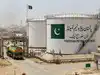
Pakistan plans oil reserves, storage push as Hormuz constraints expose vulnerabilities
Pakistan is proposing a bonded storage plan to boost its energy security by allowing international suppliers to hold petroleum stocks. The government aims to build strategic reserves, funded by a levy on fuel, and increase local supply capacity. This initiative comes as Pakistan lacks strategic petroleum reserves despite heavy reliance on Gulf imports.

Sri Lanka jolts markets with outsized 100-bp rate hike to counter Gulf crisis
Sri Lanka's central bank enacted a significant 100 basis point policy rate hike, its largest in four years, to combat rising inflation and a weakening rupee. This move comes as the nation grapples with soaring energy prices driven by the Middle East conflict, impacting economic growth and foreign reserves.

Taiwan overtakes India as world's 5th largest stock market
Taiwan's stock market has now surpassed India's in value. This shift is largely due to a strong performance by Taiwan Semiconductor Manufacturing Co. The island's market capitalization reached $4.95 trillion. India's market value stands at $4.92 trillion. This development highlights the significant impact of artificial intelligence on global markets and manufacturing hubs.

European Union's public debt to be on unsustainable path without action, IMF says
European Union nations face significant financial challenges in defence, energy, and pensions over the next 15 years. The International Monetary Fund warns that without action, public debt will become unsustainable. Reforms, consolidation, and potentially joint borrowing are suggested to manage these rising costs and ensure a stable financial future for the bloc.

India’s forex reserves fall by $8.09 bn to $688.89 bn as of May 15
India's foreign exchange reserves saw a significant drop of over eight billion dollars in the week ending May 15. Foreign currency assets and gold reserves contributed to this decline. Despite this weekly fall, the country's forex reserves remain higher compared to the previous year. The Reserve Bank of India actively monitors the market to manage currency fluctuations.

High hopes dashed: UK cost-of-living woes snare PM Starmer
Britons are unhappy with Prime Minister Keir Starmer's government. Cost of living worries are high. Economic problems persist since 2008. Recent global conflicts have worsened inflation. Food and fuel prices have increased significantly. Government measures aim to ease the burden. Slow productivity growth is a long-term challenge. Voters may lack patience for slow improvements.

Keeping close watch on supply shock, impact on inflation: RBI Guv Sanjay Malhotra
The Reserve Bank of India is watching global uncertainties closely. Governor Sanjay Malhotra stated the RBI is monitoring supply shocks. The central bank will act if price increases become widespread. India's monetary policy remains neutral, allowing flexibility. The RBI aims for price stability while managing short-term volatility. Future policy decisions will be data-dependent.

Taxes and Trump leave UK in a worse state than Starmer found it
Britain's Prime Minister Keir Starmer faces a tough economic climate. Inflation is rising, and living standards are not improving. Economic growth is expected to slow significantly. High mortgage rates and increased taxes on businesses are impacting the economy. Unemployment is nearing a post-pandemic high. The government's economic policies are under scrutiny amid these challenges.
Load More

