

Listen to this article in summarized format
×
Subscribe to

Unlock AI Briefing and Premium Content
New Year Offer 24 Hours Left
Subscribe NowAlready a member? Sign In
What's Included
- Exclusive Stories
- Daily ePaper Access
- Smart Market Tools
- Curated Investment Ideas
- Ad-lite Experience
Subscription

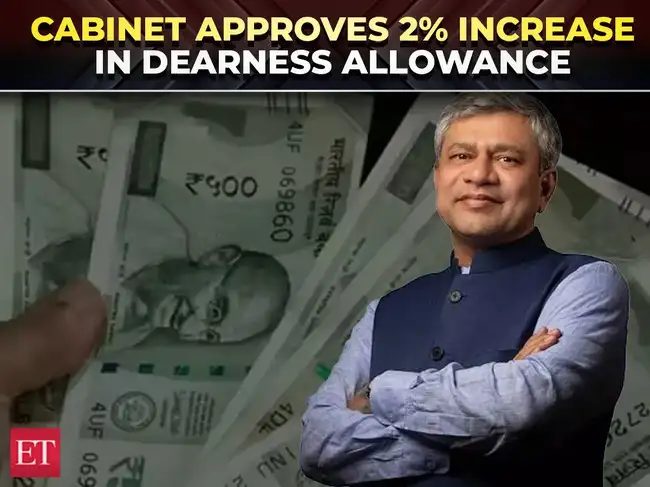
The Cabinet on Saturday approved a 2% increase in Dearness Allowance (DA) for central government employees, offering a modest boost to salaries even as broader demands on pay restructuring gather momentum.
The move comes against the backdrop of growing pressure from employee unions for sweeping changes under the proposed 8th Pay Commission. In a memorandum submitted to the government, the National Council–Joint Consultative Machinery (NC-JCM) has pitched for a significantly higher fitment factor of 3.83.
Also Read: 8th Pay Commission: Government staff seek Rs 69,000 minimum pay, DA merger proposal
The Cabinet has approved a 2% increase in Dearness Allowance (DA) and Dearness Relief (DR), taking the total to 60% of basic pay. The revised rates will be effective from January 1, 2026.
The hike is expected to benefit around 50.5 lakh central government employees and 68.3 lakh pensioners, offering a modest boost to incomes amid persistent inflation concerns.
According to official estimates, the financial implication of the increase will be approximately Rs 6,791 crore per year, adding to the government’s expenditure burden.
If accepted, the proposal could sharply raise the minimum basic pay from Rs 18,000 to around Rs 69,000, marking a substantial revision in the overall pay structure.
Numerous pensioners and employees had expressed their disappointment in the unprecedented delay over the hike. In response, one of the leading central government employees organisation had decided to hold a protest.
In a letter addressed to the Cabinet Secretary of India, the Confederation of Central Govt. Employees & Workers (CCGEW) stated that its affiliated organisations would be holding a lunch hour protest at all work places on April 16, 2026.
Also Read: DA hike delay: Central government employee body to hold protest over dearness allowance delay
Ever since the beginning of the 7th Pay Commission on January 1, 2016, the government has never delayed the DA hike announcement so long. It was expected by many employees that the Centre would announce it ahead of or a few days after Holi which fell on March 4, 2026, but they were yet to receive it.
(You can now subscribe to our Economic Times WhatsApp channel)
The move comes against the backdrop of growing pressure from employee unions for sweeping changes under the proposed 8th Pay Commission. In a memorandum submitted to the government, the National Council–Joint Consultative Machinery (NC-JCM) has pitched for a significantly higher fitment factor of 3.83.
Also Read: 8th Pay Commission: Government staff seek Rs 69,000 minimum pay, DA merger proposal
The Cabinet has approved a 2% increase in Dearness Allowance (DA) and Dearness Relief (DR), taking the total to 60% of basic pay. The revised rates will be effective from January 1, 2026.
The hike is expected to benefit around 50.5 lakh central government employees and 68.3 lakh pensioners, offering a modest boost to incomes amid persistent inflation concerns.

According to official estimates, the financial implication of the increase will be approximately Rs 6,791 crore per year, adding to the government’s expenditure burden.
If accepted, the proposal could sharply raise the minimum basic pay from Rs 18,000 to around Rs 69,000, marking a substantial revision in the overall pay structure.
Numerous pensioners and employees had expressed their disappointment in the unprecedented delay over the hike. In response, one of the leading central government employees organisation had decided to hold a protest.
In a letter addressed to the Cabinet Secretary of India, the Confederation of Central Govt. Employees & Workers (CCGEW) stated that its affiliated organisations would be holding a lunch hour protest at all work places on April 16, 2026.
Also Read: DA hike delay: Central government employee body to hold protest over dearness allowance delay
Ever since the beginning of the 7th Pay Commission on January 1, 2016, the government has never delayed the DA hike announcement so long. It was expected by many employees that the Centre would announce it ahead of or a few days after Holi which fell on March 4, 2026, but they were yet to receive it.
Add  as a Reliable and Trusted News Source
as a Reliable and Trusted News Source Add Now!
(You can now subscribe to our Economic Times WhatsApp channel)












 ETPrime Membership