
XPENG
China's Baidu launches AI model simulating road environment for robotaxis
Apollo World can generate "up to 100,000 km" (62,000 miles) of simulated driving daily, equivalent to about three years of real-world testing by a safety-driver-equipped autonomous vehicle, Baidu said. The system is capable of producing real-time multimodal data streams, such as camera and lidar observations, enabling self-driving systems to directly sense and navigate simulated environments.
Chinese EVs win over some in South Korea, but Japan is proving to be a rougher road
Chinese electric vehicle makers such as BYD are making inroads into South Korea, challenging established domestic brands with competitively priced models and growing dealership networks. BYD has sold more than 20,000 vehicles in the country in the first nine months of the year, overtaking Toyota and Lexus combined. Japan, however, has proved a tougher market due to low EV adoption, consumer preference for hybrids and scepticism towards Chinese brands.
Volkswagen bet on Xpeng to save its China business. It's not going to plan
Volkswagen’s ID. UNYX 08 electric SUV sold poorly, achieving only 267 units per month since its launch. The automaker initially aimed for 3,622 monthly sales but consistently missed this target. Local competitors have gained an advantage by offering advanced technology at lower prices, which has hindered Volkswagen's sales efforts. Despite these challenges, Volkswagen continues to pursue aggressive sales goals for the upcoming UNYX 09 sedan.
Europe’s auto giants learn from China as Volkswagen, Stellantis rethink EV strategy
Volkswagen and Stellantis are adapting their electric vehicle strategies by collaborating with Chinese automakers. Stellantis aims to improve its market position through partnerships with Leapmotor and Dongfeng. Volkswagen continues to focus on its strategies in China while exploring potential collaborations in Europe. Industry analysts note that the competition from Chinese electric vehicle makers is reshaping the European automotive landscape.

China's Xpeng plans to offer tech solutions to foreign automakers
The company plans to offer its electrical and electronic architecture, cockpit systems, Turing AI chips, and advanced-driver assistance software to other firms, the source said. Potential partners could also include foreign software developers and automobile suppliers.
Xpeng's robotics unit valued at over $6.3 billion after record funding round
The proceeds will be used to develop robotics hardware and software, train and refine physical AI models, collect high-quality data, build end-to-end mass-production facilities, and support global expansion, the company said. CEO He Xiaopeng announced in June that he would personally lead the robotics business.
- Go To Page 1
Tesla, eight other automakers recall record 4.3 million vehicles in China
Tesla and eight automakers are recalling 4.3 million vehicles in China. This recall addresses concerns about doors being difficult to open in emergencies. The remedies include software updates and improved warning labels for door handles. This action marks China's largest automotive recall to date. Regulators are increasing scrutiny of safety defects in the electric vehicle industry.

Xpeng boss to head robot unit with humanoid mass production imminent
The announcement follows market talk that Shi Xiaoxin, a core executive involved in the IRON project, had left the company earlier this month. Xpeng confirmed on Wednesday that Shi had resigned as senior director of robotics product planning, without giving further details.

China's Xpeng begins mass production of robotaxis in Guangzhou
Chinese electric vehicle maker Xpeng has started mass production of its first robotaxi. The company aims for fully driverless operations by early 2027. This move accelerates Xpeng's focus on driverless vehicles and robotics. Pilot robotaxi operations are planned for the second half of this year. Xpeng expects to produce hundreds to thousands of these robotaxis in the coming months.

China's global EV push reflects its ambition - and harsh economics at home
China's automotive industry is aggressively expanding overseas due to a saturated domestic market and a fierce price war. With a significant increase in car exports, companies like Xpeng are targeting global growth, aiming for over 50% of their revenue to come from outside China within a decade, including advanced technologies like flying cars and robotaxis.
China-based company kicks off trial production of flying cars, ahead of Tesla
Chinese firm Xpeng Aeroht has commenced trial production of its modular flying car, the "Land Aircraft Carrier," at the world's first intelligent factory for mass-produced flying cars. This move positions China ahead of competitors like Tesla and Alef Aeronautics in the burgeoning flying car market, with Xpeng targeting mass production and delivery by 2026.

'China Inside': How Chinese EV tech is reshaping global auto design
Global auto brands are now looking at Chinese technology for electric vehicles. Audi already built an EV using Chinese tech. Toyota and Volkswagen also have similar plans. Renault and Ford may develop global models using Chinese platforms. Chinese firms get revenue and global firms get technology. This helps them launch EVs faster amid a price war.

China's Xpeng revises up 2025 planned hires to 8,000, founder says
Xpeng, a Chinese electric vehicle make, plans to increase hires to 8,000 this year, up from 6,000, founder He Xiaopeng said in an internal speech. The expansion will bring its workforce close to 30,000, with many roles focused on smart driving and large AI models, reflecting the company's intensified push in advanced technologies.

Who is He Xiaopeng? Dubbed the Chinese Elon Musk, he has made Chinese cars outsmart the auto industry in the U.S. and EU
He Xiaopeng, dubbed the "Chinese Elon Musk," is making waves in the EV world with XPeng Motors. China's EV market is booming, with NEVs comprising 50% of sales and advanced driver-assist systems becoming increasingly common. While the US and Europe lag behind, He aims for XPeng to become a leading global EV exporter.

Elon Musk’s Tesla’s global market share drops: Fierce EV competition hits sales in Europe and China
Tesla’s global market share plunged in January 2025, driven by sharp sales declines in Europe and China. Meanwhile, rising competition from Chinese and European EV makers is reshaping the market landscape.
Paris Motor Show opens during a brewing EV trade war between the EU and China
Auto manufacturers at the Paris Motor Show are unveiling more affordable and tech-rich electric vehicles. Chinese firms like Leapmotor and XPeng showcased new models despite potential EU tariffs. Small EVs for teens and adults without licenses are growing in popularity. Citroen and Renault are among the European manufacturers highlighting these vehicles.
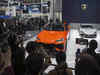
Car giants vie for EV crown at Beijing's Auto China show
Beijing's Auto China show, which lasts until May 4, sees dozens of firms square off in a bid to draw customers at one of the country's biggest car shows. Thursday saw crowds surge into the convention complex hosting the event, which takes place every other year but had not been held since 2020 because of the pandemic.
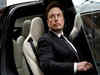
Elon Musk says Tesla's full self-driving may enter China very soon
Musk hints at soon launching FSD in China, as Xpeng upgrades ADAS to rival Tesla. Customer demand drives competition, awaiting feedback on Tesla's FSD. Xpeng competes fiercely with Tesla.
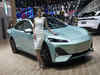
Chinese EV makers challenging market leaders at auto show in Bangkok
Chinese EV makers shine at Bangkok Motor Show with BYD leading sales. Thailand's growing EV market attracts global brands like Tesla and XPeng, with plans for EV assembly and expansion into Southeast Asia.

Xpeng to launch cheaper EV brand amid fierce China price competition
Models of the brand, to be launched within the next month, will be priced between 100,000 yuan and 150,000 yuan ($14,000-$21,000), Xpeng Chairman and CEO He Xiaopeng told an industry event in Beijing on Saturday, the company posted on its official WeChat account.

Volkswagen plans to launch entry-level electric vehicle by 2027
Volkswagen plans to launch the ID.1 electric vehicle by 2027, led by Schaefer with four project teams. The company aims for efficiency through cost-cutting, collaboration with Xpeng, and improved supply chains to enhance innovation and competitiveness.

Chinese EV maker Xpeng to hire 4,000, invest in AI
The additional employees would represent a 25% expansion of the Volkswagen-backed EV maker's workforce from the latest headcount of 15,829 at the end of 2022.

Alibaba trims stake in Chinese EV maker Xpeng for second time in December
The Chinese ecommerce giant had cut its holdings in Xpeng's Class A ordinary shares by about 6.5%, as of December 6.

Chinese electric carmaker BYD posts record quarterly profit
The Shenzhen-based firm posted a profit of 10.4 billion yuan ($1.42 billion) for the July-September period, its highest-ever earnings during a single quarter and up 82 percent on-year, a statement to the Hong Kong Stock Exchange showed.

China's Xpeng to acquire Didi's smart EV unit in deal worth up to $744 million
As part of the deal, which could be worth as much as $744 million, Xpeng will launch an A-class model next year under a new brand, currently called MONA, aiming to expand in the mass-market segment.

Abu Dhabi-backed firm to invest $740 million in Chinese EV maker Nio
Nio and peers Xpeng and Li Auto are among the companies competing to grab a larger EV market share in the world's largest automotive market dominated by BYD.

Watch: Chinese eVTOL 'flying car' makes first public flight in Dubai
Chinese electronic vehicle maker Xpeng Inc has carried out the first public flight of its "flying car" in Dubai, reports said

Chinese firm tests electric flying taxi in Dubai
The sleekly designed vehicle can carry two passengers and is powered by a set of eight propellers. The company says it has a top speed of 130 km (80 miles) per hour.
China to consolidate overcrowded electric vehicle industry
China has "too many" electric vehicle makers and the government will encourage consolidation, but will build charging infrastructure in the country’s rural areas to encourage electric car sales.
Load More

