
WORLD RESOURCES INSTITUTE

'An intelligence revolution is upon us. You have to disrupt yourself': Citibank Vice Chairman Viswas Raghavan
Viswas Raghavan shares his journey from Mumbai to leading Citi's banking operations in over 100 countries. He emphasizes the growth of Citi's corporate and investment banking services in India and globally. Raghavan reflects on the importance of emotional intelligence as he advanced in his career. He highlights the challenges facing global banks in retail banking and foreign investments in India.

Donald Trump, Xi Jinping and Vladimir Putin plan unprecedented joint meeting on APEC sidelines, White House and Kremlin say
Trump has warmly embraced Xi after coming to a truce in their short-lived trade war last year and in spite of differences over the U.S. war with Iran and other tensions between the world's foremost economic powers. Similarly, Trump has sought to build his relationship with Putin, even as the Russian leader has persisted in his nearly 5-year-old war with Ukraine and as Moscow has deepened its military, intelligence and diplomatic partnership with Iran.

Trump, Xi and Putin plan an unprecedented joint meeting on the sidelines of APEC, White House says
The three leaders may meet during the Asia-Pacific Economic Cooperation summit. This unprecedented summit is expected to focus on nuclear arms discussions and regional tensions. While no significant agreements are anticipated, the meeting symbolises their ongoing diplomatic engagements.

These large-, mid- and small-cap stocks have upside potential of more than 20% in 1 year, according to analysts
The probability of a sharp, damaging downturn now appears low, and the broad direction favours the market. So, the stance should be the same as in these past few weeks: Shedding fear, but cautiously optimistic. Focus on the business under the stock you are interested in, and keep one eye on what is happening globally.

India wants more factories, fabs and data centres. Where will the water come from?
India holds about 4% of global freshwater resources, while its demand is projected to double by 2030. The industrial sectors are increasingly vulnerable to water shortages, which may significantly affect growth plans and investments. Treatment of municipal wastewater presents a viable alternative for meeting industrial water needs and can create a new revenue source for urban areas.

India records 38% drop in TB deaths since 2015, outpaces global decline: WHO report
India has recorded a 38 percent reduction in tuberculosis mortality since 2015, surpassing the global decline rate. The treatment success rate of drug-susceptible TB patients stands at an impressive 94 percent. Key interventions include early detection, timely treatment, and community support through various initiatives. Technological innovations such as AI-enabled diagnostics have significantly strengthened the TB elimination efforts.

Jindal Power gets $470 million loan for Botswana project
Jindal Power Ltd. has acquired a $470 million loan to fuel its ambitious power project in Botswana. The financing is backed by three Indian banks, alongside participation from international institutional lenders. This initiative aligns with Jindal's previous international expansion efforts and leverages Botswana's extensive coal resources, which are essential for catering to local electricity requirements.

‘The Nvidia case can help us limit East India Company-like practices’
Stanford professor Fred Turner argues that Silicon Valley's culture, shaped by Cold War computing research and the 1960s counterculture, has evolved into a system where powerful technology leaders exercise influence with limited institutional checks.

India's water journey a model for developing nations: World Bank official
India's water management initiatives, including the Jal Jeevan Mission and Namami Gange Programme, are gaining international recognition. Senior officials at the World Bank have praised these efforts as models for developing countries. The upcoming United Nations Water Conference will highlight India's achievements and encourage knowledge sharing. India is actively preparing for the conference, emphasizing its role in global water security discussions.

Global climate talks open with big questions, smaller goals
Climate negotiators from nearly 200 countries are attending COP31 in Antalya, Turkey, to address rising global temperatures and emissions. The summit will focus on achieving existing commitments rather than making ambitious new goals amidst geopolitical tensions and financial constraints.

India's net-zero transition aim by 2070 offers $22.7 tn investment opportunity for global capital
India's push to achieve net-zero emissions by 2070 could unlock a $22.7 trillion investment opportunity across renewable energy, power grids, battery storage, green hydrogen and clean technologies, according to a report by Australian economist Nicki Hutley. The report estimates a $6.5 trillion funding gap, which will require international capital to bridge.
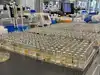
MIT scientists built over 400 tiny ecosystems with 12 to 20 bacterial species; after adding an outsider, the more changeable communities were easier to invade
Researchers at MIT have discovered that chaotic ecosystems easily accept new species while stable ones resist invasion. Conventional ecological beliefs suggest high biodiversity prevents invasions, but stability plays a crucial role. This finding has implications for the effectiveness of probiotic supplements in human gut microbiomes. Individuals with more stable guts may struggle to welcome beneficial probiotics. Future studies will further explore these dynamics and their relevance in wellness treatments.

Environmental groups embrace AI, even as they warn of data center impacts
Environmental organisations are increasingly leveraging artificial intelligence to enhance conservation efforts and analyze ecological data. Many express concerns about the environmental impact caused by data centers that support AI technologies. The energy and water consumption of these centers is projected to double by 2030, raising emissions concerns.

India progressing towards sending its first human deep-sea mission to depth of up to 6,000 metres by 2028: Jitendra Singh
Union Minister Jitendra Singh outlined India's plans for deep-sea exploration and human spaceflight during the Indo-Pacific Regional Dialogue 2026. India intends to conduct its first human deep-sea mission by 2028, reaching depths of up to 6,000 metres. The country focuses on enhancing its capabilities through collaboration among various scientific fields. The initiative reflects India's commitment to exploring and utilizing ocean resources strategically for economic benefits.
India elected as President of International Solar Alliance for third straight term: Pralhad Joshi
Addressing media at the summit, Joshi said, "At the ninth session of the ISA, we reaffirm a fundamental belief: progress becomes truly meaningful when its benefits are shared". He congratulated France on the occasion of being reelected co-President of the ISA.

US intelligence sharing has fractured under Trump, officials say
US intelligence sharing on Iran and other global threats has slowed or temporarily stopped under President Donald Trump, raising concerns about gaps in policymakers' understanding of national security risks. Tensions between the CIA and the Office of the Director of National Intelligence, staffing cuts and political interference have further weakened coordination across intelligence agencies.

South Eastern Coalfields files DRHP with SEBI for IPO; Coal India to offload 66.8 crore shares
Coal India subsidiary South Eastern Coalfields has filed its draft papers with SEBI for an IPO comprising an offer for sale of up to 66.81 crore shares. One of India’s largest coal producers, SECL reported higher revenue and profit and plans to list on the BSE and NSE.
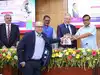
Assam signs Rs 600 crore deal for India's first state-run proton therapy centre
The Government of Assam has signed an agreement with IBA Particle Therapy India Pvt. Ltd. to establish a Proton Beam Therapy Centre. This facility will be the first of its kind in India, aiming to provide advanced cancer treatment. The project involves an investment of approximately Rs. 600 crore, with support from the World Bank. Specialised training will be provided to medical personnel for operating this advanced technology.

Jaishankar's Atlanta diplomacy: Quad meeting and several bilaterals on G20 sidelines
External Affairs Minister S Jaishankar has a busy schedule during the G20 Foreign Ministers' Meeting in Atlanta. He is expected to engage in discussions with multiple foreign ministers on trade, defense, and energy. Meetings with Canada and Brazil are crucial for redefining relationships and securing resources. Jaishankar will also address India's partnerships with European and East Asian nations.
Load More


