
WILDLIFE CONSERVATION

Indian popular tourist spot ranked in among World’s top 10 beaches. Check the list
Goa's Palolem Beach has secured the sixth position in the Global Beach Index 2026, becoming the only Asian beach in the global top 25. Known for its palm-lined bay, calm waters and beachside restaurants, it offers activities such as kayaking, paddleboarding and dolphin-watching trips. The list features 10 beaches across four continents.

Environmental groups embrace AI, even as they warn of data center impacts
Environmental organisations are increasingly leveraging artificial intelligence to enhance conservation efforts and analyze ecological data. Many express concerns about the environmental impact caused by data centers that support AI technologies. The energy and water consumption of these centers is projected to double by 2030, raising emissions concerns.

China's giant pandas make public debut at US zoo
Giant pandas Ping Ping and Fu Shuang have made their public debut at Zoo Atlanta after their arrival. The pandas were flown from Chengdu to Atlanta in September as part of a ten-year loan. Zoo Atlanta has renovated facilities to host the pandas, providing locally grown bamboo for their diet. The black-and-white mammals are considered vulnerable, with their population threatened by habitat loss and poaching.
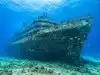
In 2024, the US military sank the 360-foot Monarch Countess weighing 2,743 tons; the retired vessel now rises 100 feet from the seafloor in 180 feet of water
The Monarch Countess, a roll-on/roll-off vessel, now rests serenely on the Gulf of Mexico's seabed. This ship, having been adapted for military tests and enticing tourists, has become a focal point for ecological studies. Research indicates that artificial reefs like the Countess support marine biodiversity. Continued observation will reveal its long-term influence on local fish populations, potentially transforming the area into a prime fishing and diving destination.
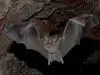
In 1990, a Texas family donated a cave to protect its bats; today, about 4 million female bats use it as a nursery each summer
A Texas family's vision for conservation transformed their cave into the Eckert James River Bat Cave Preserve in 1990, eschewing fertilizer extraction. Annually, about 4 million female Mexican free-tailed bats find refuge here, utilizing the site as their maternity colony during the crucial breeding season from May to September. Dedicated research and management initiatives strive to protect this critical habitat and deepen understanding of bat population dynamics.
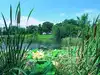
Two Iowa families donated adjoining properties totaling 21 acres for wildlife; the land was transferred to county conservation for public use
A heartwarming act in Pocahontas County, Iowa, sees neighbors John and Sally Pascal team up with Gail Ewan to donate land for a new 21-acre conservation area. Their contributions to the Iowa Natural Heritage Foundation are a testament to community spirit, ensuring the land remains untouched for wildlife and outdoor enjoyment. This initiative not only serves wildlife but also reinforces a legacy of conservation for the community's future.
- Go To Page 1
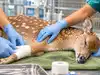
A couple helped fund a new hospital for rescued wildlife in Thailand; it opened in December 2025 to provide emergency treatment and ongoing care
A newly established wildlife hospital in Thailand aims to enhance medical care for rescued animals facing injuries and threats from exploitation or illegal wildlife trade. This state-of-the-art facility will cater to various needs, including emergency treatments and rehabilitation. Long-term care is also available for animals that cannot return to their natural habitat, highlighting the importance of ongoing funding to sustain its vital operations.

Royal Bengal Tigress 'Doors Rani' rescued after 100 km journey into Assam, safely returned to Buxa Tiger Reserve
Royal Bengal Tigress 'Doors Rani' was initially released into Buxa Tiger Reserve on October 2. After traveling over 100 km to Assam, she approached human settlements. Authorities monitored her movements through a radio collar, which indicated her proximity to humans. A coordinated rescue operation between West Bengal and Assam successfully brought her back to Bengal. The operations were conducted with support from local communities and the Assam government.

In California, researchers tracked desert tortoises in a protected area for 34 years; numbers fell from 589 to 47 by 2002, then rose to 73 by 2012
In California, desert tortoises have suffered an alarming 92% population decline, even within designated protected areas. Research attributes this drastic fall to diseases, predation, and environmental stressors, rendering protective measures inadequate. Although a slight recovery was noted by 2012, the overall trend indicates persistent decline, underscoring the urgent need for holistic conservation strategies to safeguard wildlife.

Vantara hosts EARAZA conference, puts data and technology at the heart of wildlife conservation
The four-day EARAZA Annual Conference 2026 at Anant Ambani’s Vantara in Jamnagar brought together 98 institutions from 30 countries. Vantara announced one year of free access to its ANTZ Software Platform, including its Open Data Exchange, for all EARAZA members.

In Washington, scientists excluded elk from rainforest plots for 36 years; shrubs became 5 to 6 times more abundant, while 46 plant species disappeared
A comprehensive study conducted over 36 years in Washington's Olympic Peninsula has unveiled striking insights into elk exclusion's impact on plant communities. Researchers found that while shrubs thrived, numerous smaller plant species vanished, underscoring the elk's critical role in promoting forest diversity through their feeding habits and behavior. These revelations challenge conventional views on herbivores, highlighting the importance of understanding ecological interactions for wildlife management and conservation efforts.

SC notices to Centre, Assam on Oil India plea on rejection of drilling proposal at national park
The Supreme Court has requested responses from the Ministry of Petroleum and Natural Gas regarding Oil India's proposal. This proposal involves hydrocarbon extraction through Extended Reach Drilling beneath Dibru-Saikhowa National Park. Oil India claims that the drilling will not harm the park's ecosystem while addressing energy needs.
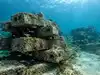
In 2026, Texas deployed 400 tons of concrete railroad ties off Port O’Connor; the material was arranged into two piles at an artificial reef site
In April 2026, Texas took a significant step by deploying 400 tonnes of concrete railroad ties to form two artificial reef piles. This project is designed to transform the flat bottom of the Gulf into a thriving habitat for marine life. Researchers are closely examining how these artificial reefs influence fish communities, with valid concerns about potential fish migration from other regions.
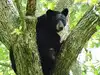
In 1992, Louisiana had as few as 150 black bears left; 30 years later, habitat restoration and relocations helped rebuild the population to about 750 bears
In the early 1990s, Louisiana black bears were on the brink of extinction due to habitat loss caused by human development. Thanks to dedicated conservation efforts, their numbers have rebounded from a mere 150 to approximately 750. Strategies like establishing interconnected forests and relocating bears have been vital to enhancing genetic diversity.

"Sink the idea": Mumbai sweats over a sea plan that intitially made waves but is now causing ripples of worry
Light pollution is already recognised as a global environmental and public health concern. Research has linked artificial light to sleep disturbances, mood disorders and higher risks of obesity and cardiovascular diseases in humans. It can also alter plant growth and interfere with animals' natural behaviour and ecological relationships.
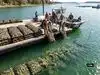
Amid layoff news, how 7 million oysters saved 1,000 jobs and environment in US
More than 7 million oysters have helped protect over 1,000 aquaculture and related jobs in the US while supporting marine conservation. The Supporting Oyster Aquaculture and Restoration (SOAR) programme was launched in 2020 after the COVID-19 pandemic left oyster farmers with large quantities of unsold shellfish. According to The Pew Charitable Trusts, the initiative has purchased oysters from over 150 growers, supported 35 restoration sites across eight US states and helped restore more than 60 acres of native oyster reefs.
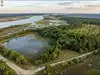
Cox Enterprises conservation deal: Why 4,400 acres at South Carolina's Clarendon Farms will remain wild
Cox Enterprises has successfully safeguarded approximately 4,400 acres in Clarendon Farms, South Carolina. This pivotal conservation initiative, announced in March 2026, aims to protect freshwater wetlands, lush forests, and vital wildlife habitats while curbing any imminent development. Renowned organisation Ducks Unlimited will manage the easement to ensure the area's environmental integrity, showcasing the essential need for safeguarding interconnected ecosystems against escalating urban expansion.
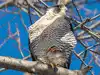
Beginning in 1974, North American conservationists released more than 6,000 captive-bred peregrine falcons; by the late 1990s, at least 1,650 breeding pairs had been restored
Once teetering on the brink of extinction in North America due to harmful pesticides and loss of natural habitats, the peregrine falcons have made a remarkable comeback. With dedicated conservationists implementing strategies such as captive breeding and urban nesting, these magnificent birds thrived, leading to their delisting as endangered in 1999. This inspiring success story underscores the crucial role of ongoing research and long-term conservation efforts in restoring wildlife communities.

Torrent Power says 3,000-MW Karjat pumped storage project outside Bhimashankar Sanctuary
The company in a statement said the project, which will supply power to Maharashtra, would support grid stability as the share of solar and other renewable energy rises, while reducing reliance on coal-fired generation during evening peak hours. It also rejected reports of tree felling inside the sanctuary, describing them as based on incorrect information.

In 1968, the 440-foot Amaryllis became an artificial reef off Palm Beach County in roughly 82 feet of water; reef divers later recorded 136 fish species in 15 surveys
The Amaryllis, once a freighter, now rests as an artificial reef after running aground near Palm Beach, lying about 80 feet underwater. Surveys have revealed 136 distinct fish species thriving around the wreck. Ongoing research aims to evaluate whether artificial reefs can replicate the essential benefits provided by natural reefs, illustrating the ecological value of human-constructed underwater habitats.

Apple invests in 14,000 acres of California redwood forest; How tech giant is helping restore wildlife habitats
Apple has collaborated with The Conservation Fund to revitalise 14,000 acres of coastal redwood forest in California. This ambitious project aims to safeguard ecosystems while benefiting wildlife, enhancing carbon storage, and enriching local communities. It plays a vital role in Apple’s commitment to achieving carbon neutrality by 2030, as the ongoing monitoring of forest growth is intended to generate carbon credits, aiding in the reduction of emissions.
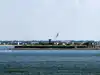
In 2020, Virginia created temporary seabird nesting habitat at Fort Wool and nearby barges; by 2021, royal tern nests there numbered up to 6,283
South Island, once a vital breeding ground for seabirds, suffered degradation due to construction activities. In a remarkable turn of events, Fort Wool was repurposed into a temporary haven for these birds. They adapted swiftly, leading to the establishment of thousands of nests and successful chick rearing. This project exemplifies how habitat restoration can thrive even amid development, offering a promising blueprint for future coastal conservation efforts facing habitat decline.

Marco Rubio meets Adani, Tata chiefs before heading to Jamnagar for Reliance refinery visit
US Secretary of State Marco Rubio met Adani Group chairman Gautam Adani and Tata Sons chairman N Chandrasekaran in Mumbai before travelling to Jamnagar to visit Reliance Industries' oil refinery, Vantara and its planned clean-energy manufacturing complex. The visit comes as India and the US explore deeper cooperation in energy, manufacturing and technology.

Over 30,000 species face critical danger: Amazon's Jeff Bezos backs $500 million wildlife plan, but one key detail is missing
Launched at the UN Biodiversity Conference, the New Species Recovery Alliance has garnered a substantial pledge of $500 million. This collaborative initiative, involving nine organizations including the Bezos Earth Fund, is set to combat species extinctions and facilitate the recovery of endangered species globally. With over 31,000 species facing extinction, urgent conservation measures are more crucial than ever, as the alliance partners with local groups to develop effective recovery strategies.
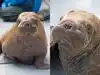
Baby walrus found between 2 dead adults in Alaska survives 3-day Arctic storm and polar bears; but his new life comes at a cost. He can never return home now
A baby Pacific walrus found between the bodies of two dead adults on a remote Alaskan beach survived a three-day Arctic storm with polar bears nearby after rescuers Violet Anniskett and Tony Fischbach sheltered him in an abandoned building. Named Annautaq, the calf was taken to the Alaska SeaLife Center in Seward, where he received treatment for dehydration and minor wounds.
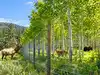
USDA scientists fenced 1 hectare of aspen against elk but allowed deer, bears and other animals through; within 1 year, protected trees gained 14.5 cm more height
Research on a ranch in Colorado highlighted the effectiveness of a unique fence in fostering the growth of young aspens. It successfully kept elk at bay for four years while still allowing smaller creatures like deer and bears access. This resulted in a notable increase in the height of protected aspens, indicating that successful ecosystem preservation can be achieved without entirely excluding larger wildlife, ensuring that biodiversity thrives.
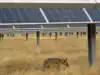
California’s endangered fox is surviving inside solar farms; how a small gap in the fence could help save them
The San Joaquin kit fox has adapted to residing alongside solar panels in California’s San Joaquin Valley. Researchers discovered that a purposely designed gap in the fencing permits safe access for the foxes while keeping larger predators at bay. Their studies indicate that the survival rates and home ranges of these foxes are comparable to those in nearby habitats, highlighting the viability of renewable energy coexistence with wildlife.
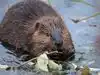
Beavers in Switzerland built dams in 16 streams that were disturbed by humans. Their hard work slowed down water and helped restore aquatic wildlife
Beavers are transforming human-altered streams across Switzerland by building dams that create new habitats for aquatic wildlife. A study of 16 streams found that their activity boosted biodiversity, benefiting species such as amphibians, dragonflies, aquatic plants and plankton. However, the gains varied depending on land use and local conditions, highlighting how beavers could help restore damaged waterways beyond natural wilderness areas.
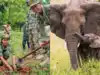
Angelina Jolie’s foundation spent 20 years protecting 150,720-acre Cambodian forests; rangers saved nearly 142 species from wire snares
Over twenty years ago, Angelina Jolie launched the Maddox Foundation to promote conservation in Cambodia. Focusing on the vital Samlout forest, the foundation protects endangered species such as Asian elephants and Sunda pangolins. Dedicated rangers strive to remove dangerous snares and fight against illegal activities. Despite being officially protected, this region faces daunting deforestation issues. Local engagement and stringent law enforcement remain key to preserving this crucial habitat.
Load More

