
WILDLIFE BEHAVIOUR STUDY
How did hippo dung turn an African river into a death trap for fish? Scientists explain
Hippo dung usually provides nutrients that help support life in African rivers. But scientists found that the situation changes when rivers begin drying up. A 2018 study in Tanzania found that dung accumulating in isolated pools was reducing oxygen levels and making survival difficult for fish.

In Idaho's Pioneer Mountains, scientists installed loudspeakers near quiet streams to mimic roaring whitewater rivers; their experiment across 20 sites revealed how natural noise influences where birds and bats live
Researchers had installed loudspeakers on towers near quiet streams. They played recordings of naturally roaring whitewater rivers. The equipment was powered by solar panels and batteries. Researchers had chosen 20 sites. They made measurements over the course of two breeding seasons. At half of these, they used the existing river noises, and in the remaining sites, researchers placed speakers that projected the sounds of a whitewater rapids.
Indiana's river otters had nearly vanished; starting in 1995, wildlife officials released 303 into rivers, and decades later, the species was reported across the state
After more than five decades, river otters have made a triumphant comeback in Indianapolis, thanks to the Indiana Department of Natural Resources, which reintroduced 303 otters from Louisiana. This lively resurgence has seen otters thriving across all counties in Indiana, showcasing effective wildlife management. However, with stability comes regulation, as some areas now permit trapping, prompting discussions on the delicate balance between conservation and resource management.
In 2024, 1,865 volunteers reviewed underwater videos; cameras recorded 4 fish species missed by traditional traps
The Where's Walleye? project showcases how researchers leveraged traditional fish traps and high-tech underwater cameras to refine fish survey methods. With assistance from 1,865 citizen scientists, the project analyzed video footage to identify diverse fish species. Remarkably, the underwater cameras uncovered four species previously missed by conventional techniques, enhancing our comprehension of aquatic ecosystems and aiding in rare species monitoring.
Florida brought in Old World climbing fern as an ornamental; the vine later smothered more than 100,000 acres and can carry ground fires into tree canopies
Once admired for its ornamental beauty, the old world climbing fern has now wreaked havoc on Florida's ecosystems. This invasive plant grows rampantly, enveloping trees and choking out native flora, while also altering fire dynamics. The heightened fire risk threatens tree vitality and wildlife habitats, complicating management efforts. Although options like herbicides and physical removal exist, these methods face challenges in less accessible areas.
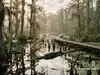
A two-feet “leopard eel” was hiding in US swamps; Scientists took years to identify it
An eel-like animal with spotted markings and frilly gills had been turning up in Florida and Alabama waters for years. In 2018, scientists described it as the reticulated siren, a salamander and a species new to science. Its identification relied on a 1970 museum specimen, years of fieldwork and DNA analysis.
- Go To Page 1
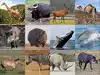
When US national parks closed in 2020, scientists tracked 229 mammals in 14 parks; animals near developed areas began using those spaces differently from before
Recent research reveals that the temporary closure of US National Parks led to notable shifts in wildlife behavior. During the pandemic lockdown, certain animals, like wolves and mountain goats, avoided human interactions. However, parks that became busier saw mule deer and red foxes engaging more with human spaces. This study sheds light on how diverse species adapt differently to human presence within these protected areas.

"Sink the idea": Mumbai sweats over a sea plan that intitially made waves but is now causing ripples of worry
Light pollution is already recognised as a global environmental and public health concern. Research has linked artificial light to sleep disturbances, mood disorders and higher risks of obesity and cardiovascular diseases in humans. It can also alter plant growth and interfere with animals' natural behaviour and ecological relationships.
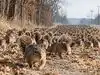
In 1968, 20 million squirrels suddenly began migrating across America. The mass exodus confused scientists but the answer was in what happened a year before
In 1968, millions of squirrels suddenly flooded roads, crossed lakes and abandoned their usual habitats across America, leaving scientists scrambling for answers. Some estimates put their numbers at 20 million, but the reason behind this extraordinary movement was not what many people expected. As researchers investigated the bizarre phenomenon, they uncovered a surprising connection to what had happened in the forests just a year earlier.
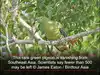
This rare green pigeon is vanishing from Southeast Asia. Scientists say fewer than 500 may be left
New research indicates the Timor green pigeon population is declining rapidly, with estimates suggesting fewer than 500 exist. Hunting and habitat loss are the primary threats, which have restricted them to Lautem district in Timor-Leste. Despite being classified as endangered since 2000, conservation efforts remain insufficient to halt their decline. The bird is now considered functionally extinct in Indonesia, making Timor-Leste vital for conservation.
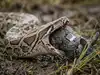
Florida researchers used 90 robotic rabbits to catch Burmese pythons. What happened next even scientists couldn't believe
Researchers in Florida's Everglades have turned to creativity in their fight against invasive Burmese pythons by designing robotic rabbits. These high-tech devices mimic the natural movement and warmth of real rabbits, making them better at attracting the elusive snakes. With remote control features and alert systems, these robotic entities promise to transform how these invasive species are monitored, potentially reshaping Florida's wildlife management landscape.
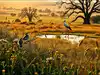
Isabella Tree used free-roaming animals instead of intensive farming to revive soils; the result transformed 3,500 acres into a wildlife haven with 13 bat species
Once a struggling farm, the Knepp Estate is now a vibrant wildlife sanctuary thanks to the move away from intensive agriculture. Stretching over 3,500 acres, this rewilding endeavor has attracted a plethora of rare species, bringing back various birds and bats to the area. Additionally, this innovative approach has generated new jobs and income streams, encouraging other farmers to consider rewilding as a sustainable farming alternative.
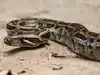
Florida doesn't know where invasive giant Burmese pythons are hiding in the Everglades. So scientists are following the males
In Florida, scientists are cleverly using male Burmese pythons equipped with transmitters to track down their breeding groups. These males lead researchers to reproductive females—the primary targets for culling and controlling this invasive species. One season alone saw the removal of 86 large pythons, showcasing how understanding natural instincts can effectively tackle ecological challenges.
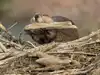
In 2019, 2 beavers were released in Yorkshire’s Cropton Forest. 5 years later, 6 dams are slowing floodwaters and reviving wildlife
A five-year experiment in North Yorkshire shows how beavers can reshape ecosystems while helping manage floodwater. Two beavers built six dams in Cropton Forest, creating wetlands and boosting habitats for plants, amphibians, mammals and insects. Researchers found the dams reduced peak water flows by nearly half, highlighting how natural engineering could complement wider flood-management and restoration efforts.
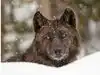
In 1995, 31 grey wolves returned to Wyoming's Yellowstone Park; decades later, 9 beaver colonies are thriving as willow forests recover and erosion risks fall
In 1995, wildlife experts decided to reintroduce the grey wolf in Yellowstone Park, Wyoming. What followed was nothing short of a miracle. It did not just have a positive impact on the beaver population but also transformed the vegetation and the ecosystem altogether. Waterways changed, vegetation sprouted again, and long-struggling species found new chances to flourish.
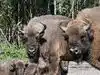
This giant animal once vanished from Britain 6,000 years ago. Now it is back as a ‘forest engineer’
European bison have returned to Britain after being absent for around 6,000 years, with conservationists releasing them into Kent’s woodlands through the Wilder Blean project. The animals are known as ecosystem engineers because their grazing, browsing, bark stripping, trampling and dustbathing reshape woodland habitats. Their natural behaviour can create conditions that benefit plants, insects, birds and other wildlife.
In 2021, researchers found 52% fewer moth caterpillars beneath LED; lit hedgerows than nearby unlit ones, an overlooked cost of brighter nights
New research indicates whiter LED streetlights significantly reduce insect populations. These lights are more detrimental to moth caterpillars than older sodium bulbs. Studies found lower caterpillar numbers under LED lighting compared to unlit areas. This impact is expected to affect other species dependent on insects for food. Authorities can mitigate harm by modifying LED intensity and light spectrum.
Psychology says celebrities who care about ecological restoration may be seeking more than just environmental change
Psychology suggests that when celebrities care about ecological restoration, the story may not be only about trees, oceans or endangered species. It can also be about identity, meaning, belonging, responsibility and the human desire to leave something better than we found it.

Nepal’s farmers carved farms into the Himalayas, but now this growing problem is destroying their harvests and triggering a wildlife crisis
Nepal’s farmers are increasingly struggling with crop damage caused by rhesus macaques and other wildlife. Rural migration has left fewer people available to protect valuable agricultural harvests, while macaques can consume nearly half of some farmers’ maize crops each year. Changes in habitat and limited natural food sources may be driving the animals towards farmland. Addressing the problem will require solutions that take into account wildlife conservation, agricultural livelihoods and rural migration.
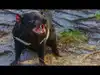
They disappeared from mainland Australia 3,000 years ago; now Tasmanian devils are breeding again, with conservationists hoping their return will reshape ecosystems and suppress predators
Tasmanian devils, absent from mainland Australia for 3,000 years, have been reintroduced. Conservationists aim to restore their ecological role and control invasive species. A disease has devastated wild Tasmanian devil populations, making mainland breeding crucial. These reintroduced devils could help manage foxes and cats in their new environment. This rewilding project seeks to restore natural pest control mechanisms.

In 2026, scientists tracked 4,581 animals across 37 species; more than 65% changed their behaviour simply when humans were nearby
Researchers tracking 4,581 animals across 37 species in the US found that more than 65% changed how they used space when humans were nearby. The Science study used animal GPS records and anonymised cellphone data during COVID-19 lockdowns to separate the impact of people from permanent landscape changes, finding that species responded differently and were often more sensitive to humans in less-developed areas.

COVID lockdowns accidentally created an experiment scientists could never have deliberately run: What happens when the roads and buildings stay, but the people disappear?
The COVID-19 lockdowns accidentally created a rare real-world experiment for scientists, as human activity suddenly dropped while roads, buildings and cities remained unchanged. Studies from the US and India found that wildlife responded to the change in human presence in different ways, while researchers also recorded sharp drops in urban noise and seismic activity.
Scientists Are Decoding the Strategies Animals Use to Survive Climate Change
Understanding animal behaviour in the wild is crucial for species survival and adaptation. Behavioral ecology, now interdisciplinary with genetics and neurobiology, uses advanced tech to track animals. This field is vital for conservation, tackling biodiversity loss and climate change, and even designing wildlife-friendly cities. It offers insights into life's adaptability in challenging environments.

Chimpanzees caught copying human habits in bizarre new 'fashion trend', scientists stunned by viral primate culture
Chimpanzees at a Zambian wildlife sanctuary have developed a unique "fashion trend" of dangling grass or sticks from their ears, and even inserting twigs into their rectums. Researchers believe this behavior, originating from observing human caregivers, spread through social learning. This highlights chimpanzees' capacity for adopting behaviors through observation and imitation, demonstrating a form of culture within their community.
Global warming causing wild animals to give birth earlier: Study
Researchers have found some of the first evidence that global warming is causing wild animals to give birth earlier in the year, a discovery that sheds more light on the impact of the climate crisis on wildlife.
Indian grey hornbills make nests early this year
Indian grey hornbills, the birds that nest in cervices of trees have shown a remarkable change in their nesting behavior in the city. This year the birds have built their nests a much earlier.

HP to launch snow leopard research, conservation facility in Spiti
"However, the Mongolian habitat differs considerably from the Himalayan ones.A primary difference is: while the former is mostly between 1,000m and 2,500m, the latter are mostly above 3,200m," they added.
Striped hyenas prefer their privacy
Human presence can affect wildlife behaviour and even alter their basic instincts. A study on striped hyena by a team of Bangalore-based researchers is a case in point.

It's the tale of a tiger, two tigresses in wilds of Sariska
With the release of the second tigress in Sariska reserve in Rajasthan, wildlife experts are curiously watching the "relationship" the new inmate will share with the relocated big cat couple already wandering in the habitat.
Load More

