
WILDLIFE
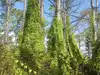
Florida brought in Old World climbing fern as an ornamental; the vine later smothered more than 100,000 acres and can carry ground fires into tree canopies
Once admired for its ornamental beauty, the old world climbing fern has now wreaked havoc on Florida's ecosystems. This invasive plant grows rampantly, enveloping trees and choking out native flora, while also altering fire dynamics. The heightened fire risk threatens tree vitality and wildlife habitats, complicating management efforts. Although options like herbicides and physical removal exist, these methods face challenges in less accessible areas.

Indian popular tourist spot ranked in among World’s top 10 beaches. Check the list
Goa's Palolem Beach has secured the sixth position in the Global Beach Index 2026, becoming the only Asian beach in the global top 25. Known for its palm-lined bay, calm waters and beachside restaurants, it offers activities such as kayaking, paddleboarding and dolphin-watching trips. The list features 10 beaches across four continents.

World's largest penguin colony loses 63% of its Penguins; scientists say climate change is to blame, not volcano
Zavodovski Island, located in the frigid reaches of Antarctica, has witnessed a staggering decline of nearly two-thirds in its breeding chinstrap penguin population since 2011. Researchers attribute this worrying trend to environmental changes and rising ocean temperatures. In contrast, macaroni penguins have thrived, experiencing a 28% increase in numbers, highlighting a shift in biodiversity.

Environmental groups embrace AI, even as they warn of data center impacts
Environmental organisations are increasingly leveraging artificial intelligence to enhance conservation efforts and analyze ecological data. Many express concerns about the environmental impact caused by data centers that support AI technologies. The energy and water consumption of these centers is projected to double by 2030, raising emissions concerns.

China's giant pandas make public debut at US zoo
Giant pandas Ping Ping and Fu Shuang have made their public debut at Zoo Atlanta after their arrival. The pandas were flown from Chengdu to Atlanta in September as part of a ten-year loan. Zoo Atlanta has renovated facilities to host the pandas, providing locally grown bamboo for their diet. The black-and-white mammals are considered vulnerable, with their population threatened by habitat loss and poaching.

'Ability, confidence, education, not minority identity': Family of Saba Haider on US poll victory
Saba Haider, an Illinois House representative, secured a significant victory in the recent elections. Her family in Uttar Pradesh celebrated the achievement, highlighting the importance of education and public service. Saba's journey included a gold medal in Wildlife Science from Aligarh Muslim University before moving to the US. She previously ran unsuccessfully for the DuPage County Board before winning her current position.
- Go To Page 1

In 2024, the US military sank the 360-foot Monarch Countess weighing 2,743 tons; the retired vessel now rises 100 feet from the seafloor in 180 feet of water
The Monarch Countess, a roll-on/roll-off vessel, now rests serenely on the Gulf of Mexico's seabed. This ship, having been adapted for military tests and enticing tourists, has become a focal point for ecological studies. Research indicates that artificial reefs like the Countess support marine biodiversity. Continued observation will reveal its long-term influence on local fish populations, potentially transforming the area into a prime fishing and diving destination.

Why Is an Owl Considered Lucky on Diwali? The Surprising Connection With Goddess Lakshmi
The owl holds an unusual place in Hindu tradition. Known as the vahana or vehicle of Goddess Lakshmi, it is associated with wealth, prosperity and good fortune. This connection has also given rise to the belief that spotting an owl on Diwali is an auspicious sign. But why was this nocturnal bird linked to the Goddess of Wealth, and what does the tradition actually mean?

Food delivery worker from UP gets 20 years in jail for abducting, raping 6-year-old girl
A 25-year-old food delivery worker was sentenced to 20 years in prison for abducting a six-year-old girl. The crime occurred while the child was playing near a brick kiln in Sikandrabad. The accused offered her biscuits and took her away on his motorcycle on February 8, 2025. Following an investigation, he was arrested on February 12, 2025, and later convicted.

From UP to US politics: Who is Saba Haider, Ghaziabad woman who studied at Holy Child School and AMU, got elected to Illinois House
Ghaziabad woman wins elections in US: Saba Haider, a former Holy Child School student from Ghaziabad and Alighrh Muslim University (AMU) gold medallist, has won the Illinois House election in the US. Married to Bulandshahr-born Ali Kazmi, she moved to America in 2007 and transitioned from a yoga instructor to a politician.

Ghaziabad to Chicago: How a UP yoga instructor and AMU gold medallist won an Illinois House seat in US elections
Saba Haider, a yoga instructor from Ghaziabad and gold medallist in wildlife sciences from Aligarh Muslim University, has won an Illinois House seat in the US. From teaching yoga in Chicago to entering electoral politics, her journey has taken her from Uttar Pradesh to American public life.

First South Asian woman in state's General Assembly takes the seat; India-born Saba Haider wins Illinois House seat
Saba Haider won a seat in the Illinois House of Representatives during the November 3 mid-term elections. She secured 70.9 per cent of the votes against her Republican opponent, Brian Scopa. Haider previously served on the DuPage County Board and focussed her campaign on affordable healthcare and education. Her victory is significant as she is the first South Asian woman in the state's General Assembly.

Big tech, green groups in talks over data center guardrails
The "Responsible Data Center Collaborative" counts Google, Meta, Microsoft, Oracle, Amazon, Nvidia and Anthropic among its members, alongside environmental stalwarts the Natural Resources Defense Council (NRDC), World Wildlife Fund (WWF) and Sierra Club.
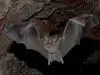
In 1990, a Texas family donated a cave to protect its bats; today, about 4 million female bats use it as a nursery each summer
A Texas family's vision for conservation transformed their cave into the Eckert James River Bat Cave Preserve in 1990, eschewing fertilizer extraction. Annually, about 4 million female Mexican free-tailed bats find refuge here, utilizing the site as their maternity colony during the crucial breeding season from May to September. Dedicated research and management initiatives strive to protect this critical habitat and deepen understanding of bat population dynamics.
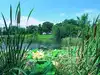
Two Iowa families donated adjoining properties totaling 21 acres for wildlife; the land was transferred to county conservation for public use
A heartwarming act in Pocahontas County, Iowa, sees neighbors John and Sally Pascal team up with Gail Ewan to donate land for a new 21-acre conservation area. Their contributions to the Iowa Natural Heritage Foundation are a testament to community spirit, ensuring the land remains untouched for wildlife and outdoor enjoyment. This initiative not only serves wildlife but also reinforces a legacy of conservation for the community's future.
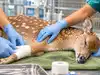
A couple helped fund a new hospital for rescued wildlife in Thailand; it opened in December 2025 to provide emergency treatment and ongoing care
A newly established wildlife hospital in Thailand aims to enhance medical care for rescued animals facing injuries and threats from exploitation or illegal wildlife trade. This state-of-the-art facility will cater to various needs, including emergency treatments and rehabilitation. Long-term care is also available for animals that cannot return to their natural habitat, highlighting the importance of ongoing funding to sustain its vital operations.
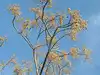
In 1830, chinaberry was introduced to the US as an ornamental tree; it later spread into forests across the South
Chinaberry trees, initially brought to the Southern U.S. in the 1830s for their beauty, have proliferated extensively. These invasive species create dense thickets that block sunlight, hindering the growth of native plants in ecosystems across Georgia and South Carolina. This situation underscores the urgency of managing ornamental plants wisely, emphasizing the need for vigilant monitoring and prompt removal to protect the health of our forests.

Florida planted Australian pine for shade, windbreaks, and storm protection; by 1993, the fast-growing tree had invaded more than 372,000 acres
Australian pines were brought to Florida in the 1800s as a means of protecting against storms and enhancing landscapes. By 1993, however, these trees had taken over more than 372,000 acres, leading to harmful impacts on local ecosystems through monocultures. A study following Hurricane Andrew revealed that merely 4% of these trees withstood the severe winds, exposing their shallow root problems.

India leads on non-animal testing and its draft lab animal rules threaten to undo that
India's draft Prevention of Cruelty to Animals Rules 2026 proposes significant changes to animal research regulations and oversight. It allows for harsher experimental practices that could cause severe suffering to animals. Local committees would gain power to approve experiments without thorough central review, raising concerns about ethical standards. This shift contradicts the existing legal framework established by the Prevention of Cruelty to Animals Act 1960.

In California, researchers tracked desert tortoises in a protected area for 34 years; numbers fell from 589 to 47 by 2002, then rose to 73 by 2012
In California, desert tortoises have suffered an alarming 92% population decline, even within designated protected areas. Research attributes this drastic fall to diseases, predation, and environmental stressors, rendering protective measures inadequate. Although a slight recovery was noted by 2012, the overall trend indicates persistent decline, underscoring the urgent need for holistic conservation strategies to safeguard wildlife.

Vantara hosts EARAZA conference, puts data and technology at the heart of wildlife conservation
The four-day EARAZA Annual Conference 2026 at Anant Ambani’s Vantara in Jamnagar brought together 98 institutions from 30 countries. Vantara announced one year of free access to its ANTZ Software Platform, including its Open Data Exchange, for all EARAZA members.

In Washington, scientists excluded elk from rainforest plots for 36 years; shrubs became 5 to 6 times more abundant, while 46 plant species disappeared
A comprehensive study conducted over 36 years in Washington's Olympic Peninsula has unveiled striking insights into elk exclusion's impact on plant communities. Researchers found that while shrubs thrived, numerous smaller plant species vanished, underscoring the elk's critical role in promoting forest diversity through their feeding habits and behavior. These revelations challenge conventional views on herbivores, highlighting the importance of understanding ecological interactions for wildlife management and conservation efforts.

SC notices to Centre, Assam on Oil India plea on rejection of drilling proposal at national park
The Supreme Court has requested responses from the Ministry of Petroleum and Natural Gas regarding Oil India's proposal. This proposal involves hydrocarbon extraction through Extended Reach Drilling beneath Dibru-Saikhowa National Park. Oil India claims that the drilling will not harm the park's ecosystem while addressing energy needs.

2000 wild deer, 2 helipads, luxury lodges: Inside Kanye West’s $14.495 million Wyoming ranch. Why he sold the 6,713 acres estate after 6 years
Kanye West was once the proud owner of the Bighorn Mountain Ranch in Wyoming, acquired for $14.495 million. Spanning an impressive 6,713 acres, this sprawling estate boasts natural beauty with lodges and diverse wildlife. In September 2025, West returned the ranch to its original owners, Greg and Pam Flitner, with sale documents officially notarized on September 17, highlighting a strategic move within his extensive real estate ventures.
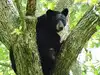
In 1992, Louisiana had as few as 150 black bears left; 30 years later, habitat restoration and relocations helped rebuild the population to about 750 bears
In the early 1990s, Louisiana black bears were on the brink of extinction due to habitat loss caused by human development. Thanks to dedicated conservation efforts, their numbers have rebounded from a mere 150 to approximately 750. Strategies like establishing interconnected forests and relocating bears have been vital to enhancing genetic diversity.
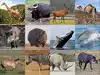
When US national parks closed in 2020, scientists tracked 229 mammals in 14 parks; animals near developed areas began using those spaces differently from before
Recent research reveals that the temporary closure of US National Parks led to notable shifts in wildlife behavior. During the pandemic lockdown, certain animals, like wolves and mountain goats, avoided human interactions. However, parks that became busier saw mule deer and red foxes engaging more with human spaces. This study sheds light on how diverse species adapt differently to human presence within these protected areas.
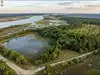
Cox Enterprises conservation deal: Why 4,400 acres at South Carolina's Clarendon Farms will remain wild
Cox Enterprises has successfully safeguarded approximately 4,400 acres in Clarendon Farms, South Carolina. This pivotal conservation initiative, announced in March 2026, aims to protect freshwater wetlands, lush forests, and vital wildlife habitats while curbing any imminent development. Renowned organisation Ducks Unlimited will manage the easement to ensure the area's environmental integrity, showcasing the essential need for safeguarding interconnected ecosystems against escalating urban expansion.
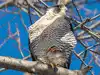
Beginning in 1974, North American conservationists released more than 6,000 captive-bred peregrine falcons; by the late 1990s, at least 1,650 breeding pairs had been restored
Once teetering on the brink of extinction in North America due to harmful pesticides and loss of natural habitats, the peregrine falcons have made a remarkable comeback. With dedicated conservationists implementing strategies such as captive breeding and urban nesting, these magnificent birds thrived, leading to their delisting as endangered in 1999. This inspiring success story underscores the crucial role of ongoing research and long-term conservation efforts in restoring wildlife communities.
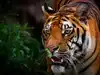
Teddy tigers and preserved embryos: Museum in Corbett tries to keep them 'alive'
Nestled close to Jim Corbett Park, a fascinating museum features detailed taxidermy models of tigers alongside other wildlife. These striking replicas narrate the complex stories of human-animal interactions throughout history, showcasing both peaceful cohabitation and fierce conflicts. Highlights include creatures who died naturally and those labeled as dangerous. The exhibits serve to educate visitors, especially children, on the vital need for wildlife conservation in Uttarakhand.
Load More

