
WATER RECYCLING TECHNOLOGIES

India wants more factories, fabs and data centres. Where will the water come from?
India's ambition to become a developed nation by 2047 is constrained by growing water resource challenges. Industries across sectors, including thermal power and semiconductor manufacturing, face water scarcity issues that could hinder growth. Many regions are already experiencing severe water stress, impacting economic development plans drastically. Adopting recycling and reuse technologies will be crucial for managing water in industries effectively.

See data centres less as energy-sucking private warehouses, and more as quasi-public utilities
We need data centres. They run far more than ChatGPT. Search, banking, streaming, social networks, cloud software, government services, hospitals and almost every company's digital operations depend on them. AI simply raises the requirement dramatically. Google says its Vizag hub will provide new subsea connectivity for India. IEA says electricity use by AI-focused data centres jumped 50% in 2025. A country without serious compute infrastructure risks becoming a consumer, rather than a producer, of the AI revolution.
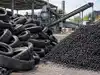
Texas reused 135,389 old tires in San Angelo road projects; the recycled rubber was used in pavement to help improve road durability and divert waste from landfills
In San Angelo, Texas, over 135,000 recycled tires have been creatively incorporated into local road projects, significantly enhancing durability. This innovative initiative not only secured an Environmental Achievement Award but also tackles the pressing tire waste problem in America, where 230 million tires are produced annually, with 79% recycled as of 2023.

Can SFC Environmental Technologies IPO deliver long-term growth for high-risk investors?
SFC Environmental Technologies is planning an IPO to raise ₹150 crore for debt repayment and ₹517.5 crore for an offer for sale. The company has reported consistent growth in both revenue and profits, with significant contributions from repeat customers. Concerns include uneven cash flow due to high working capital and reliance on government contracts for revenue.

Veolia opens India disaster hub as climate risks mount, commits over €1 million globally to emergency response
Veolia has opened a New Delhi hub to deploy mobile water-treatment units and trained personnel for disaster response across South and Southeast Asia.

UltraTech commissions Rs 2,650 crore cement plant in Andhra Pradesh in 14 months
The integrated cement plant, located in Petnikota village in Kolimigundla mandal in the Rayalaseema region, has a clinkerisation capacity of 3.3 million tonnes a year and cement dispatch capacity of 3.6 million tonnes a year.
- Go To Page 1

AdaniConneX's Vizag data centres to use air cooling, cut freshwater consumption
The facilities will have dedicated industrial water connections rather than draw supplies from municipal lines, a move aimed at preventing competition with households for drinking water.
Sustainable Product of the Year 2026: How the ET Product of the Year Awards Recognise Measurable Environmental Impact
Sustainability has become a powerful part of the product story. But as environmental claims become increasingly common, the bigger question is no longer whether a product is being positioned as sustainable. It is whether it can prove the difference it is making.

Space junk warning on World Space Week 2026: More than 4,000 payloads entered orbit in 2025 as collision risks grow
Earth’s orbital environment is becoming increasingly crowded as satellites are introduced and commercial constellations remain to expand. ESA’s 2026 Space Environment Report says over 4,000 payloads entered orbit in 2025, while orbital debris also remained to grow. Around ten payloads are currently launched each day on average, along with more than three intact satellites or rocket bodies reentering the atmosphere daily. The report cautions that insufficient end-of-life disposal, fragmentation and collisions could accelerate the growth of debris through the Kessler syndrome.

No cement, 450 homes, Rs 7 lakh each: How Gujarat couple turned factory waste into bricks, cutting construction time to just 30 days
In a groundbreaking innovation, Gujarat couple Vedant and Aditi Gandi have pioneered a pioneering technique to fabricate bricks utilizing industrial waste. Their venture, Co2ncrete, specializes in cement-free materials and notably reduces carbon emissions. With a vision to offer cost-effective housing that remains cool in warmer climates, they have remarkably completed over 450 prefabricated homes throughout Gujarat, leveraging their vast expertise in urban infrastructure and policymaking.

In 2015, Bill Gates backed a Seattle-based company that turned human waste into drinking water and Electricity. Now it has secured $500 million from investors, and earns nearly $100 million a year
The Omniprocessor, developed by the Seattle-based Janicki Bioenergy with support from the Bill & Melinda Gates Foundation, came to the limelight in 2015, when it successfully transformed human waste into drinking water and electricity. Capable of processing up to 14 tonnes of waste daily, the innovative system separates water and dry waste, burns the latter for energy, and generates clean, healthy water, ready for consumption.

These large-, mid- & small-cap stocks can give more than 20% return in 1 year, according to analysts
Oil prices are still up, and so are bond yields, both in the US and in other major markets. And fresh troubles seem to crop up somewhere or the other in the world. That is the reality, and there is no use pretending otherwise. The fact remains that we are living in a world where there is a readjustment taking place. And that is always painful.

Fashion promised to go green. Here’s how the New York Climate Week, behind closed doors, exposed the challenges of transforming the industry
Fashion is grappling with the dual challenges of rising fibre production and complex supply chain requirements. Sustainable alternatives exist, but they struggle to compete with established materials. The Climate Pledge Fashion Coalition aims to address these issues by improving material sourcing and production processes. Discussions during New York Climate Week emphasized the need for cooperation within the industry.
In 1951, two Phillips Petroleum chemists discovered plastics that later found uses in everyday products; US production reached 136 billion pounds in 2025
In 1951, an intriguing twist of fate brought Robert Banks and Paul Hogan to Bartlesville, Oklahoma, where they stumbled upon significant plastics. Although their creation faced hurdles in initial market uptake, the 1956 Hula-Hoop phenomenon ignited interest. The medical field soon embraced high-density polyethylene for baby bottles, recognizing its cleanliness.

Ganpati Visarjan 2026: As Bappa bids Mumbai goodbye, a new product cycle begins
Ganpati Visarjan 2026: During Anant Chaturdashi, thousands of devotees participate in the Ganpati Visarjan, bidding farewell to the idols. After the immersion, the challenge of recycling and managing waste from the idols arises. The Brihanmumbai Municipal Corporation collects and stores the idols for future processing. Various organizations are exploring ways to convert recovered materials into usable products. The emerging ecosystem needs improved technology, predictable material flows, and a market for end products.

These large- and mid-cap stocks can give more than 20% return in 1 year, according to analysts
The next time you take some action in the stock market – whether it is buying or selling – ask yourself these questions: Why am I doing this? Is it because the news flow is bad? Or, because the company is in trouble? Or is it because the stock price has come down? Answering these questions honestly will probably help you make better decisions.

Elon Musk Moon city: World’s richest man plans self-growing city within 10 years, but scientists warn of a major problem that could hamper his plans
Elon Musk is planning a self-growing city on the Moon that could eventually house millions of people. But a new study has raised a major concern: there may not be enough water on the Moon to support such a large population for long.
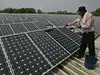
Premier Energies commissions 7 GW solar cell plant in Andhra Pradesh
Premier Energies commissioned a large solar cell manufacturing facility in Andhra Pradesh. This new plant significantly boosts the company's total solar cell production capacity. The facility is India's largest solar cell manufacturing plant and was completed on schedule. It aims to meet rising demand for high-efficiency solar modules in domestic and international markets. This expansion supports India's broader clean-energy transition goals.

IIT Madras professor Jhunjhunwala wants PLI to be more startup friendly
PLI should be opened to smaller companies, with incentives tied to meaningful domestic value addition rather than the ability to make large upfront investments, Ashok Jhunjhunwala said in a chat with ET.
Coal India Limited announces ambitious Business Development portfolio for diversification beyond mining
Coal India Limited announced its ambitious business development portfolio on Sunday. This plan focuses on five key platforms for future expansion and growth. Initiatives include coal gasification, thermal power, and renewable energy ventures. The company will also explore critical minerals and advanced materials. This diversification aims for energy and mineral security and import substitution.

This institute in Georgia helps students transform discarded plastic waste into phone chargers in under five minutes
Georgia Tech’s new Trash Lab is testing how discarded plastic can be transformed into useful products in under five minutes. Using Miniwiz’s miniTrashpresso, researchers shred, clean and reshape plastic waste into items such as phone chargers, bowls and sunglasses. The project explores local recycling, upcycling and circular-economy solutions, aiming to turn waste into valuable resources while reducing landfill dependence.

In 2019, South Africa put 700 kg of waste plastic into a 300-metre road; Jeffreys Bay turned discarded packaging into its asphalt surface
In 2019, South Africa put 700 kg of waste plastic into a 300-metre road; Jeffreys Bay turned discarded packaging into its asphalt surface. The pilot project used recycled plastic in asphalt to address plastic waste and road maintenance. The road was built in Woltemade Street, Jeffreys Bay, and used plastic pellets to replace part of the bitumen binder. The project also explored durability and maintenance benefits.

Australia used artificial tree hollows to replace vital wildlife homes lost to bushfires; new 3D-printed and drilled habitats could give threatened species a place to shelter
Innovative researchers are harnessing the power of 3D printing to construct homes for endangered Australian wildlife. By replicating the natural tree hollows that these species depend on, the new habitats promise to attract wildlife in distress. Additionally, a groundbreaking drilling technique is being used to create artificial hollows directly in living trees, aiming to provide a million new shelters amidst the aftermath of bushfires.

In 2026, Australian surfer Banjo Hunt transformed a retired wind turbine blade into surfboard fins. Years later, the experiment shows how old composites can find new uses
Banjo Hunt’s turbine-blade surfboard fins tell a larger story about the next stage of the renewable-energy transition. Wind power can reduce emissions during operation, but the infrastructure supporting renewable energy also has a physical life cycle that must be managed responsibly. The Waubra project demonstrates one creative response: instead of viewing a retired composite blade only as difficult waste, designers can ask what its existing strength, shape and material properties make possible.

This wind-turbine nacelle once sat atop a giant machine in the Dutch city of Eindhoven; designers turned the 10-metre-long retired shell into a tiny house
Nestle's most memorable achievement may therefore be its ability to change the way people see an object that would normally disappear at the end of a machine's life. A nacelle that once stood around 100 metres above the Austrian landscape has been brought down to earth and transformed into a compact living space.

US pilot turns 60 tons of old boats into cement fuel as 200,000 fiberglass hulls face retirement every year
Thousands of old fiberglass boats are difficult and expensive to recycle, leaving many destined for landfills or abandonment. A Rhode Island pilot project is testing a different solution by shredding unwanted boat hulls and sending the material to a South Carolina cement plant, where it can provide fuel and replace some raw materials used in cement production. The project could offer a new disposal route for the growing amount of fiberglass boat waste in the US.

In 2018, the Netherlands turned 1,000 kg of household plastic into a 30-metre cycle path; the road contained the equivalent of 218,000 plastic cups
A Dutch cycle path turned plastic waste into something useful. In 2018, Zwolle opened a 30-metre path made with about 1,000 kilograms of recycled household plastic. That amount was equivalent to roughly 218,000 plastic cups. The experiment showed that discarded plastic could become part of everyday infrastructure, not simply waste. The path also included space for water storage and sensors to study how the material performed.

In 2020, California repaved a highway using recycled materials, including 150,000 plastic bottles per mile; it could last 2-3 times longer than conventional asphalt
California transportation officials tested recycled pavement using plastic bottle binder. This pilot project on Highway 162 consumed approximately 150,000 plastic bottles per mile. The technology developed by TechniSoil Industrial processes old pavement with a liquid plastic polymer. This innovative method potentially reduces landfill waste and transportation pollution significantly. Officials are studying the road's durability and environmental benefits for future applications.

MIT researchers are giving millions of plastic bottles a new life by turning plastic waste into homes, decks and bridges using AI robots
In a significant development, the Atlas Building Composites, a spinout of Massachusetts Institute of Technology are turning millions of plastic bottles to homes, bridges and decks using AI-powered robots. Single-use plastic from water bottles and other items is first shredded and then fed into the Atlas system, where the plastic is melted and mixed with American-made fiberglass. This makes the material stronger than wood. The material is then used in a large-scale 3D printer to make building parts, including trusses for floors, walls, roofs and bridges.
Load More

