
WASTEWATER FOR INDUSTRIAL USE

India wants more factories, fabs and data centres. Where will the water come from?
India's ambition to become a developed nation by 2047 is constrained by growing water resource challenges. Industries across sectors, including thermal power and semiconductor manufacturing, face water scarcity issues that could hinder growth. Many regions are already experiencing severe water stress, impacting economic development plans drastically. Adopting recycling and reuse technologies will be crucial for managing water in industries effectively.

Climate platform Two Point O raises $10 million led by Transition Venture Capital
The company plans to enter battery energy storage while expanding its existing offerings in solar power, energy efficiency, and wastewater treatment. It will also target customers in sectors such as data centres, automobile manufacturing, pharmaceuticals, and healthcare, where energy and water consumption are significant operating costs.
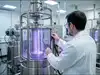
'Forever chemicals' can remain in water for years, but can a new UV technology finally destroy them? Here's how it works
The process targets the carbon-fluorine bonds in PFAS compounds, which are responsible for their exceptional chemical stability. The company says its system can target long-chain, short-chain and ultra-short-chain PFAS. It is designed for industrial wastewater, groundwater and concentrated PFAS waste streams. The technology is intended to operate on-site and can be integrated into existing industrial wastewater treatment systems.

Post Jio boost: 5 IPOs to raise Rs 2,581 crore next week alongside India's biggest listing
In a bustling week for the IPO market, five mainboard offerings are set to debut between October 26 and 30, aiming to amass an impressive Rs 2,581 crore. EAAA India Alternatives spearheads the launches, while Jio Platforms makes its entrance on October 28. Other notable entries include SFC Environmental Technologies and BLS Polymers on October 27, with MK Sons Fine Jewels and Bombay Coated and Special Steels following closely.

Polish PM Tusk seeks deeper tech, AI and space ties with India
During a recent meeting, Polish Prime Minister Donald Tusk called for strengthened collaboration with India, zeroing in on advancements in AI and space technology. He pointed out potential synergies in manufacturing automation and data analysis. Karnataka's Chief Minister DK Shivakumar invited Polish participation in the 2027 Global Investors Meet, stressing the importance of joint ventures in renewable energy and advanced manufacturing, given Bengaluru's pivotal role in tech innovation.

AdaniConneX's Vizag data centres to use air cooling, cut freshwater consumption
The facilities will have dedicated industrial water connections rather than draw supplies from municipal lines, a move aimed at preventing competition with households for drinking water.
- Go To Page 1

MENA must classify AI data centres as critical loads, overhaul power planning amid rising demand: WEF
The World Economic Forum has highlighted the urgent need for countries in the Middle East and North Africa to refine their energy strategies. With rising electricity consumption, limited water resources, and extreme temperatures impacting AI infrastructure, the report suggests classifying AI data centers as critical energy loads and improving regulatory frameworks.

These large- and mid-cap stocks can give more than 20% return in 1 year, according to analysts
The mayhem in the market is likely to continue, at least for the short-term. Nothing has changed in terms of the known headwinds: The US-Iran war continues in fits and starts, oil prices are still elevated, US bond rates remain high, and global supply chains continue to be disrupted. With the calendar year-end approaching, however, there is a technical factor that has entered the mix.

Looking beyond 2026: 5 mid-cap stocks from different sectors with upside potential of up to 22%
After a long run of red days, the screen finally turned green on Tuesday. And for once it is not just the big names, the broader market joined in too. One or two companies have put out early numbers for the quarter, and those have been better than expected. After weeks of watching stocks drop, it is the most natural thing in the world to look at a day like this and feel that the worst is behind us. That would be a mistake, however.

Maharashtra imposes minimum 10% water cut in urban, rural local bodies from Oct 16 amid deficient monsoon
Maharashtra will enforce a 10 percent reduction in water supply starting October 16 due to insufficient rainfall. The state has prioritized drinking water and will reserve it through August 31, 2027. Local bodies are instructed to prevent water leakage and maximize sewage treatment plant operation. Industries must recycle at least 30 percent of their water usage under new directives.

These large-, mid- & small-cap stocks can give more than 20% return in 1 year, according to analysts
Oil prices are still up, and so are bond yields, both in the US and in other major markets. And fresh troubles seem to crop up somewhere or the other in the world. That is the reality, and there is no use pretending otherwise. The fact remains that we are living in a world where there is a readjustment taking place. And that is always painful.
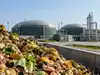
An Ohio plant takes 190,000 tons of unwanted food a year instead of sending it to landfill; what comes out is pipeline-ready renewable natural gas
In St. Bernard, Ohio, a groundbreaking facility is turning food waste into renewable natural gas through anaerobic digestion. This efficient method decomposes organic materials to produce gas, which is purified and delivered into existing pipelines. This approach not only reduces landfill methane emissions but also transforms waste into a valuable resource, paving the way for similar initiatives across the country.

5 stocks with consistent score improvement and upside potential of up to 25% in 1 year, according to analysts
If you are looking to deploy money in the market, make sure it is not money you need in the short term. Also, be clear that when you invest in equity as an asset class, it is for the long term and not with the expectation that the money will give returns by the next quarter. Our selected stocks for today depict a strong upward trajectory in their overall average score which is based on five key pillars: Earnings, fundamentals, relative valuation, risk, and price momentum. This implies that there has been a significant improvement in their market outlook in the given time frame.

India’s semiconductor push will need a new approach to water management: CN Water
India’s semiconductor push is creating a new demand for smarter, more reliable water infrastructure. CN Water’s Shoeb Kurawadwala on localisation, water recovery, digitalisation and the challenge of managing the entire water cycle for fabs

From Gujarat to Rio: How India's pollution solution could offer lessons for Delhi-NCR’s dirty air crisis
An Indian emissions trading scheme developed in Gujarat is now being explored internationally. This market-based approach encourages industries to reduce pollution through economic incentives. The successful pilot in Surat demonstrated significant emission reductions and cost savings for factories. This innovative model is now being considered for adoption in Rio de Janeiro, Brazil. The program's success has also generated renewed interest among other Indian states.

In 2016, Gwyneth Paltrow bought 2.4 acres in Montecito for $4.9 million and rebuilt from scratch; 6 years later, her 14,000-square-foot solar-powered home used graywater system
Gwyneth Paltrow built a large estate in Montecito during a severe California drought. Her new home incorporated solar panels and a graywater system for water conservation. This construction project took six years to complete and cost millions of dollars. Such sustainable features are becoming more common in wealthy coastal communities. High-profile builds help normalize these technologies for broader adoption by homeowners.

Researchers crushed mussel, cockle and oyster shells collected from a Dublin beach and added them to polluted water; the experiment cleaned the water while recovering valuable metals
A team of researchers discovered that discarded seashells have the ability to purify water by removing rare earth metals. Among various shell types, oyster shells stood out for their unique porous structure that effectively transforms dissolved metals into solid minerals. Given the aquaculture industry’s yearly production of millions of tonnes of shell waste, this innovative process presents an opportunity to recycle waste while tackling water contamination issues.

These mid-cap stocks with ‘Strong Buy’ & ‘Buy’ recos may rally over 21%, according to analysts
With the US market shedding weight overnight, the probability is high that Thursday will see another day of choppy trading. The best way to deal with such volatile conditions is to sit it out and let clarity emerge. Alternatively, turn into a real long-term investor.

VA Tech Wabag shares jump 3% after securing repeat order from RIL for ETP project
VA Tech Wabag shares rose nearly 3% after securing a medium-sized repeat order from Reliance Industries to design and commission an advanced Effluent Treatment Plant at Jamnagar’s Dhirubhai Ambani Green Energy Giga Complex. The project will use advanced chemical, biological and sludge treatment technologies and is scheduled for completion within 13 months.

In 2015, a seawater desalination plant was built at cost of $1 billion. Now, it provides 50 million gallons of drought-proof drinking water daily, but does it harm marine life or raise cost of living?
In 2015, a seawater desalination plant was built at cost of $1 billion. It now supplies 50 million gallons of drought-proof drinking water daily and meets about 10% of San Diego County’s demand. The plant reduces dependence on imported water, but its cost, energy use, marine life impact, brine discharge, and long-term purchase agreement remain key concerns for water ratepayers and residents in the region.

Earlier in 2026, WSU researchers heated and pressurized sewage sludge with oxygen, producing 200% more renewable gas. Now the process cuts treatment costs from $494 to $253 per ton
WSU researchers treated sewage sludge under high temperature and pressure while introducing oxygen. Under those conditions, the relatively small amount of oxygen acts as a catalyst, helping break apart long polymer chains and making the organic material easier for microbes to process.

In 2019, RMIT researchers fired clay bricks mixed with treated sewage sludge; a 25% biosolids batch cut firing energy by 48.6% while passing strength tests
Researchers are exploring ways to recycle sewage sludge into building materials. Mixing biosolids into clay significantly cuts the energy needed for brick firing. This process helps reduce landfill waste and the environmental impact of construction. Studies show sludge can either maintain or improve brick strength depending on conditions. These innovations offer a dual solution for waste management and sustainable building.

Indian Railways is planting an aromatic-rooted grass in Lonavala ghats to prevent landslides and avert a Nepal-like flash flood situation
Indian Railways is testing vetiver, an aromatic-rooted grass native to India, as a low-cost nature-based solution to stabilise vulnerable slopes, control runoff and reduce the risk of landslides during heavy rainfall.

In the 1990s, 17 cities joined Germany's Emscher regeneration programme. 30 years later the polluted industrial region had become a green hub with a 70-km landscape park
Emscher story is a powerful example of how environmental regeneration can take place across generations. The region did not become green overnight, and the landscape park was never simply a single construction project completed in the 1990s. Instead, the original IBA vision established a framework that continued evolving through new restoration, infrastructure, cultural and ecological projects.

World’s biggest citrus waste-to-energy plant is being built in Brazil: 2.1-million-square-foot facility to turn orange juice waste into 1.77 million cubic feet of biogas every day
Brazil is building the world’s biggest citrus waste-to-energy plant, a 2.1-million-square-foot facility designed to transform orange juice wastewater into renewable energy. The project is expected to generate 1.77 million cubic feet of biogas every day, replacing fossil natural gas while reducing emissions and turning citrus waste into a valuable energy resource.

Earlier in 2026, United Utilities sent 44-ton tunnel borer Lily beneath Knutsford to build a 1.1-mile stormwater tunnel. Now, the finished system will hold 5.5 million liters of rainwater without closing the high street
Knutsford tunnel boring machine Lily has just completed the first major drive beneath the English town, digging deep underground without tearing up the busy streets above. The 44-ton machine is helping build a 1.8-kilometer sewer tunnel designed to store 5.5 million liters of stormwater. The £48 million project aims to reduce pressure on aging sewers and protect local waterways, while keeping everyday life in Knutsford moving.

In US, rare earths extracted from coal mine wastewater
West Virginia University researchers are extracting valuable rare earth elements from acidic mine drainage. This process cleans up environmental pollution while recovering critical minerals. These elements are essential for high-tech products and clean energy technologies. The United States seeks to reduce its reliance on China for these vital resources. This initiative aims to bolster domestic supply chains for defense and industry.

Daiki Axis setting up 3rd plant in India, bets big on sustainable water treatment sector
Japan's Daiki Axis will invest Rs 200 crore for a new manufacturing facility in Tumakuru, Karnataka. This facility will produce decentralized wastewater treatment systems using proprietary Johkasou technology. The expansion aims to meet India's growing demand for sustainable water recycling solutions. This investment supports India's 'Make in India' initiative and urban development goals. The new plant will enhance local manufacturing and reduce import dependence for these systems.

Wastewater turning into resource: NMCG pitches circular water economy model
Sewage is now seen as a resource in India. Treated wastewater is replacing freshwater use in industries. Projects are underway to supply treated water to refineries and power plants. This initiative aims to reduce freshwater extraction and protect rivers. It promotes a circular water future by reusing treated water for industrial and non-potable needs.
Load More

