
VERA RUBIN AI CHIPS
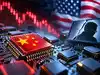
Chinese AI stocks, hardware suppliers slide as Nvidia CEO exit fuels US-China chip fears
Chinese AI and semiconductor stocks decline amid concerns over Nvidia leadership changes and tighter US chip export restrictions. Fears of disrupted technology access intensify pressure on AI developers and hardware suppliers, while domestic chipmakers gain.

Fallout from the Nvidia scandal may dampen the exuberance around the AI boom
Nvidia CEO Jensen Huang resigned following reports of personal scandals, including extramarital affairs. His departure raised uncertainty in the AI sector and prompted rivals to consider increased competition. Competitors like Advanced Micro Devices and Broadcom saw share price gains on the news.

Nvidia scandal puts China chip curbs back in focus as US lawmakers push tougher export restrictions
US lawmakers from both parties are pushing tougher restrictions on China's access to advanced AI chips following reports about former Nvidia CEO Jensen Huang's affair with a suspected Chinese spy. Congress is weighing measures to tighten export oversight, track advanced processors, pressure US allies and close remote-access loopholes.
Post-Gen Jensen Nvidia: A smooth leadership transition needed
The scale of Huang’s indiscretions outweighs anything reported so far in corporate history. Nvidia is the world’s 2nd most-valuable company, and reached $5.6 tn peak value — before the scandal broke. Investors have lost $600 bn this week. This matters, because of the weight Nvidia and fellow technology stocks have in the US500. The effects are rippling through AI and technology stocks to the broader market and risk throttling investment. An AI slowdown will squeeze US growth and intensify fiscal stress.
What comes next for Nvidia and AI industry after spy scandal
The scandal, which deepened after reports of a second affair emerged, has sent shares in the multi-trillion-dollar company plunging and raised questions about the future of Nvidia and the wider AI industry.
Nvidia's Asian supply chain prepares for life after Huang
Nvidia faces a turbulent leadership landscape as the board evaluates CEO Jensen Huang's future amidst scandals. Asian suppliers are on alert, considering how the situation might disrupt operations and impact their partnerships, particularly in the booming AI sector. While the potential for investment slowdowns raises concerns, some analysts cautiously predict minimal immediate disruption on production fronts.

Chinese AI firms rush to secure Nvidia chip capacity as spy scandal stirs fear of US curbs
Chinese artificial intelligence companies are actively seeking to rent Nvidia-powered computing capacity from overseas data centres. They are motivated by fears of stricter US export controls and political controversies surrounding Nvidia's CEO. Major cloud providers and smaller AI labs are exploring international options to maintain access to advanced processors.

Who's next CEO at Nvidia? Top engineer and CFO favored as candidates
Nvidia's CEO Jensen Huang faces potential ousting from the board due to reported extramarital affairs. If removed, Colette Kress could serve as interim CEO due to her experience and familiarity. Meanwhile, Ian Buck, a key engineer at Nvidia, is seen as a strong long-term candidate for the position. Speculation also includes external candidates like Arm CEO Rene Haas. Nvidia's governance and direction are under scrutiny as these developments unfold.

Why is Nvidia so powerful in the AI world, and what could Jensen Huang's scandal really cost?
Nvidia's CEO Jensen Huang has recently admitted to an extramarital affair, and the woman involved, Alice Huang, has been accused of being a Chinese spy. The company's share price tumbled after the affair was revealed and is reportedly under criminal investigation. The industry is known for its circular financing schemes, with investors already fretting over whether AI investments can ever return profits.

China’s army-linked university was served Nvidia chips despite US sanctions
A Chinese university with close links to the country's military has purchased two of Nvidia's powerful H200 AI chips despite being on the US export blacklist, according to procurement records reviewed by Reuters. The findings raise fresh concerns over gaps in Washington's export restrictions and China's access to advanced American technology through domestic suppliers. Other Chinese universities and research institutions have also reportedly obtained restricted Nvidia chips or rented computing capacity powered by them.
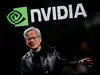
Nvidia board meets to decide CEO Jensen Huang's future, source says
Nvidia's board is meeting to discuss whether to remove CEO Jensen Huang amid reports of two alleged extramarital affairs involving the longtime leader. The possibility of a leadership change has raised concerns among investors and market experts about the company's succession plans, future AI strategy, China business and its position in the global artificial intelligence industry. Here is what market experts are saying about the potential impact on Nvidia and the broader AI sector.

Dragon's Army-linked university was served Nvidia chips despite US sanctions
The findings come as Nvidia and its CEO Jensen Huang face mounting scrutiny in Washington over his lobbying for looser restrictions on sales of AI chips to China, following reports alleging he was targeted by a Chinese spy.

Google's expanding AI chip business opens new opportunities for Samsung, SK hynix beyond Nvidia
Google's strategy to boost its tensor processing units is likely to create greater demand for high-bandwidth memory from Samsung and SK hynix. With nearly 100 TPU clients, including Oracle ready to utilize Google's chips by 2024, both memory giants aim for long-term supply contracts as the need for HBM in custom AI chips accelerates. However, the transition from this potential to actual orders is hindered by current production obligations.

Anthropic IPO: Why are Nvidia, Google, Microsoft and AMD investing billions in their own AI competitor? What Big Tech stands to gain from the Claude maker
Anthropic IPO: Anthropic is set to receive a significant $26 billion investment through its upcoming IPO from several technology companies. Major contributors include Google, Nvidia, and AMD, each seeking commercial advantages. This financial backing will support Anthropic's expansion and operational needs, including increased computing infrastructure. The participating companies aim to benefit from Anthropic's growth while addressing their own strategic interests in the AI market.
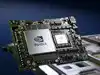
How China gets the Nvidia chips it needs to develop AI
Nvidia's dominance in the global AI chip market has come under scrutiny as US export restrictions fail to fully prevent China from accessing advanced processors. Chinese firms are reportedly obtaining Nvidia chips through smuggling and overseas data centres, while domestic players such as Huawei race to develop competitive alternatives.

Moonshot AI rents Nvidia’s top AI chips in China, documents show
Documents indicate that Moonshot AI possibly accessed advanced Nvidia chips despite US export restrictions and related investigations. The servers were reportedly rented from Super Micro Computer Inc. with significant financial backing from Lingmeixin Technology Co.
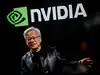
'No ordinary CEO': Why the AI race cannot do without Nvidia's Jensen Huang
Nvidia CEO Jensen Huang’s influence extends beyond chip supply, making him a central figure in the global AI industry. The company’s dominance in AI processors, investments across the sector and Huang’s close control over its strategy have raised concerns about the risks of depending heavily on one executive.
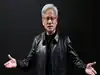
'No ordinary CEO': Why the AI race cannot do without Nvidia's Jensen Huang
The star power that 63-year-old Huang draws as the gatekeeper to Nvidia's chips shows how badly the AI industry is leaning on him for the graphics processing units that train models and run services such as ChatGPT.

21 years after the discovery of the last dwarf planet, scientists may have found a sixth one beyond Neptune
Vera Rubin Observatory may have identified a new dwarf planet called ED138, hidden beyond Pluto's orbit. Researchers are in the process of assessing ED138's size, a task expected to take several months. This finding is noteworthy as it holds the potential to be recognized as the sixth dwarf planet. Difficulties in locating such remote celestial bodies stemmed from their position in the southern hemisphere.
Load More


