
USG

In 1872, Alta, Utah, drew thousands of seasonal residents during a silver boom; by 1920, George Watson was reportedly its only resident
Once a bustling mining hub fueled by silver, Alta, Utah saw its fortunes decline in the 1920s. The last resident, George Watson, relinquished his land amid tax woes to the U.S. Forest Service, paving the way for ski area development. In 1938, the first chairlift was erected, marking the dawn of the Alta Ski Area. This transformation highlights how towns reliant on a single industry can adapt and thrive.
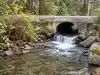
California replaced a fish-blocking pipe on Fort Goff Creek with a bridge in 2014; later monitoring found 64 Chinook salmon nests upstream
In California, the removal of the culvert on Fort Goff Creek has significantly enhanced fish passage, particularly for salmon. Completed in 2014, a new bridge now connects fish to breeding grounds that were previously inaccessible. Biologists found 64 nests of Chinook salmon in this newly opened habitat, highlighting the importance of addressing culverts nationwide to improve aquatic ecosystems and connectivity.
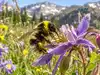
For 8 years, scientists studied 8 wild bumblebee species in Colorado; tongue length shaped pollen preferences, while bees shifted their diets with the seasons
A recent study from Northwestern University and the Chicago Botanic Garden reveals bumblebees' dietary preferences. Wild bumblebees monitor their intake of proteins, fats, and carbohydrates throughout the seasons. The research indicates that bees change their dietary preferences as seasons progress, ensuring they get adequate nutrition. Planting a variety of flowers in gardens may help support these vital pollinators.

In California, researchers tracked desert tortoises in a protected area for 34 years; numbers fell from 589 to 47 by 2002, then rose to 73 by 2012
In California, desert tortoises have suffered an alarming 92% population decline, even within designated protected areas. Research attributes this drastic fall to diseases, predation, and environmental stressors, rendering protective measures inadequate. Although a slight recovery was noted by 2012, the overall trend indicates persistent decline, underscoring the urgent need for holistic conservation strategies to safeguard wildlife.

HUL Q2 Results: Net profit rises 4% YoY to Rs 2,790 crore; Rs 19/share dividend declared
HUL Q2 Results: Hindustan Unilever reported a 4% year-on-year rise in Q2 FY27 net profit to Rs 2,790 crore, while revenue grew 15% to Rs 18,226 crore. The FMCG major declared an interim dividend of Rs 19 per share and expects performance to improve in FY27, though near-term commodity inflation remains a concern.
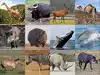
When US national parks closed in 2020, scientists tracked 229 mammals in 14 parks; animals near developed areas began using those spaces differently from before
Recent research reveals that the temporary closure of US National Parks led to notable shifts in wildlife behavior. During the pandemic lockdown, certain animals, like wolves and mountain goats, avoided human interactions. However, parks that became busier saw mule deer and red foxes engaging more with human spaces. This study sheds light on how diverse species adapt differently to human presence within these protected areas.
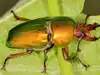
Scientists released 600 beetles into 30 identical landscapes; after 13 generations, some traveled three times farther than others despite the same lab conditions
A 2009 research highlighted that the movement patterns of species are far more erratic than earlier assumptions suggested, due to inherent natural variability. Experiments with red flour beetles over a span of 15 months in identical environments revealed significant differences in their movement. This unpredictability complicates the management of invasive species within ecosystems, emphasizing the need for a deeper understanding of uncertainties in ecological predictions for effective future planning.

Tibet earthquake: CTA President says "damage could be much more", cites limited access to information
An earthquake with a magnitude of 7 occurred in Tangnezong district, Nakchu, northern Tibet. Initial reports indicate that 16 people died, while dozens sustained injuries due to the quake. Over 300 houses have reportedly collapsed, with rescue operations currently underway in the affected areas. Emergency response teams have been activated to assist those impacted by the disaster.
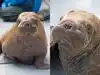
Baby walrus found between 2 dead adults in Alaska survives 3-day Arctic storm and polar bears; but his new life comes at a cost. He can never return home now
A baby Pacific walrus found between the bodies of two dead adults on a remote Alaskan beach survived a three-day Arctic storm with polar bears nearby after rescuers Violet Anniskett and Tony Fischbach sheltered him in an abandoned building. Named Annautaq, the calf was taken to the Alaska SeaLife Center in Seward, where he received treatment for dehydration and minor wounds.

In 2025, Alaska was hit by the second-highest tsunami in history. Its vibrations travelled around the world for 36 hours
On August 10, 2025, a massive landslide unleashed over 64 million cubic meters of earth into the stunning depths of Tracy Arm fjord. The sudden collapse triggered a tsunami, soaring to record heights and reshaping the fjord's landscape. Luckily, the early morning timing minimized human exposure, resulting in no casualties and limited shoreline damage. Scientists recorded related seismic activities persisting for up to 36 hours post-event.
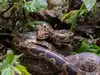
Researchers release a 16ft and 150-pound female Burmese python into the Greater Everglades to test a technology that might help remove snakes of her own species
Researchers at the US Geological Survey have released a radio-tagged Burmese python into the Everglades. This experiment aims to improve tracking efficiency of invasive pythons in the complex terrain. A potential use of drones may enhance data collection while reducing costs for researchers. Scientists previously removed many pythons, including reproducing females, to protect native wildlife.
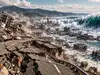
Japan issues false 9.9 magnitude earthquake warning after quake in Russia but scientists say megaquakes may never happen
On Friday, a powerful magnitude 7.0 earthquake struck near Vilyuchinsk in Russia's Kamchatka Peninsula. The European-Mediterranean Seismological Centre confirmed the intensity, and thankfully, no tsunami warning was issued. However, Japan mistakenly released a startling warning for a 9.9 magnitude quake shortly after, despite history showing only five quakes of magnitude 9 or higher have been documented. Notably, a magnitude 10 quake is deemed impossible based on current geological understanding.

Not gold, GDP, military strength or rare earths: Elon Musk, the world’s richest person, says this hidden metric reveals true economic strength
Elon Musk has offered a different way to judge the strength of a major economy. In an October 10 post on X, the Tesla and SpaceX chief executive argued that electricity production is the best measure of a country's economic strength.
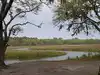
In 2019, Georgia placed 5,000 cubic yards of dredged sediment on a 5-acre salt marsh; six years later, it remained about 12 cm higher, with plant growth similar to nearby marshes
Wetlands serve as vital buffers in coastal regions, adeptly mitigating storm impacts while also acting as natural filters for pollutants. A recent initiative on Jekyll Island explored the advantages of sediment nourishment for restoring marshlands. Remarkably, over six years, the project elevated marsh height by 12 cm. This promising approach not only shields wetlands from rising sea levels but also boosts biodiversity and overall environmental integrity.
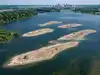
In 2022, contractors began using 400,000 cubic yards of Mississippi River sand to build six islands at Minnesota’s Pigs Eye Lake; the project covers more than 40 acres and aims to protect surrounding wetlands
Contractors began constructing new islands in Pigs Eye Lake in June 2022 using sand from the Mississippi River. This project aims to restore habitat within the local ecosystem over more than 40 acres. The islands will serve as breakwaters to limit erosion caused by wind and waves. A citizens' group expressed concerns regarding investment disparities in nearby neighborhoods.

Panama rocked by 2 powerful earthquakes and multiple aftershocks, prompting evacuations
On Friday, two significant earthquakes of magnitudes 7.7 and 6.6 impacted southern Panama, leading to widespread evacuations. Many buildings collapsed near the epicenter while the capital experienced overwhelming fear among residents. Authorities did not report any fatalities, although there were injuries due to falling debris. Several aftershocks rattled the region, with damage primarily affecting central provinces. Regional leaders expressed solidarity with Panama, pledging support in response to the disaster.

California cleared invasive plants from three Camp Pendleton breeding areas; willow flycatchers resettled at those sites within 5–7 years
In 2023, a lone Southwestern Willow Flycatcher was spotted at Marine Corps Base Camp Pendleton, a notable event after an absence since 2012 due to a drastic decline in its population. While habitat restoration initiatives show potential, challenges like invasive species and environmental pressures persist. Although some regions have experienced successful recovery, ongoing management and favorable conditions remain essential for the future of this vulnerable species.
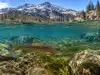
California began removing invasive brook trout near Independence Lake in 2005; a study found young Lahontan cutthroat trout survival increased from 4% to 12%
In the Sierra Nevada, Lahontan cutthroat trout have struggled due to competition from non-native brook trout. A study conducted between 2005 and 2010 revealed that brook trout removal improved the survival rates of cutthroat fry significantly. Research indicated a notable increase in the number of cutthroat juveniles entering Independence Lake after brook trout removal. Long-term monitoring is necessary to determine if the recovery of the species is sustainable.
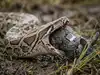
Florida researchers used 90 robotic rabbits to catch Burmese pythons. What happened next even scientists couldn't believe
Researchers in Florida's Everglades have turned to creativity in their fight against invasive Burmese pythons by designing robotic rabbits. These high-tech devices mimic the natural movement and warmth of real rabbits, making them better at attracting the elusive snakes. With remote control features and alert systems, these robotic entities promise to transform how these invasive species are monitored, potentially reshaping Florida's wildlife management landscape.
Load More


