
US SANCTIONS

'I'll be a better CEO': Nvidia staff give returning Jensen Huang a hero's welcome
Jensen Huang received a warm welcome from Nvidia staff after his recent return to the company. He had resigned amid revelations of personal misconduct, including extramarital affairs and claims of espionage. Following intervention from Donald Trump, Huang was reinstated despite facing ongoing investigations by regulators. Nvidia's share price initially soared after his return, reflecting the company's reliance on his leadership.
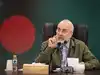
Iran's Ghalibaf warns of "no negotiation" with US until seven conditions met
Iranian Parliament Speaker Mohammad Bagher Ghalibaf on Tuesday warned that Iran will not take any action or enter into negotiations with the United States in order to end the hostilities in West Asia until its seven conditions are met, reiterating Tehran's position amid mounting tensions following fresh US sanctions targeting Iranian financial networks.

China, India set for record Russian oil imports in 2026, but demand seen peaking
China and India are set to achieve record imports of Russian oil due to supply gaps. This increase comes amid the ongoing Iran war and US sanctions waivers affecting oil purchases. Chinese imports have risen significantly, accounting for about a quarter of its total oil imports. India's imports also surged, with expectations that demand will stabilize as Middle Eastern supplies normalize.
Vance and Rubio meet with Qatari PM as uncertainty mounts over Trump's intentions with Iran
Vice President JD Vance and Secretary of State Marco Rubio held discussions with Qatar's prime minister on U.S.-Iran relations. They focused on efforts to revive negotiations to end the conflict with Iran. These meetings followed Donald Trump's directive to prioritize issues related to fraud and crime in Democratic-led cities. The ongoing situation in the region raises concerns among U.S. allies regarding the potential for a renewed war.
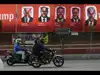
Iran sets conditions for revoking Strait of Hormuz shipping blockade, sends stern message to President Donald Trump of using all forces to counter US naval blockade
Strait of Hormuz has become the focus of Iran-US war, with Tehran continuing in its efforts to blockade the waterway, vital to global energy supplies.
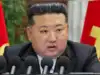
North Korea's Kim says country seeks security, not supremacy
Kim Jong Un recently stated that North Korea aims to enhance its security capabilities while avoiding dominance. During a ceremony to receive new ambassadors, he highlighted diplomatic goals based on sovereignty and peace. Kim's comments follow a recent snub of US President Donald Trump's overtures during his visit to China. Despite sanctions, North Korea continues to advance its nuclear program and reinforce ties with Russia.
Ukranian drones strike Russian cargo ship off Finland, escalating tensions over NATO involvement
A fire broke out on the Russian cargo ship Sparta II after it was struck by drones. The attack is believed to have been carried out by Ukraine during recent military operations. Following the strike, the ship drifted into Finnish waters and has remained anchored there. The Finnish Coast Guard and military continued efforts to extinguish the flames overnight as the crew was evacuated.
China and Russia say they and US agree on UN reforms, boosting fuel supplies, dialogue on nuclear
Leaders from the United States, China, and Russia met in Shenzhen to address nuclear risks. They discussed U.N. reforms and the necessity of improved communication on trade issues. While modest agreements were reached, the discussions yielded no major breakthroughs regarding ongoing conflicts. Tensions remain, particularly between the U.S. and China, despite friendly gestures exchanged during the meeting. Future talks are expected to further explore areas of mutual interest.
Trump-Xi-Putin meeting agenda: Nuclear arms, ending wars in Iran and Ukraine likely on discussion table
Donald Trump is set to meet with Xi Jinping and Vladimir Putin to discuss various geopolitical issues. The discussions will include nuclear arms control, trade relations, and the wars in Ukraine and Iran. Experts predict that significant breakthroughs are unlikely from this trilateral meeting. Despite their differing dynamics, Trump's relationships with Xi and Putin will be highlighted during the discussions.
View: Trump-Xi-Putin summit exposes Europe's power deficit
US, China, and Russia will meet at the APEC forum, while Europe will notably not participate in discussions. Europe's economic weight contrasts sharply with its limited geopolitical power regarding ongoing global conflicts. Resolution of the Ukraine conflict would require European involvement due to its geographical proximity and energy ties with Russia.
Trump meets Xi and Putin in China with nuclear arms and two wars on the table
Donald Trump is preparing for an unprecedented trilateral meeting with Xi Jinping and Vladimir Putin, hoping to discuss nuclear arms control, Ukraine and Iran. But divergent strategic interests, deepening China-Russia ties and unresolved trade tensions have tempered expectations of a breakthrough from the high-profile summit in Shenzhen.
Duo before trio: Vladimir Putin, Xi Jinping blast western 'protectionism'
It has also unnerved some European and Asian capitals, which fear the world's greatest military powers will disregard their interests. In his opening address, Xi urged support for what he called "free and open trade," trying to portray his country as a stable partner on the global stage, in contrast with the US, which has raised tariffs and adopted a more muscular foreign policy under Trump.
One Kremlin hint raises odds of Trump-Kim Jong Un meeting at APEC, analysts say
Chances for a meeting between US President Donald Trump and North Korean leader Kim Jong Un have increased. This follows indications from the Kremlin about a possible meeting at the APEC summit. Analysts suggest Russia's involvement may signal preparations for such a summit. Both South Korea and Japan are closely monitoring these developments concerning Trump and Kim.
Iran's proxy in Iraq rakes in hundreds of millions through oil smuggling
Kataib Hezbollah, a Shi'ite militia in Iraq, has been accused of stealing state oil for years. Prime Minister Ali al-Zaidi has launched a crackdown against their smuggling operations, which have robbed the government substantially. Nine officials have been dismissed as a result of a high-level investigation into this smuggling network. The militia denies the allegations and claims the crackdown is politically motivated.
"Still in state of war": Iran says prepared for diplomacy, blockade or military action with US
Iran is preparing for three possible outcomes in its confrontation with the United States: diplomacy, an economic blockade or military aggression, Deputy Foreign Minister Kazem Gharibabadi said. He accused Washington of repeatedly violating diplomatic understandings, outlined Tehran's conditions for a deal and maintained that Iran legally remains in a state of war.
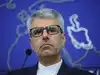
US pushing 'deceptive narrative' to evade responsibility for aggression against Iran: Esmaeil Baqaei
Esmaeil Baqaei from Iran's Foreign Ministry rebuffed US President Donald Trump's assertion about the 1979 conflict initiation. He described the American narrative as deceptive and aimed at shifting responsibility for previous military actions against Iran. Baqaei emphasized the historical context, mentioning decades of US intervention in Iran's affairs, including the 1953 CIA-backed coup.
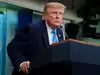
Trump tells advisers he may hold off on Iran attacks barring new provocations, sources say
President Trump has been consulting with regional allies about the potential delay of military action against Iran. Both Saudi Arabia and Turkey have urged him not to resume strikes, citing the effectiveness of existing sanctions. The US military remains prepared to escalate if necessary, with a third aircraft carrier moving into the region soon. Israel continues to apply pressure for renewed military engagement against Iran's nuclear capabilities.
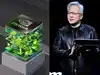
China’s army-linked university was served Nvidia chips despite US sanctions
A Chinese university with close links to the country's military has purchased two of Nvidia's powerful H200 AI chips despite being on the US export blacklist, according to procurement records reviewed by Reuters. The findings raise fresh concerns over gaps in Washington's export restrictions and China's access to advanced American technology through domestic suppliers. Other Chinese universities and research institutions have also reportedly obtained restricted Nvidia chips or rented computing capacity powered by them.
Dragon's Army-linked university was served Nvidia chips despite US sanctions
The findings come as Nvidia and its CEO Jensen Huang face mounting scrutiny in Washington over his lobbying for looser restrictions on sales of AI chips to China, following reports alleging he was targeted by a Chinese spy.
Load More


