
US RECESSION DATA

Argentina bans its central bank from printing money for the government
Argentina's Congress has passed a law barring the central bank from printing money to finance government spending, formalising a key part of President Javier Milei's fight against inflation. The move comes as the country's economy slips into recession, with manufacturing and other industries struggling and concerns growing over Milei's economic reforms ahead of the next presidential election.

Tech layoffs were just the start: 1.6 million more US job cuts could push America toward recession
US technology layoffs have crossed 200,000 in 2026, with Google, Microsoft, Amazon and other major companies cutting jobs. But the bigger concern is whether the trend will spread to retail and financial services, where another 1.6 million job losses could push unemployment higher and raise fears of a US recession.

Anthropic forges ahead with its IPO even as AI fears mount and markets wobble
No ordinary sale, the Claude chatbot maker's IPO could raise more than $60 billion on Thursday, a massive haul that, depending on the ultimate pricing and other issues, could rival SpaceX's in June.

Heat-trapping carbon pollution drops, but scientists cite the Iran war rather than energy progress
This year, global carbon emissions fell by 0.4%, driven by oil supply disruptions from the conflict in Iran. While oil and natural gas emissions experienced notable declines, there was a small uptick in coal emissions. Experts caution that these improvements may not be guaranteed, attributing them primarily to external influences.
Global markets were already fragile. Big AI bets could break them
Investors flocked to bonds. Yields, which move inversely to price, fell from multidecade highs, with the benchmark 10-year Treasury, which guides borrowing costs globally, falling almost 20 basis points on October 22, its biggest daily fall since early 2023.
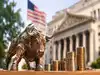
Stocks rose after every US midterm elections since 1946. Why that streak may not mean what investors think
Tomorrow Americans vote in the midterms, and a lot of investors are asking one thing; will stocks go up afterward? History says yes. The S&P 500 was higher a year after every midterm since 1946, 20 times out of 20. The average gain was 14.8%. That sounds like a sure thing. It isn’t, and here is why.
- Go To Page 1

‘Facing ‘gerontonomia’, the West’s young opt for political extremes’
Tim Vlandas analyzes the influence of aging populations on electoral politics in advanced capitalist nations like Europe. Older voters display different policy preferences, emphasizing pensions over issues of younger demographics. Consequently, governments often allocate more resources to pension spending rather than investing in education and infrastructure. Young voters may become politically disenchanted, leading to radical shifts towards extreme parties.

World Bank sees commodity prices surging 23% in 2026 on Middle East war
Commodity prices were projected to rise 23% in 2026 as the Middle East war disrupted energy supplies and shipping, while grain disruptions and safe haven demand pushed food and metals prices higher. The World Bank warned that further conflict escalation and a severe El Niño could intensify inflation and food security risks.

World Bank sounds alarm on food crisis as energy shock and El Nino push commodity prices up 23%
Global commodity prices are projected to rise significantly in 2026, driven by conflict in the Middle East and supply disruptions. Energy prices are likely to escalate by 32% due to decreased oil supply and increased consumption. Food prices are expected to increase about 10% in 2026 due to rising farm costs and disrupted grain shipments. The World Bank emphasizes the urgency of supporting vulnerable countries facing economic hardships.
Bond market doubts gridlock will ease deficit woes this time
Amidst the backdrop of upcoming midterm elections, bond investors are voicing skepticism about the effects on fiscal policy. Polls indicate that Democrats could seize control of one Congress chamber but might lack a veto-proof majority. Historical data shows that a divided Congress generally reduces Treasury yields, yet anxiety persists this time around.

The war bump is a false victory for S&P 500 profits
The commentary argues that strong S&P 500 earnings growth is narrowly concentrated in AI-linked companies and sectors benefiting from the Iran war, including energy, defence and materials. It warns that higher fuel prices, inflation and borrowing costs could weaken consumer demand, while heavy dependence on the AI boom leaves the market vulnerable if investment returns disappoint.

Research: Navigating the Business Risks of Changing Pro-America Sentiment
U.S. firms increasingly operate in a marketplace where “Made in USA” is no longer a neutral provenance claim but a charged political signal. A new study analyzing 5,355 companies over twenty years found that pro-America marketing has increasingly shifted from pride-based patriotism to grievance-fueled, us‑versus‑them nationalism. While this can create upsides—new customers, loyalty, pricing power—it also exposes companies to narrative capture, boycotts, and legal scrutiny. To avoid risk, companies must examine their exposure along two axes: domestic embeddedness and symbolic intensity. Leaders must align operations and symbolism, set clear guardrails, and proactively manage meaning drift before others define their loyalties.

RBI rate hikes: How short-duration funds and high-quality corporate bonds can protect your debt portfolio
Investors must position fixed income portfolio for further rate hikes. But this cycle may look different.

When it comes to Trump's economy, these are the numbers that matter before mid-term elections
United States President Donald Trump attempted to convince voters before the upcoming mid-term elections that the American economy is growing. However, voters have maintained the negative effects of inflation caused by the Iran war. The economy is seeing slowing job growth and widening income inequality, with high interest rates encumbering housing and automobile purchases.

Global Market: Japan’s Nikkei plunges nearly 5% as AI stocks tumble on CoreWeave debt concerns
Japan’s Nikkei 225 plunged, while the broader Topix fell 2.5%, as AI-linked stocks led a broad selloff. Sentiment was hit by concerns over the financial health of US cloud-computing firm CoreWeave and fears of higher interest rates following hotter-than-expected US inflation data, Reuters reported. Chip equipment makers Advantest and Tokyo Electron tumbled 13.9% and 7.3%, respectively, while SoftBank Group slid 9.4%.

Global Market | European companies better positioned to withstand energy price shock than in 2022: Analysts
European companies appear better equipped to withstand rising oil and gas prices than during the 2022 energy crisis, supported by changing stock market composition, AI-related spending, global operations and stronger risk management. However, a prolonged energy shock could still pressure earnings and consumer demand.
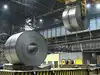
India fastest-growing major steel market; demand to grow 7.9% in 2026: World Steel Association
India's steel demand is projected to grow by 7.9 percent in 2026 and by 8 percent in 2027. This growth is driven by infrastructure projects, manufacturing expansion, and strong real estate demand. Conversely, steel demand in China is expected to experience a decline of 2 percent in 2026, followed by a lesser contraction in 2027.

US bull market nears fourth anniversary, but narrow rally raises risks
The ongoing US stock bull market is nearing its fourth anniversary with strong corporate earnings and low volatility. Investor concerns are rising due to the disparity between benchmark indices and the performance of individual stocks. The reliance on artificial intelligence for growth makes the market susceptible to volatility if sentiment shifts. Upcoming third-quarter earnings and midterm elections could introduce additional uncertainties for investors.

The Comeback of the Physical Store—and What It Means for Your Business
Brick-and-mortar retail is not declining but evolving, as stores take on new roles as logistics hubs, experiential destinations, and powerful drivers of demand and brand equity. Rising digital acquisition costs and operational challenges are pushing companies to integrate physical and online channels, using stores to improve fulfillment, customer engagement, and marketing effectiveness. The broader lesson for leaders: assets once viewed as liabilities can become competitive advantages when their role is reimagined and aligned with changing economics and customer behavior.

There could be a pretty big global shock, says Nobel laureate & economist Michael Spence
Michael Spence highlights the economic growth of India and China, noting India's potential growth trajectory. He emphasizes India's advancements in digital infrastructure, particularly in digital financial services like UPI. Spence discusses the significance of AI in economic development and its anticipated impact over the next decade. He warns of potential economic shocks due to rising debt levels and high market valuations.

Trump's AI lunch: Zuckerberg, Pichai, Musk and Huang head to the White House
President Donald Trump and House Speaker Mike Johnson plan to meet with AI executives at the White House. The discussion will focus on balancing innovation with the need for oversight amid growing public concern. Lawmakers face pressure to introduce regulations to govern the rapidly evolving AI sector. Companies are concerned about their operational practices being scrutinized by proposed legislation.

Why bond yields are rising and why everyone should care
The bond market has witnessed unprecedented yield levels, peaking at heights not seen in two decades, leading to increased borrowing costs for individuals and businesses alike. Rising inflation plays a pivotal role as U.S. Treasury yields climb, pushing mortgage rates upward for eager homebuyers. This trend affects interest rates, investment flows, and could lead to larger interest payments for taxpayers as government borrowing escalates.
US stocks face rate-hike jitters as investors assess Fed's policy path
US stocks face renewed volatility as investors assess the Federal Reserve’s rate-hike path and its impact on economic growth and corporate earnings. Historical data show the S&P 500 often weakens initially after the first rate increase, although longer-term performance has generally remained positive when economic and earnings growth stay resilient.

Treasury yields have spiked significantly, is there a US recession lurking around the corner? Here's what you need to know
The US government bonds have undertaken a sudden steep climb in recent while, which is raising concerns about the possibilities of an impending recession in the US economy, according to reports. What is the primary reason for such a sudden climb in Treasury yields?

Soft landing or Hard landing of the U.S economy? It's more like no landing; what it is, here's all you need to know
The path of the overall US economy across the first few months has been rather complex and has predicted everything from a soft landing to a recession this year. However, it now seems that there is a third option on the table.
Recent job uptick is temporary, the US may be caught off-guard by a recession very soon
The current labor market may not be as great as it seems at this point, and unemployment could be at its worst currently, if a market strategist is to be believed. Does this mean the arrival of a US recession?

A US recession in 2025? Goldman Sachs says only 15% chance
Increased recession fears in the United States can take a chill pill right now, as the latest knockout jobs report has somehow reduced the tensions around an impending recession hitting the US markets by the end of the year, as per reports.
Top money mistakes to avoid when preparing for a recession
A US recession could be incoming whether you may like it or not, and when such calamities are on the verge of occurring, people tend to make some mistakes that make them regret for life. Here are some things one should avoid during any impending recession scenario, especially in a country like United States.

Economic data points towards an U.S recession, stock markets could tank going forward
The US recession is currently in a major, fragile state, as economic data suggests that the markets could see major drop in some major stocks. What could be the scenario of the US economy in case the stock markets begin tanking?
Load More

