
US RECESSION
Argentina bans its central bank from printing money for the government
Argentina's Congress has passed a law barring the central bank from printing money to finance government spending, formalising a key part of President Javier Milei's fight against inflation. The move comes as the country's economy slips into recession, with manufacturing and other industries struggling and concerns growing over Milei's economic reforms ahead of the next presidential election.
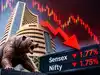
Monday Blues! Profit-booking puts brakes on bull run
On Monday, Indian equities hit a rough patch, resulting in declines for BSE Sensex and NSE Nifty. Investors opted for profit-taking after recent upward trends. The Nifty Bank index took a major hit, dropping over 4%. While US stock futures showed signs of recovery, Asian markets reacted variably following various countries' stabilizing efforts, all amid rising worries about global growth slowdowns and potential US interest rate increases.

Tech layoffs were just the start: 1.6 million more US job cuts could push America toward recession
US technology layoffs have crossed 200,000 in 2026, with Google, Microsoft, Amazon and other major companies cutting jobs. But the bigger concern is whether the trend will spread to retail and financial services, where another 1.6 million job losses could push unemployment higher and raise fears of a US recession.

Why gold’s five-year winning streak is under threat after dramatic selloff
Gold has fallen to around $3,510 an ounce after hitting a record $5,594.82 earlier in 2026, putting it on track for its first annual loss in five years. A stronger dollar, elevated bond yields, profit-booking and weaker safe-haven demand continue to pressure prices.

Fund managers turn overweight on India, first such classification since Jan
Fund managers have recently indicated an increased interest in investing in India after several months of cautious sentiment. A significant number of investors are concerned about the absence of artificial intelligence-related investment options available. Increased interest in healthcare and shifts toward defensive sectors have been noted, reflecting changing priorities among investors. Despite concerns over potential risks, half of the fund managers predict a soft landing for the global economy.

Warren Buffett’s distinction: A share price is a guess, but there are things that can be predicted
A merger is announced as the strongest its industry will ever see, and the bankers put their names to it. Nine years on, the owners have lost more than half of what they had. Elsewhere, a man who built a firm from almost nothing turns down the bidder offering him the most, for a reason that has nothing to do with money. And a railroad changes hands the day after the market decides to avoid it. Buffett ties all three together to tell us about what the job of buying actually is.
- Go To Page 1
Anthropic forges ahead with its IPO even as AI fears mount and markets wobble
No ordinary sale, the Claude chatbot maker's IPO could raise more than $60 billion on Thursday, a massive haul that, depending on the ultimate pricing and other issues, could rival SpaceX's in June.

Heat-trapping carbon pollution drops, but scientists cite the Iran war rather than energy progress
This year, global carbon emissions fell by 0.4%, driven by oil supply disruptions from the conflict in Iran. While oil and natural gas emissions experienced notable declines, there was a small uptick in coal emissions. Experts caution that these improvements may not be guaranteed, attributing them primarily to external influences.

Mid and smallcap stocks could see strong gains in 2027, but expect volatility, says Deepak Shenoy, Capitalmind Mutual Fund
Deepak Shenoy anticipates a stronger rally for mid and smallcap stocks in 2027, marked by volatility. He forecasts earnings growth exceeding 20% in these segments, supporting potential gains. Valuations, however, will vary based on companies meeting growth expectations or not. Global political tensions and the AI sector's challenges may influence market dynamics. Shenoy emphasizes the unpredictability of market movements and shares insights on past predictions.
US employers added a surprising 165,000 jobs in October; unemployment rate dipped to 4.1%
US employers added 165,000 jobs last month, surpassing economists' expectations and bringing the unemployment rate down to 4.1%. The Labor Department also revised previous months' job figures upwards, indicating stronger hiring trends.

Mass protests sweep France as huge crowds demand higher wages, back students' demands
France witnessed a wave of protests advocating for increased wages and student rights, drawing attention from both unions and political leaders. The Interior Ministry estimates around 600,000 participants, while unions claim nearly 1.6 million people took part in these demonstrations. Disruptions in schools and public transport were rampant, as blockades and strikes organized by students and workers unfolded.
Hundreds of thousands strike across France for higher wages and to back students
The Paris march began peacefully on Thursday afternoon at Place de la Republique. The large crowd included many students carrying signs reading, "Inequalities seriously jeopardize our future" and "We can't spend our whole lives just trying to make a living." They were joined by workers and retirees demanding higher wages and pensions.
Global markets were already fragile. Big AI bets could break them
Investors flocked to bonds. Yields, which move inversely to price, fell from multidecade highs, with the benchmark 10-year Treasury, which guides borrowing costs globally, falling almost 20 basis points on October 22, its biggest daily fall since early 2023.
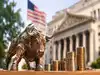
Stocks rose after every US midterm elections since 1946. Why that streak may not mean what investors think
Tomorrow Americans vote in the midterms, and a lot of investors are asking one thing; will stocks go up afterward? History says yes. The S&P 500 was higher a year after every midterm since 1946, 20 times out of 20. The average gain was 14.8%. That sounds like a sure thing. It isn’t, and here is why.

When do clocks fall back in 2026? November 1 brings an extra hour of sleep, but could America finally end daylight saving time for good?
When does Daylight Saving Time end in 2026? Daylight saving time keeps American clocks one hour ahead of standard time during the warmer months. The idea is to shift an hour of daylight from the early morning to the evening, giving people more sunlight after work and school.

Rs 4,000 crore Ramayana producer lost 90% of his wealth in 2008 recession. How Namit Malhotra bounced back to build an Oscar-winning company from a Mumbai garage and back the epic movie
Ramayana Part 1, helmed by director Nitesh Tiwari, is set to premiere on November 5 across multiple languages. The film boasts an impressive ensemble cast featuring talents like Ranbir Kapoor, Sai Pallavi, and Yash. Producer Namit Malhotra has an inspiring backstory, evolving from a garage startup to an Oscar-winning visual effects powerhouse with DNEG. Read on!

‘Facing ‘gerontonomia’, the West’s young opt for political extremes’
Tim Vlandas analyzes the influence of aging populations on electoral politics in advanced capitalist nations like Europe. Older voters display different policy preferences, emphasizing pensions over issues of younger demographics. Consequently, governments often allocate more resources to pension spending rather than investing in education and infrastructure. Young voters may become politically disenchanted, leading to radical shifts towards extreme parties.
Wall Street is showing fear at 32 on the Fear and Greed index: Is a US recession getting closer and what should investors do?
Wall Street investors are becoming cautious after a strong period of stock market gains. The Fear and Greed Index has fallen to 32, placing it in the fear zone. The S&P 500 is around 2% below its recent high, while the Dow Jones Industrial Average and Nasdaq Composite are down roughly 3% and 5%, respectively, from their peaks earlier this year.
Christine Lagarde: The outsider who led the European Central Bank her way
Christine Lagarde's early departure as European Central Bank president marks the end of a seven-year tenure shaped by the Covid-19 pandemic, energy shocks and record inflation. Despite initial doubts over her lack of formal economics training, Lagarde helped steer the ECB through major crises. However, her decision to leave before her term ends has sparked criticism over political interference and raised questions about the institution's independence.

World Bank sees commodity prices surging 23% in 2026 on Middle East war
Commodity prices were projected to rise 23% in 2026 as the Middle East war disrupted energy supplies and shipping, while grain disruptions and safe haven demand pushed food and metals prices higher. The World Bank warned that further conflict escalation and a severe El Niño could intensify inflation and food security risks.

World Bank sounds alarm on food crisis as energy shock and El Nino push commodity prices up 23%
Global commodity prices are projected to rise significantly in 2026, driven by conflict in the Middle East and supply disruptions. Energy prices are likely to escalate by 32% due to decreased oil supply and increased consumption. Food prices are expected to increase about 10% in 2026 due to rising farm costs and disrupted grain shipments. The World Bank emphasizes the urgency of supporting vulnerable countries facing economic hardships.
Bond market doubts gridlock will ease deficit woes this time
Amidst the backdrop of upcoming midterm elections, bond investors are voicing skepticism about the effects on fiscal policy. Polls indicate that Democrats could seize control of one Congress chamber but might lack a veto-proof majority. Historical data shows that a divided Congress generally reduces Treasury yields, yet anxiety persists this time around.
Arizona Midterm Polls 2026: Who is Katie Hobbs? Democrat outspends Republican rival Andy Biggs in race for governor as she seeks second term in office; all you need to know
Arizona's 2026 midterm elections are set for November 3, where voters will select crucial officials. Governor Katie Hobbs seeks re-election against Republican Andy Biggs. Hobbs has a notable advantage, outspending Biggs by $12 million in campaign funding. Both candidates have attracted significant outside financial support, creating a highly competitive environment in the gubernatorial race.
Bond market is a buy right now, JP Morgan Asset Management's fixed income head says
According to Bob Michele of J.P. Morgan Asset Management, investors should take advantage of the current bond market opportunities without delay. He estimates returns of up to 8% over the next year, emphasizing the promising yield potential, especially in US treasuries. Michele reassures that a recession seems unlikely at this time while also alerting that inflation concerns could compel the Federal Reserve to implement larger rate hikes than expected.

The war bump is a false victory for S&P 500 profits
The commentary argues that strong S&P 500 earnings growth is narrowly concentrated in AI-linked companies and sectors benefiting from the Iran war, including energy, defence and materials. It warns that higher fuel prices, inflation and borrowing costs could weaken consumer demand, while heavy dependence on the AI boom leaves the market vulnerable if investment returns disappoint.
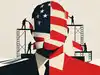
Research: Navigating the Business Risks of Changing Pro-America Sentiment
U.S. firms increasingly operate in a marketplace where “Made in USA” is no longer a neutral provenance claim but a charged political signal. A new study analyzing 5,355 companies over twenty years found that pro-America marketing has increasingly shifted from pride-based patriotism to grievance-fueled, us‑versus‑them nationalism. While this can create upsides—new customers, loyalty, pricing power—it also exposes companies to narrative capture, boycotts, and legal scrutiny. To avoid risk, companies must examine their exposure along two axes: domestic embeddedness and symbolic intensity. Leaders must align operations and symbolism, set clear guardrails, and proactively manage meaning drift before others define their loyalties.
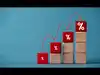
RBI rate hikes: How short-duration funds and high-quality corporate bonds can protect your debt portfolio
Investors must position fixed income portfolio for further rate hikes. But this cycle may look different.

Dallas began building a $110 million park over a freeway in 2009; 3 years later, Klyde Warren Park became a major attraction
Klyde Warren Park is a five-acre public park in downtown Dallas, Texas. It was built over the recessed Woodall Rodgers Freeway, between Pearl and St. Paul streets. The aim was to create green space above a busy road and reconnect parts of the city centre. The park serves as a recreational, social and cultural space for residents and visitors.

Tilak Varma’s family was once too poor to own a home. Today, his Hyderabad home worth crores, has a swimming pool, private gym, puja room
Tilak Varma’s Hyderabad home is a study of mixing comfort with elegance. The house is multi-stoered and costs anything from Rs 5 to Rs 10 crores.
Load More

