
US ECONOMY

US growth boosted by AI, but no sign of a turning point higher
Economists estimate the growth potential of the US economy to be around 2%, whereas President Donald Trump aspires to double it. Business investments are escalating, primarily driven by the demands for data centers and enhanced AI capabilities, which can positively affect GDP growth. However, the influence of artificial intelligence on productivity is still unpredictable, and tariff strategies for cutting imports yield mixed results, affecting the market dynamics significantly.

Iranians fear a possible return to all-out war as US and Israeli elections approach
Many residents in Tehran are increasingly anxious as threats of war loom ahead of elections in the U.S. and Israel. Iranian leadership remains defiant despite mounting pressures due to a naval blockade and economic challenges. Citizens are stockpiling food and medicines as a precaution against potential military conflict. Political moderates are calling for negotiations to address the worsening economic situation.



Charting the global economy: Euro area business activity cools
The euro area’s private sector slowed more than expected in October, weighed down by France as the region’s No. 2 economy grapples with fiscal and political tensions.

Silver dividends: How investing in ageing societies can boost growth and cut healthcare costs
As populations age and people work longer, governments can turn longevity into an economic opportunity by investing in accessible infrastructure, reskilling and flexible employment. The proposed “silver multiplier” captures how keeping older people socially and economically engaged can raise output, support entrepreneurship, improve public health and reduce healthcare spending.
- Go To Page 1

Fitch maintains Ukraine at 'CCC', expects war to extend into 2027
Fitch Ratings has kept Ukraine's long-term foreign-currency rating at 'CCC', indicating significant credit risk amid the ongoing war. The agency predicts that the conflict with Russia may extend into 2027, affecting the country's economy. Ukraine will continue to depend on foreign financial aid to address budget deficits while facing rising fiscal challenges. Growth is projected to resume in 2027 after a slight economic contraction in 2026 due to war-induced pressures.
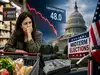
US consumer sentiment near record low ahead of midterm elections
In October, consumer sentiment in the U.S. plummeted to a concerning 48.0, driven by rising prices and economic worries amid the ongoing Middle East conflict. Survey results suggest that independents show the steepest drop in confidence, approaching historical lows. Additionally, inflation expectations have risen, marking a continuation of trends from earlier this year. Federal Reserve officials are attentively observing these shifts as they plan future interest rate adjustments.

Strong macro fundamentals, policy interventions to anchor eco against global headwinds: RBI bulletin
Strong macroeconomic fundamentals continue to support the Indian economy against global inflation and trade tensions. Recent geopolitical frictions have resulted in increased prices and supply chain issues, leading to policy changes. Currency fluctuations were observed, but measures by the Reserve Bank helped stabilize the rupee recently. Foreign Direct Investment remains robust, driven by significant inflows from major sources like the US and Singapore.

US business activity cools in October; strong demand fueling price pressures
US business activity experienced a slight slowdown in October, though strong demand allowed price increases. The S&P Global Composite PMI Output Index indicated sustained economic expansion, even amid challenges. New orders received by businesses rose slightly, with the services sector seeing growth. Although price pressures persisted, employment in manufacturing increased significantly, highlighting capacity expansion. Economists anticipate further inflation concerns due to ongoing supply chain issues and geopolitical tensions.

World shares are mixed after Wall Street's AI-related losses, while oil prices jump
Global stock markets displayed a mix of outcomes while oil prices surged due to escalating tensions in Iran. Brent crude soared past $114 per barrel, suggesting growing unease within the energy sector. In the U.S., tech giants like Nvidia and Meta Platforms saw significant declines, raising worries about economic repercussions. Concurrently, U.S.

US bond market down: Why are 10-year, 30-year, 2-year treasury yield notes are falling? Check latest predictions
US bond Yields have dropped in recent days, as concerns about a slowdown in AI spending and its impact on economic growth have overshadowed economic data, which showed persistent inflation pressures.

India must avoid copying China's aggressive tax policies on private wealth and offshore assets
Developing economies often look to the US and China for cues on taxation, infra spending and policy. India, for one, must steer clear of emulating such tax policies. China's circumstances are materially different from India's. India's economy is expanding at a healthy pace, and housing is rising steadily.

Pershing's Ackman sees a $1 trillion Israeli company within a decade
Billionaire investor Bill Ackman said he remained bullish on Israel’s economy and financial markets, predicting the country could produce a $1 trillion company within a decade. He highlighted Israel’s technology ecosystem, AI potential and growing ambitions to build global companies, while saying the country’s small population could become an advantage.
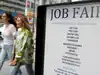
US weekly jobless claims near 57-year lows
Economists say rising profits amid strong domestic demand were shielding workers from layoffs. There are, however, worries that tightening financial conditions and higher interest rates as the US-Israeli war with Iran fuels inflation could undercut the labor market next year.

Major new US regulation on AI unlikely despite rising political focus: UBS Report
In the United States, significant regulations on Artificial Intelligence appear improbable, as economic optimism prevails. This technology is viewed as a cornerstone for future economic growth and enhanced productivity. The midterm elections are predicted to have a minimal effect on existing regulations. While developers advocate for stricter safety protocols, the tech industry has opted for voluntary collaborations instead.

US economy could reportedly lose $1 billion in a single day as 1.5 million people plan ‘sick leaves’ for GTA 6 launch: When was this seen before?
With the Grand Theft Auto VI launch just around the corner on November 19, excitement is palpable among gamers. Economic analysts anticipate a noticeable dip in workplace productivity, with numerous employees likely to take sick days to immerse themselves in the game. Historical game releases have demonstrated comparable trends, indicating that Rockstar Games is poised for a lucrative opening day.

Chinese stock market enters bear territory! CSI 300 index crashes 20% from June peak
China’s CSI 300 index entered bear market territory on Thursday, falling 20% from its June peak amid concerns over taxation policies, slowing economic growth and weak corporate earnings. Geopolitical uncertainty and fears of an artificial intelligence bubble have added to investor anxiety, though some analysts expect a potential rebound in 2027.

America's $1 trillion annual interest bill is growing as national debt surges, so why isn't the US facing a debt crisis like France?
The United States continues to finance its national debt more effectively compared to France. While both countries face rising borrowing costs, the US dollar's global status provides crucial advantages. Increased federal interest costs are currently impacting public funding for services in America. France's debt challenges are worsened by political divisions and economic stagnation, which restrict fiscal reforms.

When it comes to Trump's economy, these are the numbers that matter before mid-term elections
United States President Donald Trump attempted to convince voters before the upcoming mid-term elections that the American economy is growing. However, voters have maintained the negative effects of inflation caused by the Iran war. The economy is seeing slowing job growth and widening income inequality, with high interest rates encumbering housing and automobile purchases.

Global Market | Safe-haven assets under pressure: Dollar, Swiss franc, German bonds and gold in focus
Safe-haven demand is shifting amid AI-driven market volatility, geopolitical tensions, rising energy prices and mounting government debt. The US dollar, Swiss franc, German Bunds, short-term government bonds and gold offer potential protection, but differing risks and volatile returns highlight the challenges of safeguarding portfolios during market uncertainty.

A 'golden age' vs. 'we're working on it': Trump and Vance give different pitches on the economy
US President Donald Trump asserts that America is experiencing a golden age, despite rising costs affecting citizens. Meanwhile, Vice President JD Vance acknowledges the frustrations many voters feel due to high gas prices. Economic confidence continues to decline, with inflation affecting multiple sectors. Supporters have mixed feelings about the president's optimistic outlook on the economy.

Fed sneezes, but emerging markets aren't catching a cold yet: McGeever
Emerging markets are displaying surprising economic resilience in light of the Federal Reserve's tightening measures. Stronger fiscal fundamentals and high bond yields provide emerging market central banks with greater flexibility. Some countries are even considering rate cuts, which may not have been possible in the past. Investor sentiment is shifting towards emerging markets as they are viewed more favorably compared to developed economies.

Gold edges higher as investors assess Fed rate-hike odds
In early Asian trading, gold prices saw a modest uptick as speculation swirled regarding the Federal Reserve's policy stance. Investors are closely watching remarks from Fed Chairman Kevin Warsh on the state of the U.S. economy and rising inflation concerns. As import costs climb, expectations for a rate hike this December are building. Furthermore, unrest in the Middle East is contributing to market volatility, influencing investor confidence.

Rebuked by India, Vance admits he went too far with "indentured servants" rhetoric
JD Vance faced backlash for comparing H-1B visa holders to indentured servants, prompting clarifications in his statements. He emphasized that his criticism aimed at the companies and visa system instead of the visa holders. The Indian government condemned Vance's remarks, highlighting the contributions of Indian professionals to the US economy. They stated that such descriptions ignore the significant role immigrants have played in America's growth.

Charting the global economy: Inflationary pressures mount in US
A broad upswing in consumer prices last month helps reinforce expectations for additional Federal Reserve interest-rate increases in the months ahead.

Euro gets much-needed reprieve as AI wobbles rock the dollar
The dollar is about to experience its first weekly decline in five weeks amid AI investment concerns. The euro has rebounded from a 17-month low as US yields fall. Investors are worried about the profitability of data centre operators amidst AI stock volatility. Federal Reserve Chair Kevin Warsh's speech may influence market expectations for upcoming rate decisions.

US consumers are muscling through higher prices, but for how long?
High gas prices are impacting inflation, leading to increased costs across various sectors and goods. Consumers are still maintaining spending levels, indicating some economic resilience despite these pressures. Retail sales rose, driven by higher expenditures at gas stations and dining establishments. However, economists are expressing concerns regarding the long-term effects of inflation on consumer spending power. With unemployment low, spending may continue, although inflation raises potential borrowing costs.

Small-biz optimism in US at three-month low
The National Federation of Independent Business index slipped 0.8 point to 97.9, according to data released on Tuesday. Six of the 10 components that make up the gauge declined, while three rose and one held steady. The net share of owners who expect business conditions to improve declined 4 percentage points to a four-month low of 6%. Persistent price pressures continue to weigh on small businesses as conflicts in West Asia and Europe keep energy costs high.
Load More

