UNSC REFORM
'Universal, non-discriminatory and verifiable': India calls for legally binding framework for nuclear disarmament at UN
India called for a universal and verifiable framework for nuclear disarmament at the UN General Assembly. The country emphasized that nuclear weapon decisions should remain under human control amid AI advancements. India reiterated its commitment to a no first use policy and a voluntary moratorium on nuclear testing. Legal assurances against nuclear attacks for non-nuclear states were also advocated by India's representatives.

Permanent India UNSC seat an 'obvious element' of global governance reform: Polish envoy
Poland's Ambassador to India affirmed support for India's permanent seat on the United Nations Security Council. This endorsement aligns with broader reforms in global governance that recognize emerging powers from the Global South. India has been praised for its diplomatic efforts concerning the Russia-Ukraine war, promoting peace and dialogue. A potential trilateral summit between Russia, the United States, and China could address this conflict further.

Next UNSG's top task, UNmaking irrelevance
With just three months left in his term, Secretary General Antonio Guterres prepares to pass the torch to his successor. To be considered, candidates must garner substantial backing from the United Nations Security Council. The incoming Secretary General will need to navigate intense geopolitical strife and pressing global issues such as climate change and financial instability.

India-Brazil-South Africa make strong pitch for ambitious, comprehensive and profound reform of UN
IBSA Foreign Ministers convened to call for urgent reforms of global governance institutions and the UN Security Council. They expressed support for increased representation of developing countries in decision-making processes, particularly in the UNSC. The Ministers highlighted the need for reform to address contemporary challenges, including climate change and socio-economic inequality. They also raised concerns about conflicts in the Middle East affecting the Global South.

80 years, no woman at the top: UN chief race tests its gender-equality promise
Calls for a female UN leader are growing as the agency faces ongoing gender equality challenges. Experts indicate it may take 171 years to achieve true gender parity globally. Several nations expressed the need for women to hold leadership roles during recent discussions. Notably, women currently represent only 22% of positions in the AI sector, reflecting ongoing disparities.
Russia backs India's bid for permanent seat on United Nations Security Council
Demonstrating solidarity, Russia has backed India's ambition for a permanent seat at the United Nations Security Council, firmly opposing additional positions for Western powers like Germany and Japan. Sergey Lavrov, the Russian Foreign Minister, underscored the essential need for greater representation from regions such as Asia, Africa, and Latin America, reaffirming the importance of considering African needs in any discussions regarding council reforms.
- Go To Page 1
India calls for greater Global South voice, UNSC reform at G77 foreign ministers' meeting
India called for greater voice and representation for developing countries and stressed the need for urgent UN Security Council reform as Foreign Secretary Vikram Misri delivered India's national statement at the 50th Annual Meeting of Ministers for Foreign Affairs of the Group of 77 during the 81st session of the UN General Assembly in New York.

‘India’s UNSC claim is strong — big powers are failing their UN role’
Richard Caplan emphasizes the limited role of the United Nations in current conflicts like Ukraine-Russia and US-Iran. He highlights how the UN struggles to enforce collective security due to actions by permanent members of the Security Council. While the UN has made some humanitarian contributions, significant issues remain unaddressed. Caplan also critiques the diminished institutional power of the UN under recent US administrations.

China unlikely to back India's UNSC bid: Former US NSA John Bolton
John Bolton has indicated that China will not support India's permanent seat bid in the UN Security Council. He suggested that any expansion of permanent membership requires an amendment to the UN Charter. Bolton believes this amendment would likely be vetoed by China, maintaining the current five permanent members. He also expressed doubts about the UN's ability to manage broader institutional difficulties.
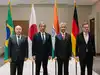
India, Brazil, Germany & Japan call UN Security Council ‘anachronistic,' seek urgent reform
India, Brazil, Germany, and Japan have called for reform of the UN Security Council, emphasizing its outdated structure. The G4 nations expressed concern over the slow progress of negotiations for reform over the last 18 years. They advocate for the extension of both permanent and non-permanent members to better represent underrepresented regions. Support for Africa's push for permanent membership was also reiterated by the G4 ministers.
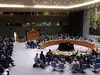
India, other G4 nations express 'strong concern' at lack of progress on UNSC reform
The G4 nations of Brazil, Germany, India, and Japan convened to address UN Security Council reform concerns. They expressed disappointment over the lack of advancements in previous negotiations regarding UNSC reform. The Ministers emphasized the necessity for the reform to reflect contemporary geopolitical realities and represent underrepresented regions. They reiterated the importance of including more voices from Africa, Asia-Pacific, and Latin America and the Caribbean.
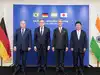
G4 countries call for immediate UNSC reform, cite council's inability to uphold global peace, security
Foreign Ministers from the G4 countries met in New York to discuss the need for UN Security Council reform. They highlighted the current Council's inability to maintain international peace and security effectively. The G4 emphasized the importance of expanding both permanent and non-permanent membership categories to reflect modern geopolitical realities. Discussions also included the representation needs of under-represented regions, especially Africa.
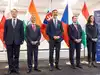
India gets backing from 4 European nations for permanent UN seat; Jaishankar hails ‘historic’ meet
Slovakia voiced support for India's permanent United Nations Security Council membership. This backing came during a significant Visegrad Group plus India meeting. India and the V4 nations agreed to enhance their political and economic ties. They also committed to strengthening cooperation in technology and defense sectors. Regular ministerial meetings and business forums will now be held annually.
India’s 30-year wait for a seat has a new twist and an old problem
European nations now support India's bid for a permanent UN Security Council seat. Prime Minister Modi stresses the urgent need for Security Council reform. Key questions involve seat allocation and regional claim resolution. The UN reform process has stalled without a negotiating text. India continues its campaign for elected terms while pursuing permanent membership.
BRICS Declaration condemns Pahalgam terror attack, backs India's UNSC aspirations
BRICS countries condemned the 2025 Jammu and Kashmir terrorist attack in Pahalgam. The New Delhi Declaration called for zero tolerance towards terrorism and rejected double standards. Acts of terrorism were deemed criminal and unjustifiable regardless of motivation or perpetrator. BRICS reiterated commitment to combating terrorism in all its forms and manifestations. Accountability for those involved in and supporting terrorist activities was stressed.
BRICS adopts New Delhi Declaration: Inside the 140-point document on Global South's ambitions
BRICS leaders adopted the New Delhi Declaration at the 18th summit, reaffirming their commitment to cooperation, multilateralism and a more representative global order. The document outlines India's 2026 chairship priorities, recognises partner countries' contributions and calls for greater participation of Emerging Markets, Developing Countries and Least Developed Countries in global governance.
BRICS 2026: A declaration, no roadmap
India displayed diplomatic strength by forging consensus for the New Delhi Declaration. Member nations hold differing perspectives on BRICS's future direction and goals. China's influence is evident as it prepares for its upcoming chairmanship of the grouping. The declaration reiterates support for UNSC reform without setting a clear timeline. BRICS members aim to shape global rules rather than merely follow them.

New Delhi scripts a post-US worldview
The New Delhi Declaration signifies a transformative shift in global dynamics, asserting a multipolar world that transcends Western dominance. BRICS stands against unilateral sanctions, branding them as coercive actions that undermine legitimacy. This unified stance underscores the importance of sovereignty and dialogue while highlighting a move towards strategic autonomy. India's advocacy for UNSC reform further supports this newly conceived worldview, as BRICS actively engages with the shifting global landscape.
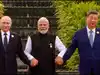
BRICS 2026: Global South must now shape, not merely follow, rules, says PM Modi
Prime Minister Modi advocated for global governance reform, transforming privilege into partnership. He proposed a Seafarers Emergency Support Network for maritime welfare. A BRICS trio format was suggested to ensure continuity among presidencies. India championed the New Delhi Declaration's adoption by consensus among bloc leaders. The group aims to give the Global South a greater voice in global decision-making.
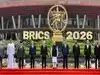
BRICS urges IMF, World Bank reforms, condemns unilateral tariffs, secondary sanctions
BRICS leaders adopted the New Delhi Declaration, expressing serious concerns over unilateral trade measures. They called for the elimination of unlawful measures and advocated for global financial architecture reform. Discussions explored efficient cross-border payment mechanisms and local currency trade settlements. The bloc also emphasized stronger energy security and agricultural collaboration among members. BRICS reaffirmed support for a rules-based multilateral trading system centered on the WTO.

'UNSC reform can no longer be delayed': UN backs PM Modi's UNSC reform push, credits India's BRICS Presidency
The UN spokesperson supports Prime Minister Modi's call for Security Council reform. He stated the current structure does not reflect 21st-century global realities. BRICS nations seek a more representative and equitable international system. They advocate for greater participation of developing countries in global governance. The group also supports reforming international financial institutions and the WTO.
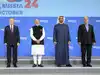
BRICS 2026: India's chairship and Global South's push for 'endless war to end of war'
New Delhi hosts the 18th BRICS Summit amid global conflicts and economic challenges. Developing nations seek this platform to voice concerns and find alternative solutions. The bloc faces internal divisions due to differing geopolitical alignments and national priorities. India aims to facilitate dialogue and steer discussions towards shared Global South objectives. The summit will explore practical solutions for global problems and promote peace and prosperity.
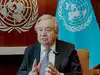
UN chief Antonio Guterres to stress multipolarity, UNSC reforms at BRICS Summit in India
United Nations Secretary-General Antonio Guterres will attend the BRICS Summit in India this week. He will speak on the importance of multipolarity and reforming global institutions. Guterres will highlight that current realities differ from those of 1945. He is expected to meet Prime Minister Narendra Modi and other officials. The summit will discuss pressing global challenges and inclusive growth.

BRICS at a crossroads: Why India's chairship must turn diversity into strength
BRICS, with its expanded membership, aims to strengthen multilateralism and global dialogue. The group seeks to convert economic complementarity into resilient and dependable value chains. Sustainability is presented as a crucial development imperative for member nations. BRICS can offer pragmatic, development-centered approaches to global challenges. The grouping can reinforce its role as a bridge between diverse nations and institutions.
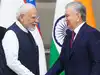
Uzbekistan backs India's permanent UNSC bid; both agree to set up FM-led mechanism, strengthen counter-terror cooperation
Uzbekistan supports India's permanent UNSC membership bid and will establish a Foreign Ministers-led oversight mechanism. Both nations condemned terrorism and agreed to enhance counter-terrorism cooperation through joint working groups. They also committed to strengthening coordination at international forums for Global South interests.
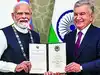
PM's central Asia trip amid rising geopolitical salience
Prime Minister Modi's Central Asia visit highlights regional importance and India's UNSC bid. Uzbekistan and India agreed to strengthen cooperation in international organizations. Both nations called for comprehensive United Nations Security Council reform. Uzbekistan reaffirmed its support for India's permanent UNSC membership bid.

Donald Trump demands UN overhaul, US plans $850 million payment
The US government plans to pay $850 million to the United Nations. This payment includes regular budget dues and peacekeeping operations contributions. The United States owes billions in dues to the international organization. Republicans expressed concerns about the payment and UN reforms. The administration previously withdrew from several UN agencies.
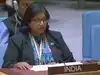
India calls for urgent UNSC reforms, greater Global South representation at UN debate
India advocates for urgent UN Security Council reforms to reflect current global realities. The nation seeks expanded membership, especially for developing countries in the Global South. Discussions on working methods must integrate broader reform clusters and the veto issue. Transparency and equal access to information are crucial for all members. Troop contributing countries should influence peacekeeping decision-making processes.
Load More