
U S GEOLOGICAL SURVEY
Magnitude 6.9 earthquake shakes Peru's Andes, with no damage or casualties immediately reported
On Friday, a magnitude 6.9 earthquake shook the Andes region of central Peru at 7:09 p.m. local time. The epicenter was located 34 kilometers north of Junin at a significant depth of 108 kilometers. Residents in the Peruvian capital felt the tremors and fled into the streets for safety. Fortunately, there were no immediate reports of damage or casualties following this earthquake.

Earthquake in California: LAFD activates earthquake mode across 106 fire stations, launches citywide emergency inspections after two back-to-back quakes near Los Angeles
Los Angeles earthquake today: California had two significant earthquakes within hours of each other, the first a magnitude 5.1 quake near Monterey County, the second a magnitude 4.4 quake in the Los Angeles area. prompting the Los Angeles Fire Department to activate emergency protocols across 106 neighborhood fire stations. There were no immediate reports of operational disruptions, including at Los Angeles International Airport, said Los Angeles Mayor Karen Bass.
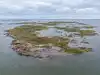
Most of Louisiana's Rabbit Island was flooded in 2020; after crews restored 102 acres of nesting habitat, birds built more than 11,600 nests in the first season
Rabbit Island, located in southwestern Louisiana, is undergoing an extensive restoration project aimed at reviving habitats for colonial waterbirds. Initiated in 2020, the initiative tackles erosion and habitat loss brought on by various challenges. The first season saw over 11,600 nests discovered, exceeding expectations considerably. To further combat erosion, limestone rock baskets were installed, enhancing the area's viability for wildlife.
In 1872, Alta, Utah, drew thousands of seasonal residents during a silver boom; by 1920, George Watson was reportedly its only resident
Once a bustling mining hub fueled by silver, Alta, Utah saw its fortunes decline in the 1920s. The last resident, George Watson, relinquished his land amid tax woes to the U.S. Forest Service, paving the way for ski area development. In 1938, the first chairlift was erected, marking the dawn of the Alta Ski Area. This transformation highlights how towns reliant on a single industry can adapt and thrive.
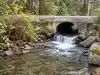
California replaced a fish-blocking pipe on Fort Goff Creek with a bridge in 2014; later monitoring found 64 Chinook salmon nests upstream
In California, the removal of the culvert on Fort Goff Creek has significantly enhanced fish passage, particularly for salmon. Completed in 2014, a new bridge now connects fish to breeding grounds that were previously inaccessible. Biologists found 64 nests of Chinook salmon in this newly opened habitat, highlighting the importance of addressing culverts nationwide to improve aquatic ecosystems and connectivity.
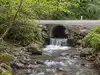
For 20 years, a road culvert blocked fish in California’s Sharber-Peckham Creek; crews replaced it in 2016, and 2017 monitoring found 740 juvenile coho upstream
In Northern California, a four-foot metal pipe had hindered salmon migration for two decades. After its replacement, juvenile coho salmon gained access to essential spawning habitats. This case underscores the critical situation of culverts obstructing fish passage nationwide. Recent research has identified the need to evaluate these structures for effective prioritization in upgrades. Continuous investment, study, and conservation efforts are essential for sustaining fish habitats.
- Go To Page 1
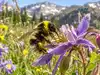
For 8 years, scientists studied 8 wild bumblebee species in Colorado; tongue length shaped pollen preferences, while bees shifted their diets with the seasons
A recent study from Northwestern University and the Chicago Botanic Garden reveals bumblebees' dietary preferences. Wild bumblebees monitor their intake of proteins, fats, and carbohydrates throughout the seasons. The research indicates that bees change their dietary preferences as seasons progress, ensuring they get adequate nutrition. Planting a variety of flowers in gardens may help support these vital pollinators.

In Washington, scientists excluded elk from rainforest plots for 36 years; shrubs became 5 to 6 times more abundant, while 46 plant species disappeared
A comprehensive study conducted over 36 years in Washington's Olympic Peninsula has unveiled striking insights into elk exclusion's impact on plant communities. Researchers found that while shrubs thrived, numerous smaller plant species vanished, underscoring the elk's critical role in promoting forest diversity through their feeding habits and behavior. These revelations challenge conventional views on herbivores, highlighting the importance of understanding ecological interactions for wildlife management and conservation efforts.
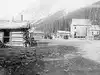
In 1902, Wyoming’s Kirwin mining camp grew to about 200 people; by 1907, a deadly snowslide destroyed the last company buildings and the boom faded
Kirwin, a once-bustling mining community nestled in the Absaroka Mountains of Wyoming, experienced a fleeting boom in the early 1900s. The settlement featured essential amenities like hotels and stores catering to miners' needs. However, a devastating snow slide in February 1907 crippled the town’s infrastructure, leading to a rapid decline in mining activity and a mass exodus of its residents.
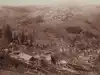
In the 1890s, Montana’s Marysville gold camp grew to about 4,000 people; today, its population is officially 82, with local estimates closer to 90–100
Marysville, Montana, once stood as a vibrant mining hub in the late 1800s, largely thanks to the rich yields from the Drumlummon Mine. At its zenith, this gold-producing site attracted a thriving community. However, as mining operations floundered, the population sharply declined, resulting in a mere handful of residents. The town's experience highlights the challenges faced by economies overly reliant on singular resources, underscoring the lessons on sustainability.
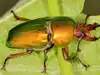
Scientists released 600 beetles into 30 identical landscapes; after 13 generations, some traveled three times farther than others despite the same lab conditions
A 2009 research highlighted that the movement patterns of species are far more erratic than earlier assumptions suggested, due to inherent natural variability. Experiments with red flour beetles over a span of 15 months in identical environments revealed significant differences in their movement. This unpredictability complicates the management of invasive species within ecosystems, emphasizing the need for a deeper understanding of uncertainties in ecological predictions for effective future planning.

US designates helium as a critical material, citing its importance for semiconductors
The U.S. remains the largest producer of helium globally, with production primarily from natural gas processing. Helium is crucial for semiconductors, medical imaging, and renewable energy technologies.

Los Angeles braces for rare tornado threat as major storm brings heavy rain, flash flood warnings
Los Angeles and Southern California are bracing for a major storm from Wednesday to Thursday, with the National Weather Service warning of potential flooding from heavy rains expected to reach three inches. Coastal regions are also under tornado threat, increasing the need for caution. Communities recovering from wildfires should prepare for possible mud and debris flows.
Trump says oil, gas and mineral exploration in Greenland is set to begin. It's not that simple
Donald Trump announced the beginning of exploration for oil and gas in Greenland which may alleviate energy concerns. Despite Trump's optimistic statements, resource extraction in Greenland has faced numerous challenges over the years. An agreement with Denmark and Greenland was signed to enhance Arctic security but lacks exploration rights. Legislators in Greenland have expressed environmental concerns over potential new permits for oil extraction.
San Francisco Bay cut invasive cordgrass by nearly 98%; native Ridgway’s rails then expanded into 4 former salt ponds as restored marsh habitat returned
The San Francisco Bay has seen remarkable advancements in wetland restoration, benefiting the Ridgway's rail population significantly. While initial attempts to eradicate invasive cordgrass had adverse effects on the rail, the project has effectively reestablished native plant species across vast areas. This ongoing restoration highlights how public funding plays a vital role in environmental conservation. Continuous observation and management remain crucial as the marsh works to revitalize its ecosystem.
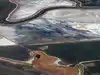
San Francisco Bay cut invasive cordgrass by more than 97%; native Ridgway’s rails later expanded into restored former salt ponds as marsh habitat returned
In a promising turn of events, restoration efforts in San Francisco Bay have notably decreased invasive cordgrass numbers, allowing the Ridgway's rail to flourish in revitalized salt ponds. By adjusting their strategies to eliminate invasive species while promoting native varieties, restoration teams aim to enhance these vital coastal wetlands that play a key role in flood protection as rising sea levels threaten California's shores.
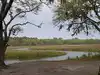
In 2019, Georgia placed 5,000 cubic yards of dredged sediment on a 5-acre salt marsh; six years later, it remained about 12 cm higher, with plant growth similar to nearby marshes
Wetlands serve as vital buffers in coastal regions, adeptly mitigating storm impacts while also acting as natural filters for pollutants. A recent initiative on Jekyll Island explored the advantages of sediment nourishment for restoring marshlands. Remarkably, over six years, the project elevated marsh height by 12 cm. This promising approach not only shields wetlands from rising sea levels but also boosts biodiversity and overall environmental integrity.

California cleared invasive plants from three Camp Pendleton breeding areas; willow flycatchers resettled at those sites within 5–7 years
In 2023, a lone Southwestern Willow Flycatcher was spotted at Marine Corps Base Camp Pendleton, a notable event after an absence since 2012 due to a drastic decline in its population. While habitat restoration initiatives show potential, challenges like invasive species and environmental pressures persist. Although some regions have experienced successful recovery, ongoing management and favorable conditions remain essential for the future of this vulnerable species.

Off Gulf coast of Florida, giant concrete domes were dropped more than 200 feet underwater to help restore corals and sea life. All corals outplanted in 2025 survived and even grew
Scientists have deployed specially designed concrete domes off Florida’s northern Gulf coast to help restore coral habitats. The project targets mesophotic corals that were affected by the 2010 Deepwater Horizon oil spill. In a follow-up mission, researchers found all corals placed in 2025 survived and grew successfully. The restoration efforts involve multiple organisations, including NOAA and the University of Rhode Island.
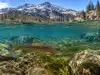
California began removing invasive brook trout near Independence Lake in 2005; a study found young Lahontan cutthroat trout survival increased from 4% to 12%
In the Sierra Nevada, Lahontan cutthroat trout have struggled due to competition from non-native brook trout. A study conducted between 2005 and 2010 revealed that brook trout removal improved the survival rates of cutthroat fry significantly. Research indicated a notable increase in the number of cutthroat juveniles entering Independence Lake after brook trout removal. Long-term monitoring is necessary to determine if the recovery of the species is sustainable.

Warnings ignored as Venezuela coastal towers faced quake forces they couldn't take, investigation reveals
In June, powerful earthquakes struck the coastal town of La Guaira, resulting in significant destruction and loss of life. Government-built apartment complexes collapsed due to inadequate construction standards and negligence toward geological risks. Experts indicated that the region's historical vulnerability to natural disasters was overlooked in housing projects. Officials have pledged to rebuild but face scrutiny regarding past mistakes in planning and execution.

In 1880, teacher Wells Cooke began writing down when migrating birds arrived; 90 years later, the project had left millions of records scientists still use today
Wells W. Cooke began recording bird migration dates in 1880 using index cards and a network of volunteers. This initiative expanded into a national program that operated until 1970, collecting millions of data points. Recent research has utilized this historical data to understand how climate change has impacted bird migration patterns. Studies indicate birds are migrating earlier in spring due to warming trends.

Since 1874, a boat on the Detroit River has passed mail to freighters that never stop, hauled up in a bucket on a rope; it has its own ZIP code: 48222
Since 1874, the J.W. Westcott II has served as a crucial lifeline for freighters navigating the Detroit River. Starting with John Ward Westcott's effort to connect ships to land, it transformed into a legally recognized service by USPS, operating 24/7 from April to December. As traditional mail volume dwindled, the mailboat diversified its offerings, including grocery deliveries and foreign vessel guidance.
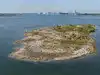
Savannah turned 160,000 cubic yards of mud removed from its harbor into an 8-acre island; birds built more than 300 nests there in the first season
Nestled in Georgia, a harbor island crafted from dredged mud has become a refuge for over 300 bird families. This artificial sanctuary serves as a critical nesting area for shorebirds, compensating for the loss of their natural coastal habitats. Although these islands play a vital role in avian conservation, they demand continuous upkeep.
In the 1940s, a few snakes arrived in Guam hidden in military cargo; decades later, nine of the island’s 11 native forest bird species were gone
Government bodies are collaborating with local citizen scientists in a proactive approach towards snake removal on Guam. This program's aim is to rejuvenate the island's native bird and reptile populations, which have been severely impacted by the invasive brown treesnake. The project will assess the role of citizen science in wildlife conservation and implement snake barrier strategies, with plans to use toxicants and live lure traps in subsequent efforts.

103 earthquakes in 80 days in Texas! Are oil and gas extractions responsible for this? Details here
Justin Rubinstein, a geophysicist with the U.S. Geological Survey in Menlo Park, California, has said Texas has experienced a total of 103 earthquakes, including 12 of magnitude three or more.

Remote sensing & aerial survey in southern Bihar to identify magnetite-bearing rocks & ultramafic rocks
Anomaly that will be obtained by DMG will be checked by drilling to prove the presence of magnetite-bearing rocks as well as ultramafic rocks which usually host Chromite (Cr), Nickel (Ni), Platinum Group of Elements (PGE) and gold. This will help in enhancing the mineral resource potentiality of the state, the official said. The survey will also identify the magnetic anomaly on the surface representing the presence of rocks having a higher content of ferrous minerals (representing iron with Vanadium-Titanium mineralisation), Bamrah said.

Moderate earthquake rocks Indonesia's Bali, killing at least 3
Indonesia, a vast archipelago of 270 million people, is frequently struck by earthquakes, volcanic eruptions and tsunamis because of its location on the "Ring of Fire," an arc of volcanoes and fault lines that arcs the Pacific.

4.3-magnitude earthquake rattles Los Angeles, no injuries reported
The magnitude-4.3 quake struck shortly after 7:58 p.m. and was centered near Carson, about 21 miles (34 kilometers) southeast of downtown LA, according to preliminary information from the U.S. Geological Survey website.
Load More

