U N CLIMATE

COP31 summit: Nepal highlights need for climate justice, pushes for billions to help disaster survivors
In Nuwakot, Nepal, villagers are struggling to recover from floods that destroyed homes and livelihoods. Survivors rely on aid for basic necessities like water and food as they await help. Globally, climate leaders at COP31 stress the urgency of addressing climate change and its impacts on vulnerable nations. The established loss and damage fund falls significantly short of the required financial support for affected countries.
Study estimates magnitude of US data center pollution as climate talks unveil clean AI pledge
The pledge also calls for focusing the power of artificial intelligence on solving the so-far intractable problem of climate change and reflects burgeoning concerns about AI's ever-expanding environmental footprint. The political backlash has played out in U.S. elections and major local objections for new sites.
World leaders urge stronger and faster action at UN climate talks over inadequate response
World leaders gathered in Turkey for COP31 to discuss effective strategies to combat climate change. Notably absent are leaders from major polluting nations, including the United States, China, and India. U.N. Secretary-General Antonio Guterres urged immediate action in his opening speech and suggested a framework for cooperation. Brazil's President Luiz Inacio Lula da Silva emphasized the need for global leadership on environmental issues.

In 1954, Bell Labs scientists Daryl Chapin, Calvin Fuller and Gerald Pearson unveiled a solar battery that helped advance solar-powered technology
On April 25, 1954, Bell Telephone Laboratories made a significant breakthrough by introducing a solar battery designed to power telephone systems. The focus was on enhancing efficiency, enabling solar cells to transform 6% of sunlight into usable electricity. While it started as a specialized technology, solar energy has seen remarkable adoption, with projections suggesting that by 2026, it will represent a major share of new energy production.

Heat-trapping carbon pollution drops, but scientists cite the Iran war rather than energy progress
This year, global carbon emissions fell by 0.4%, driven by oil supply disruptions from the conflict in Iran. While oil and natural gas emissions experienced notable declines, there was a small uptick in coal emissions. Experts caution that these improvements may not be guaranteed, attributing them primarily to external influences.

Trump says he's ending restrictions on climate-warming methane from oil drilling
US President Donald Trump has announced the termination of a Biden-era rule aimed at reducing methane emissions from oil and gas operations, arguing that the move will save energy producers and consumers $45 billion. The rollback would ease restrictions on oil and gas companies, including requirements to detect and repair methane leaks. Environmental groups have criticised the decision, warning it could increase greenhouse gas emissions and undermine efforts to tackle climate change.
- Go To Page 1

India’s ‘dear friend’ is back in power in Brazil, and a $30 billion trade opportunity is on the table
Prime Minister Narendra Modi congratulated Brazilian President-elect Luiz Inácio Lula da Silva on his re-election, pledging to deepen the India-Brazil Strategic Partnership. Bilateral trade rose 25% to $15.21 billion in 2025, with Lula setting a target of $30 billion.

Almost all coral reef ecosystems face risk of collapse in 50 years, study warns
The world’s coral reefs are critically endangered due to rising ocean temperatures and climate change. This poses a significant threat to marine biodiversity and coastal communities. Nearly all shallow-water reef systems could collapse by 2075 without intervention. Experts emphasize the need for ambitious emissions reductions and improved protection efforts. The IUCN report serves as a crucial reminder of the urgent action needed to protect coral ecosystems.

In 1943, Kentucky released a hardy pasture grass that farmers embraced; today, tall fescue covers an estimated 35 million acres, while its hidden fungus causes costly cattle health problems
In 1931, tall fescue grass was first found in Kentucky and later spread throughout the eastern United States. While it's advantageous for farmers, this grass harbors a harmful fungus contributing to fescue toxicosis, which severely impacts livestock health and leads to substantial financial losses in beef production. Ongoing research aims to develop grass varieties that mitigate these risks while adapting to the evolving agricultural landscape.

80 years, no woman at the top: UN chief race tests its gender-equality promise
Calls for a female UN leader are growing as the agency faces ongoing gender equality challenges. Experts indicate it may take 171 years to achieve true gender parity globally. Several nations expressed the need for women to hold leadership roles during recent discussions. Notably, women currently represent only 22% of positions in the AI sector, reflecting ongoing disparities.
Nepal's leader, at UN, says recent floods serve as a 'warning to the world' about climate change
Nepali Prime Minister Balendra Shah addressed the U.N. General Assembly to emphasize Nepal's suffering from climate change. He stated the recent floods were not just a local disaster but a warning for the world. Shah remarked that Nepal contributes very little to global emissions yet faces severe consequences. He stressed the need for immediate and effective international assistance and criticized bureaucratic delays.
Heads of AI firms tell UN Security Council that it could be a risk to all humanity
Both said the countries of the world, through the U.N. Security Council, where they testified Wednesday, have to set safeguards of some kind, which would be actual controls to prevent the technology from getting too powerful to rein in.
Worsening El Nino threatens Asia with drought, potentially raising food prices globally
Experts warn that the current El Nino phenomenon could become one of the most intense in recorded history, raising alarms over possible devastating droughts and chaotic weather patterns throughout Asia and other regions.

A world in turmoil walks into the UN, looking for a way out
World leaders gather amid escalating wars and economic uncertainty. The Middle East conflict has drawn in regional nations and closed a vital waterway. Ongoing Russia-Ukraine war shows no signs of diplomatic resolution or ending. Global crises extend beyond conflicts to pandemics and climate change impacts. Diplomats seek common ground to manage mounting international challenges.
South Korean President plans to call for phased denuclearisation of North Korea at UN
South Korean President Lee Jae Myung will advocate phased denuclearisation at the UN. He believes a step-by-step approach is practical for resolving North Korea's nuclear issue. Both Seoul and Washington are willing to reengage with Pyongyang without preconditions. Lee also seeks to formally end the Korean War and explore peace initiatives. He intends to strengthen ties with the United States during his visit.

War, runaway AI and climate shocks will take center stage as world leaders meet at UN
World leaders gather at the United Nations amid numerous global conflicts and escalating crises. Artificial intelligence concerns are now a central focus for the international body. The UN faces significant reform challenges and financial difficulties this year. Key leaders will address issues like climate change and global economic shocks. This pivotal meeting aims to reaffirm multilateralism and international cooperation.

Google agrees biggest carbon-removal deal yet, aims to scale new model
Spanning more than 200,000 hectares in the southern state of Rio Grande do Sul, it is the largest enhanced rock-weathering project to date, aiming to accelerate a natural process where certain rocks absorb CO2 from the atmosphere.
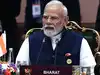
At BRICS, Modi warns geopolitical tensions and supply chain shocks threaten global stability
Prime Minister Modi urged BRICS nations to boost cooperation and support for the Global South. Rising geopolitical tensions and climate crises are impacting people worldwide, he stated. The bloc agreed to establish an early warning system for infectious diseases. Leaders opposed unilateral sanctions and supported reforms to global institutions. BRICS seeks greater representation for developing countries in global decision-making.
'Supersized' El Niño may become strongest ever recorded: UN weather agency
The World Meteorological Organization said its forecasts showed a near 100% likelihood that El Nino would persist through February 2027, fuelled by exceptionally warm Pacific Ocean temperatures. This is the first time it has expressed such a degree of certainty, the WMO said.

EU warns of 'serious blow' from Trump on climate change
Despite this potential challenge, the EU aims to continue engaging with the U.S. while preparing its national climate plan for the U.N. summit in November.

U.N. climate chief says two years to save the planet
Governments, business leaders and development banks have two years to take action to avert far worse climate change, the U.N.'s climate chief said on Wednesday, in a speech that warned global warming is slipping down politicians' agendas.

How could a COP28 climate deal advance protection of nature?
As the U.N. climate talks enter their final week in Dubai, Colombia and Germany called in an open letter for the U.N. climate summit's outcome to formally support efforts to combat land degradation, reverse biodiversity loss and restore ecosystems, among other nature protection measures.

COP28 opens with plea to work together on fossil fuels
Adnan Amin, CEO of the COP28 summit, told Reuters this month the aim was to secure several hundred million U.S. dollars for the climate disaster fund during the event. He said he was "hopeful" that the UAE would make a contribution. "We cannot rest until this fund is adequately financed and starts to actually alleviate the burden of vulnerable communities," said Samoa's Ambassador to Europe, Pa'olelei Luteru, who is also the chairman of the Association of Small Island States (AOSIS) negotiating bloc.

EU countries meet to agree stance for U.N. climate negotiations
The EU, the world's third-biggest emitter of greenhouse gases, is facing pressure from developing nations to soften its long-standing resistance to compensation for the "loss and damage" wrought by floods, rising seas and other climate change-fuelled impacts.

COP26 in the final hours of climate negotiations
Civil society groups who have been closely watching the deliberations were scouring documents released in the early morning for clues about what might go into the final deal.

2-week UN climate summit formally opens in Glasgow
The U.N. climate summit in Glasgow has formally opened, kicking off two weeks of intense diplomatic negotiations by almost 200 countries on how to tackle the common challenge of global warming.

PM Narendra Modi to attend Glasgow climate conference
Prime Minister Narendra Modi is all set to attend the UN climate conference in Glasgow in a bid to boost global efforts to cut emissions to fight the effects of global warning.

China raises emissions reduction targets; Xi sets sights on carbon-neutrality by 2060
The announcement was cheered by climate campaigners. Greenpeace executive director Jennifer Morgan called it "an important signal" that showed climate change is "top of agenda for China."
Load More