
TRAI INTERCONNECTION FRAMEWORK

TRAI sets port charge ceilings for IP-based interconnection, effective Jan 2027
TRAI has capped annual charges for telecom IP interconnection ports at ₹5.6 lakh for 1 Gbps and ₹42.3 lakh for 10 Gbps, effective January 1, 2027. The ceilings apply across fixed-line, mobile and long-distance services, with operators free to negotiate lower rates.
TRAI to review of interconnection regulations; floats discussion paper
Telecom regulator TRAI is reviewing all nine interconnection regulations. Stakeholder views are sought on satellite-based networks and IP interconnection. The review aims to adapt to technological evolution. Various charges and frameworks are under examination. TRAI is also looking at international models for adaptation in India. The regulator seeks input on security provisions and charges for international calls.

Trai moots single authorisation for all telecom services
The Telecom Regulatory Authority of India (Trai) has proposed a unified authorisation for satellite telecommunication, merging VSAT and GMPCS licences. This would allow entities to offer various telecom services under one authorisation. The proposal includes reducing entry fees and eliminating renewal fees, aiming to replace the current licensing regime if accepted by the government.

Broadcaster and cable operators exchange barbs, label charges over new tariff order
The Indian Broadcasting and Digital Foundation (IBDF) in a statement on Sunday charged All India Digital Cable Federation (AIDCF) members of making "inaccurate remarks regarding the new price regime" and invoking "consumer sentiment".
Trai defers implementation of broadcast regulations again
The new channel and bouquet pricing for consumers will now take effect from November 30th, instead of the earlier announced June 1st, according to the revised schedules.

Trai extends broadcast regulations implementation deadline again
The amendments were challenged by the broadcasters and producers’ lobby group in the Bombay High Court, which later struck down one provision of the amendments while upholding the other changes. Currently, the matter is in the Supreme Court, which has reserved its order.

Regulator seeks cable TV group to withdraw legal notice
In a legal notice, the Delhi-based law firm, on behalf of TV operators group said, "our clients are not doubting on your (Trai) intentions but have been shocked and surprised to see the conduct and malafide of the pay channel broadcasters who have wrongly interpreted the New Tariff Order, 2020 and have substantially inflated the prices of the pay channels."

TRAI designates TEC as testing-and-certification agency for CAS and SMS
It will also notify and maintain test schedules and test procedures, empanel and declare the list of accredited testing laboratories that fulfil the requirements for carrying out the testing, provide certification for all products tested and certified by the accredited testing laboratories, and maintain the version and deployment details of the CAS and SMS deployed in India.

Discovery challenges Trai’s fresh consultation
Discovery filed the new petition seeking a stay order on the new consultation paper issued by Trai on August 16th

TRAI extends deadline for comments on interconnection paper
The last date for industry for comments is extended from June 27 to July 4 while deadline for counter comments is extended from July 11 to July 18.
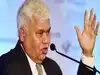
TRAI chief says new broadcasting framework will reduce rates, slams fearmongering attempts
Trai has already initiated a consumer outreach programme to create user awareness on the nuances of its new tariff order.

Trai to meet telcos, others next month to finalise 2019 agenda
The discussion - now an annual feature - is however expected to entail a wider set of players in the telecom space this time, spanning operators, infrastructure providers and others.

Broadcast sector gets new tariff order
Trai has enforced the framework after complying with the judicial mandates since the Madras High Court upheld the tariff order and the interconnection regulations.

Trai to reject Bharti Airtel, Vodafone India and Idea Cellular claims that calls can’t be priced less than 14 p/min
Citing claims as a classic example of the pot calling the kettle black, an official said country’s three largest telcos were already pricing voice calls lower than 14 paise.

Trai for bar on bypassing STD, ISD using audio-conferencing
Ringo maintained that its service was legal, but decided to put it on hold after concerns were raised by other mobile service providers.

Trai floats paper on interconnect rules to remove arbitrariness
Trai said that operators have raised several issues with regard to interconnection facility ranging from unreasonably high rates asked by existing telecom operators, billing settlement, disconnection etc.
Bharti drills legal loopholes in TRAI's IUC consultation paper
Trai had sought comments on whether the time has come to abolish the termination charge, a levy paid by an operator to another service provider on whose network the call ends.
Vodafone Essar calls for fair, transparent regulatory system
Vodafone Essar's letter comes in the wake of Telecom Ministry framing a new Telecom Policy 2011 where it has announced several initiatives.
Link with RCom against interconnect rules: COAI
TRAI had on August 4 directed some COAI members to open up their network to the mobile switching code (MSC) “90” allocated to RCOM, thus offering interconnection with their networks, and report compliance within seven days.
Load More


