
TIDAL DISRUPTION EVENT
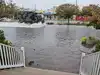
Dangerous nor’easter batters the US East Coast — one dead, hundreds of flights cancelled, thousands still without power as states of emergency continue in New York and New Jersey
The US East Coast experienced a powerful nor'easter that caused significant flooding and travel disruptions. Major cities like New York City and Boston were affected, along with coastal communities in New Jersey and Massachusetts. Strong winds and high tides exacerbated the flooding conditions, leading to state emergencies being declared. Flight operations faced considerable delays and cancellations due to the storm's impact on air travel.
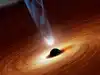
The strange 2% rule: Why black holes suddenly switch on their powerful jets
A new study reveals black holes become predictable when feeding. Jets emerge when accretion rates fall to two percent of the Eddington limit. This threshold applies to black holes of vastly different sizes. Tidal disruption events offer a rare view of this process. Future observations may predict when these powerful jets will appear.
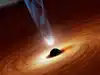
A black hole destroys a star, then fires off a powerful jet years later — scientists discover the 'burping' feeding pattern behind these cosmic outbursts
Scientists have found a new trend in black hole feeding patterns. Powerful jets emerge during two distinct phases of a black hole's feeding process. These jets appear during heavy feeding and later when feeding slows significantly. This discovery helps explain jet appearances long after a star's destruction. The findings may aid astronomers in planning future radio observations more efficiently.
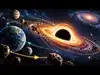
Science says black holes don’t actually suck everything around them: Here’s what really happens
Black Holes are called black because light cannot escape from inside their event horizons. Astronomers nevertheless detect black holes indirectly through their effects on nearby matter, gravitational lensing, stellar orbits and radiation from accretion disks.
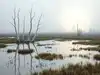
Massachusetts’ 2022 drought pushed seawater into a coastal marsh, triggering an 83% crash in methane emissions; the wetland still hadn’t recovered a year later
In 2022, Massachusetts experienced a significant drought that led to seawater intrusion in a coastal marsh. This unusual phenomenon resulted in a dramatic reduction of methane emissions by almost eighty-three percent. Even after the return of normal rain, the marsh did not revert to its former state due to prolonged salt exposure, which disrupted microbial communities and curtailed methane production.

7-second gravity blackout? NASA explains viral earth disaster claim
Viral posts falsely claimed Earth would experience a seven-second gravity blackout. Scientists confirmed this physics-bending anomaly is impossible due to Earth's mass. Astronomical events like eclipses do not affect planetary gravity significantly. Hypothetical scenarios show a gravity loss would eject the atmosphere. The hoax exploited public interest in celestial events for engagement.
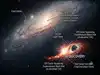
A hidden black hole stayed invisible until it destroyed a passing star, revealing a cosmic mystery
Astronomers have identified a dormant supermassive black hole far from its galaxy's center. This hidden object revealed itself by tearing apart a passing star in a rare event. The discovery challenges assumptions about black hole locations within massive galaxies. Scientists predict many more such wandering black holes may exist in the universe.

Einstein Probe discovers mysterious cosmic explosion unlike anything astronomers have seen before
A peculiar cosmic event, dubbed EP240305a, has baffled astronomers with its rapid X-ray fade and lingering radio signals. Detected by China's Einstein Probe, this transient phenomenon exhibits characteristics similar to gamma-ray bursts but crucially lacks the expected gamma-ray signature. Scientists are exploring possibilities like an off-axis jet or a choked jet to explain this "gamma-ray-dark GRB-like transient," potentially revealing a new class of cosmic explosions.
Oil prices settle up as US begins holiday weekend
Oil prices increased on Friday as traders rushed to close short positions ahead of the extended weekend. Heightened fears about a possible US operation against Iran contributed to the fluctuating prices, pushing both Brent crude and US West Texas Intermediate to gain ground. The recent deployment of a US Navy carrier group to the Persian Gulf couldn't be ignored either.
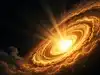
A Star that keeps dying? Scientists shocked by cosmic explosion defying all expectations
Longest gamma ray burst ever: Scientists have spotted a strange cosmic explosion. This gamma-ray burst repeated several times in a day. Typically, these bursts happen only once when a star dies. NASA's Fermi telescope and the Einstein Probe detected the unusual activity. Observations reveal the burst originated far beyond our Milky Way galaxy.

The biggest explosion since the Big Bang; Star ripped apart by a Black Hole unleashes history’s most powerful and brightest known explosion
Astronomers have spotted a new type of cosmic explosion. These are called Extreme Nuclear Transients or ENTs. These events occur when stars get too close to supermassive black holes. The black holes tear the stars apart. These explosions are more powerful than supernovas. Scientists believe ENTs can help them study black holes.

Astronomers witness supermassive black hole tear star apart during violent galactic collision—here’s what exactly happened in this rare tidal disruption event
Black hole rips apart star in a once-in-a-lifetime event called AT 2022wtn, spotted 700 million light-years away during a rare galactic collision. This dramatic tidal disruption event shows a supermassive black hole devouring a low-mass star, creating a burst of light that briefly outshone its entire galaxy. What makes this discovery so special? It’s only the second time scientists have seen such an event during a galaxy merger. With unusual light patterns, radio emissions, and expanding gas bubbles, this cosmic event gives us powerful clues about how black holes feed and evolve. A must-read space mystery unraveling in real-time.

Supermassive black hole “ate” a star, are we next? Here’s what NASA found out
In a cosmic first, astronomers observed a supermassive black hole consuming a star. This happened outside the core of its host galaxy. The event, named AT2024tvd, occurred 600 million light-years away. Zwicky Transient Facility spotted it. NASA's Hubble and Chandra telescopes confirmed it. The black hole, a million times the Sun's mass, tore the star apart.
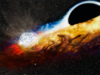
NASA and AstroSat capture explosive eruptions from stellar remnants near massive black hole
An international team of astronomers, including experts from Pune’s IUCAA, has made significant strides in understanding black hole-star dynamics. Observations of the star AT2019qiz revealed it collides with debris from a destroyed star every 48 hours, leading to bursts of X-rays. This research connects tidal disruption events and quasi-periodic eruptions, shedding light on their relationship and cosmic behavior.
Scientists spot Sun-like star being devoured by a hungry black hole
Swift was originally designed to study gamma-ray bursts, the most powerful explosions in the cosmos. Since the satellite launched, however, scientists have recognised its ability to study a whole host of celestial objects, like tidal disruptions and comets.
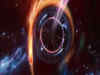
Supermassive black hole sends jet pointing towards Earth after tearing apart a star, say astronomers
Astronomers captured a bright flare emanating from a dying star being torn apart by a supermassive Black Hole launching relativistic jets towards Earth.
Black hole devouring star for a decade detected
Washington, Feb 7 (IANS) Astronomers have detected a giant black hole that ripped apart a star and then gorged on its remains for an unusually long time -- about a decade, which is more than ten times longer than any observed episode of a stars death by black hole.

Massive black hole spotted binging on star for a decade
As it travels inwards to be ingested by the black hole, the material heats up to millions of degrees and generates a distinct X-ray flare.

Road ahead not easy, Infosys CEO Sikka tells employees
Sikka suggested that by all indications, the future for Infosys's business looks disruptive due to multiple factors like technological and geopolitical disruption.
Load More


