
THE LOST FOREST

Maoists gone, but 'dimagi Naxals' instigating people against Constitution and democracy: PM Modi
Prime Minister Narendra Modi highlighted the elimination of armed Maoists while addressing the ideological threat of 'dimagi Naxals'. He emphasized the need to identify and defeat these elements infiltrating various organizations and political parties. Modi referenced past failures in addressing Naxalism while stating that strong policies and political will led to significant improvements.

PM Modi celebrates Diwali with Bastar security forces, says India has overcome Naxalism
Prime Minister Narendra Modi celebrated Diwali with security personnel involved in anti-Naxal operations in Chhattisgarh's Bastar region. He highlighted the significance of this Diwali as the first since the defeat of Naxalism. Modi commended the personnel for their sacrifices that contributed to eliminating Maoist insurgency from the region. He noted that every district in India is now free from Naxalism, allowing citizens to overcome fear.

In Washington, scientists excluded elk from rainforest plots for 36 years; shrubs became 5 to 6 times more abundant, while 46 plant species disappeared
A comprehensive study conducted over 36 years in Washington's Olympic Peninsula has unveiled striking insights into elk exclusion's impact on plant communities. Researchers found that while shrubs thrived, numerous smaller plant species vanished, underscoring the elk's critical role in promoting forest diversity through their feeding habits and behavior. These revelations challenge conventional views on herbivores, highlighting the importance of understanding ecological interactions for wildlife management and conservation efforts.
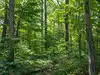
In Maryland, Smithsonian scientists planted 17,000 trees in plots with 1, 4, or 12 species; after years of monitoring, mixed forests grew faster and stored more carbon
A recent investigation in Maryland reveals that forests composed of mixed species grow at a much faster rate compared to those with a single species. The BiodiversiTREE experiment highlights enhanced canopy complexity, which allows for more effective light absorption and greater overall productivity. Researchers are advocating for diverse tree planting to maximize carbon capture. Although single-species forests are favored for timber production, this approach may require reassessment.
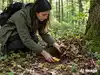
Buy gold, then leave it in a forest: Bizarre investment scam in Norway is making victims lose their savings; banks issue warning
Gold scam: A bizarre investment scam in Norway is prompting warnings after victims were persuaded to buy gold and leave it at secluded forest locations, only for the precious metal to disappear. Finans Norge says the first cases emerged in spring, while separate figures reveal that Norwegian banks and their customers lost 962 million kroner to financial fraud last year.
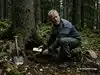
Why Norwegians are buying gold and leaving it in forests
A gold investment scam in Norway has prompted banks to warn customers after victims were allegedly persuaded to buy gold and leave it in forests, believing it would be kept safe as its value increased. Finans Norge says cases have been reported around Oslo and in Bergen, as authorities and banks step up efforts to raise awareness about financial fraud.
- Go To Page 1
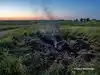
A stone fell onto an Iowa prairie in 1890; a farmer dug up a 66 pound meteorite and sold it for $105
In 1890, an Iowa farmer sold a 66 pound meteorite for $105. A sheriff seized it, the buyer’s university took it back, and the Iowa Supreme Court ruled it belonged to the landowner. A jury later priced the stone at $480.

In 1886, Thomas Edison bought a 15-acre estate in New Jersey's Llewellyn Park; today, Glenmont is the only home in the 420-acre community owned by the Park Service
Glenmont, a Victorian property acquired by Thomas Edison in 1886, serves as a significant historical site. It is located within the privately-owned Llewellyn Park community in West Orange, New Jersey. The estate is notable for maintaining a unique collection of artifacts that detail the Edisons' private lives. While the mansion is preserved by the National Park Service, surrounding areas are privately owned.

A stone fell onto an Iowa prairie in 1890; a farmer dug up a 66 pound meteorite and sold it for $105
In 1890, an Iowa farmer sold a 66 pound meteorite for $105. A sheriff seized it, the buyer’s university took it back, and the Iowa Supreme Court ruled it belonged to the landowner. A jury later priced the stone at $480.
The world is falling further behind on climate action, and the US looms large
Humanity is heading towards a hotter world due to increasing carbon emissions primarily from the United States. The United Nations Environment Programme has updated its climate projections, indicating a potential rise of 1.2 degrees Celsius. The report notes that while most economies reduced emissions, the United States' emissions have surged significantly. These changes could lead to severe consequences for vulnerable communities and ecosystems globally.

Giant 'heat storms' are scorching the Earth. This is the story of the biggest one on record
Heat storms have increased dramatically, causing severe global consequences including excess deaths and environmental catastrophes. Recent heat storms have been identified as a new classification, representing larger and more persistent heat events. The intensity of these heat storms has worsened due to climate change and greenhouse gas emissions. Associated weather patterns have significantly disrupted ecosystems and agriculture worldwide.

Gary Kirsten, who coached India to 2011 World Cup win, praises Pakistan's beauty after Margalla Hills visit in Islamabad
Gary Kirsten, who coached India to the 2011 Cricket World Cup title, praised Pakistan's natural beauty after cycling through Islamabad's Margalla Hills. The Sri Lanka head coach also expressed interest in exploring Pakistan's northern regions.
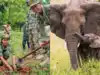
Angelina Jolie’s foundation spent 20 years protecting 150,720-acre Cambodian forests; rangers saved nearly 142 species from wire snares
Over twenty years ago, Angelina Jolie launched the Maddox Foundation to promote conservation in Cambodia. Focusing on the vital Samlout forest, the foundation protects endangered species such as Asian elephants and Sunda pangolins. Dedicated rangers strive to remove dangerous snares and fight against illegal activities. Despite being officially protected, this region faces daunting deforestation issues. Local engagement and stringent law enforcement remain key to preserving this crucial habitat.
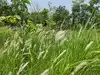
In 1921, America introduced cogongrass as a forage crop; later used for soil control, the invasive grass now covers more than 1 million acres in Florida
Cogongrass was brought to the United States in the early 20th century with the noble goal of supporting agriculture and curbing erosion. However, it has since evolved into a troublesome invasive species, particularly in the Southeast, where its swift proliferation has overwhelmed land management efforts. Consequently, substantial financial resources are annually directed towards its eradication, illustrating the challenges of integrating non-native plants into local ecosystems.

California cleared invasive plants from three Camp Pendleton breeding areas; willow flycatchers resettled at those sites within 5–7 years
In 2023, a lone Southwestern Willow Flycatcher was spotted at Marine Corps Base Camp Pendleton, a notable event after an absence since 2012 due to a drastic decline in its population. While habitat restoration initiatives show potential, challenges like invasive species and environmental pressures persist. Although some regions have experienced successful recovery, ongoing management and favorable conditions remain essential for the future of this vulnerable species.

Inside Judi Dench’s six-acre Surrey garden — Over 100 trees, a white garden and memories of her husband
Taking you through legendary actor Dame Judi Dench's 6-acre private garden in Surrey — woodland tributes, each representing a lost loved one, and so much more.

AI startup Black Forest Labs urges optimism from Europe despite safety fears
Europe needs to view artificial intelligence with more optimism -- despite growing warnings about its dangers -- or risk falling further behind, the head of a leading European AI start-up warned. "I think the mindset in Europe needs to shift to one of optimism and to one of opportunity, and not to one of risk and fear," Robin Rombach, CEO of German AI image generation specialist Black Forest Labs, told AFP. Europe lags behind the United States and China when it comes to cutting-edge AI models.
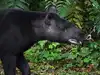
In 1967, Los Angeles Zoo began breeding mountain tapirs from one pair, and the effort still shapes the species today
The Los Angeles Zoo launched its mountain tapir breeding program in 1967, starting with a single pair. A significant achievement followed in 1977, marking the first birth of this species in captivity. Mountain tapirs are slow reproducers and are under threat from poaching and habitat destruction. Their captive lineage faces genetic diversity issues due to the narrow selection of founding animals.
In 2019, AXA launched a $175 million climate and biodiversity fund. Within a year, $41.5 million had been allocated to projects targeting measurable environmental outcomes
In July 2019, AXA Group launched a $175 million private equity vehicle with a mandate that traditional financiers usually leave to non-profit foundations. The fund set out to test whether commercial capital could generate market-rate returns while restoring ecosystems, managing water basins, and protecting threatened species. Structured as a 12-year private equity pool, the fund marked a deliberate departure from standard corporate philanthropy by treating natural capital as a core financial asset rather than an operational expense.

This invasive fungus removed an iconic American tree from its ecosystem in 1904. Can scientists revive it in 2026? Know here
A genetically engineered chestnut has cleared a major federal hurdle a century after an invasive fungus almost wiped out one of America’s most important forest trees. Scientists are making attempts to revive what was destroyed in the 1900s. Four billion American chestnut trees died. The ecosystem where they flourished now has barely any left. So, can a 2026 breakthrough bring American chestnuts back to life?
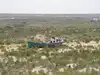
In just decades, the world's fourth-largest lake vanished and became a 23,000-sq-mile desert. Now millions of shrubs are bringing hope back
The Aral Sea, once the world’s fourth-largest lake, dramatically shrank after Soviet irrigation diverted its rivers. Today, Kazakhstan is restoring part of the northern basin, reviving fisheries and ecosystems, while Uzbekistan is planting millions of acres of drought-resistant vegetation across the exposed seabed. Together, these efforts aim to reduce dust, stabilise damaged landscapes and recover parts of a devastated eco

In 1959, 9 hikers died on Russia's Dyatlov Pass under mysterious circumstances. 67 years later, many theories exist, but the case still sparks debate worldwide
On a freezing night in February 1959, nine experienced hikers disappeared from their tent in the northern Ural Mountains. They were part of a skiing expedition led by Igor Dyatlov. When rescuers finally reached the site, the scene raised more questions than answers. The tent had been cut from the inside, and the hikers had fled into temperatures that fell below −25°C.

Death by breath: How mining dust in Aravallis is killing residents
Unregulated Aravalli mining in Rajasthan has triggered a fatal silicosis crisis, claiming dozens of lives in villages like Syalodra. Affected families face catastrophic medical costs, unaddressed safety hazards and rejected disability certifications. Meanwhile, a Supreme Court-appointed panel skipped visiting these heavily impacted areas ahead of its November deadline.

Gold biscuit recovery from Maoist supply dumps: Risking life but not wealth, rebels picked safe haven asset
A Maoist dump is a concealed underground cache, usually deep in the forest and sometimes placed in plastic drums or other containers before being camouflaged with soil, wood and fallen leaves. From these dumps, authorities have recovered at least 8 kg of gold in the past two years.
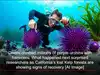
Divers crushed millions of purple urchins with hammers; What happened next surprised researchers as California’s lost Kelp forests are showing signs of recovery
California's kelp forests are witnessing a remarkable comeback due to dedicated restoration efforts. Divers have been diligently smashing millions of purple sea urchins to make room for new kelp growth. In addition, scientists have begun planting lab-grown kelp in coastal areas. These creative initiatives are significantly contributing to the recovery of vital underwater ecosystems, providing habitats and revitalizing marine life in the process.

In 2020, a Missouri Labrador disappeared after her family moved; Cleo travelled 57 miles back to the only house she still knew
Cleo, a lost dog, undertook an incredible 57-mile trek to an unknown home in Missouri, shedding light on theories surrounding canine navigation. Researchers are probing the possibility that dogs utilize Earth’s magnetic field for direction, suggesting an intrinsic compass for wayfinding. The presence of microchips is crucial, as they drastically enhance the likelihood of lost dogs reuniting with their families.
In 1826, mosquitoes arrived in Hawaii and pushed native birds toward extinction. Now, scientists are releasing millions of mosquitoes to save them
Hawaii's native birds face extinction due to avian malaria transmitted by mosquitoes. Conservationists are releasing sterile male mosquitoes to reduce disease-carrying populations. This innovative strategy aims to protect honeycreeper species from the deadly infection. The incompatible insect technique prevents mosquito eggs from hatching after mating. This effort seeks to preserve Hawaii's unique birdlife from an ongoing crisis.
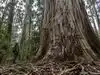
Australian scientists started a forest experiment but forgot about it. The trees kept growing; 30 years later, researchers were shocked by the results
A decades-old forest experiment in Victoria, Australia, was largely forgotten after funding cuts ended its main monitoring. When researchers returned about 30 years later, they found that different forestry methods had produced strikingly different results, including exceptionally large trees in heavily thinned areas and unexpected findings about carbon storage and wildlife habitat.
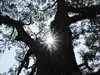
How a 133-year-old tree signed for Yellowstone Forest Reserve stalled a helicopter mission
Plans to helicopter a historic inscribed tree from Wyoming's wilderness are paused. Public opposition arose after land managers failed to consult advocacy groups. The Shoshone National Forest is now exploring a 3D scan and replica option. This alternative aims to preserve the tree's history without removal. The original plan involved significant helicopter use within the protected area.
Load More

