
SUSTAINABLE CLIMATE SOLUTIONS

Urgent climate finance pleas at COP31 face a non-urgent response
Poor nations are calling for urgent financial support to address climate-related disasters, yet responses are sluggish. Despite past agreements, funding to vulnerable countries has not met the required targets, causing severe delays. Geopolitical issues and rising military expenditures further divert attention and resources away from climate financing.

From biomass to biochar: Ankur Scientific’s 4-decade journey of turning waste into wealth
The Vadodara-based second-generation company has built a global business by turning waste into valuable resources.

ET AI Awards 2027 are here: Discover if your AI innovation is ready for the spotlight of a national stage!
Celebrating the future of technology, the ET AI Awards 2027 acknowledges key innovations and leadership in AI from various industries in India. With an impressive array of over 40 categories, these awards emphasize the importance of AI developments by startups, SMEs, and large enterprises, offering a valuable stage for recognizing their contributions to the AI ecosystem.

Acceleration in clean technology needed to ensure decline in world's emissions: Study
Adopting clean energy solutions such as solar, wind, and electric vehicles can play a pivotal role in lowering carbon emissions. The Global Carbon Project highlights a concerning forecast of rising emissions in India that may exceed earlier predictions. While many nations are successfully decreasing fossil fuel emissions, a rapid shift to cleaner energy sources is critical, as our carbon budget is narrowing, demanding immediate action to meet 2028 emission goals.
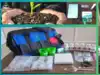
From lab to farm: How Proximal Soilsens is developing a ‘glucometer’ for soil testing
Developed over nearly a decade of research at IIT Bombay, Proximal Soilsens’s patented NutriSense X aims to make laboratory-grade soil testing portable, faster and accessible. The device tests multiple soil parameters in seconds, without requiring electricity or elaborate laboratory infrastructure.

From tyres to footwear: How Brisil is finding new uses for rice husk ash
Rice husk ash is often treated as industrial waste. Vadodara-based Brisil converts it into green silica—a material used in tyres, footwear, paints, toothpaste, and rubber products, offering industries a lower-carbon alternative to silica made from mined sand and quartz.
- Go To Page 1

Fossil fuel emissions fall due to Iran war and renewables, finds research
Emissions from the burning of oil, gas and coal -- the main drivers of climate change -- rose by 0.9 percent per year on average in the past decade, hitting a record high in 2025, according to the Global Carbon Budget report.

India’s emissions to rise 4.4% despite global dip: Study
Renewable energy capacity growth and electric vehicle adoption are projected to reduce fossil fuel emissions by 0.4%. Major economies like China, the US, and the EU are expected to decrease emissions this year. However, India's emissions are predicted to increase at a higher rate than previous years. The ongoing energy crisis due to geopolitical events is influencing these changes in emissions.

How China's clean-tech machine is reshaping the global climate fight
In 2024, China took the lead as the top investor in global clean technology, directing $132 billion to developing nations to aid carbon reduction efforts. This unprecedented infusion of resources could potentially reshape the landscape of international climate finance.

Investors in other markets would be envious of India multiples: Rich Handler, chief executive of Jefferies
Jefferies CEO Rich Handler believes Indian equities remain reasonably valued despite the market correction and says easing long-term capital gains taxes could attract foreign investors. He sees opportunities in India's AI and data centre sectors, argues that global capital outflows reflect external pressures, and believes concerns about an AI bubble warrant a healthy pause rather than alarm.

A billionaire couple donated $50 million to UC Davis for agricultural research; in 2026, a 34,000-square-foot center opened in California
At the forefront of agri-tech innovation, the Resnick Center at the University of California, Davis, drives agricultural advancement with a strong focus on sustainability and research. Fueled by generous donations, it strives to elevate farming practices and enhance crop resilience. Current projects aim at transforming agricultural waste into valuable resources, thereby reducing ecological footprints.

In 2024, Cornell researchers grew radishes and radicchio between solar panels near Albany; shade reduced light and crop biomass, with radishes more affected
In a groundbreaking study, Cornell University researchers evaluated agrivoltaics in Albany, New York, focusing on crops like radishes and radicchio. Their findings revealed that solar panel shading led to considerable reductions in light and biomass. With agrivoltaic land usage in the U.S. having more than doubled since 2020, they advocate for strategic adjustments in planting schedules and crop choices to optimize synergy between agriculture and solar energy.

Scientists mixed just 3% volcanic ash into forest soil in a UC San Diego experiment; coleus plants grew roughly three times as much as plants in untreated soil
At UC San Diego, researchers have made an exciting discovery: adding volcanic ash to soil can significantly enhance plant growth. Their study revealed that incorporating just 3% basaltic ash not only boosts the biomass of coleus plants but also positively influences beneficial soil microbes. This finding showcases volcanic ash as a viable solution for rejuvenating poor agricultural soils, making it an effective tool for sustainable practices and carbon capture initiatives.

India elected as President of International Solar Alliance for third straight term: Pralhad Joshi
Addressing media at the summit, Joshi said, "At the ninth session of the ISA, we reaffirm a fundamental belief: progress becomes truly meaningful when its benefits are shared". He congratulated France on the occasion of being reelected co-President of the ISA.

India-France defence ties poised for new phase, with 114 Rafales in focus
India and France are advancing their defence relationship with proposals for new fighter aircraft and submarines. The two nations are collaborating on advanced technologies and strategic partnerships essential for regional security. As the global security landscape evolves, India aims to enhance ties with trusted allies like France. The Horizon 2047 Roadmap outlines a vision for future cooperation across various sectors.
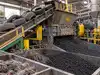
Since 1978, Caltrans has used recycled tire rubber in 17 asphalt overlays; a technical review found less cracking, distress and maintenance than conventional mixtures, including thicker ones
In the United States, an astounding 273 million tires are discarded every year, resulting in a considerable amount of waste. To address this issue, California has implemented rubberized asphalt in road construction since 1978. This approach has had mixed outcomes across different states, with some projects failing to justify the increased costs.

‘Facing ‘gerontonomia’, the West’s young opt for political extremes’
Tim Vlandas analyzes the influence of aging populations on electoral politics in advanced capitalist nations like Europe. Older voters display different policy preferences, emphasizing pensions over issues of younger demographics. Consequently, governments often allocate more resources to pension spending rather than investing in education and infrastructure. Young voters may become politically disenchanted, leading to radical shifts towards extreme parties.

From Patna to Kanpur, can an emerging market fix dirty, broken cities?
Patna is set to become the first municipality in Bihar to issue municipal bonds, raising Rs 200 crore for urban infrastructure. This move highlights the ongoing need for investment in India's urban infrastructure amid challenges like urban flooding and sanitation. Other cities like Kanpur are also expected to follow with their own bond issues soon. However, many municipalities still struggle with reliable revenue sources needed for debt repayment.

L&T flags inflation, geopolitical risks, leans on its capabilities to navigate global uncertainty
Larsen & Toubro reported a 33% profit increase for the second quarter, driven by strong order inflows. Infrastructure spending and reconstruction activities in the Middle East contributed significantly to this growth. The company expressed concerns over inflation, geopolitical tensions, and trade uncertainties impacting the global economic outlook.
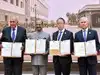
BRICS parliamentary forum condemns Pahalgam attack, calls for UN reforms
The 12th BRICS Parliamentary Forum took place in New Delhi, gathering legislative leaders from various member nations. Delegates emphasized the need to reform the United Nations for more effective global governance while condemning terrorism and unilateral sanctions. The forum expressed concern over regional conflicts, urging resolutions based on human rights and humanitarian law.

Reinventing the pond: How this Bengal start-up is helping fish farmers battle climate and credit crisis
At a time when climate change is impacting world resources, including the aquatic system, Jalpaiguri’s Essential Aquatech is working to empower smallholder fish farmers by turning data into actionable insights and measures.

Goa aims to build innovation-driven AI ecosystem, announces return of tech conclave next year
As part of these efforts, the Goa AI Tech Conclave, which concluded on Friday, will return in October 2027 to further strengthen the state's artificial intelligence ecosystem and foster innovation, they said.

As COP31 nears, India's heatwave disaster tag puts spotlight on global adaptation finance gap
India's recognition of heatwaves as natural disasters underscores the urgent need for international climate finance. Experts note that domestic funding is inadequate for heat adaptation strategies. They emphasize the necessity of consistent and predictable international resources for effective implementation. Upcoming discussions at COP31 will focus on adaptation finance for developing countries. There is growing concern over the lack of responsibility taken by developed nations regarding climate impact.
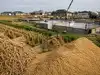
How rice husks are helping protect American homes from wildfires, rot and costly repairs as builders turn farm waste into wood siding alternatives
Homeowners are considering rice husk panels as a viable alternative to conventional wood siding due to their durability. These building materials are designed to resist moisture, decay, and fire, making them suitable for various climates. Their use is already expanding in regions prone to wildfires and severe weather, showing versatility for other applications. However, initial installation costs may be higher than traditional materials, which could affect widespread adoption.

Piyush Goyal discusses investment opportunities with Bayer, Fresenius
Piyush Goyal held meetings with Bayer and Fresenius executives to discuss investment opportunities in India's healthcare sector. During these discussions, Goyal explored Bayer's expansion plans and potential collaborations in healthcare. He also examined how Fresenius can leverage India's skilled workforce for the healthcare market. Additionally, Goyal engaged with Knauf Group regarding sustainable construction materials and manufacturing operations in India. These meetings highlight India's growing role in global healthcare and manufacturing.

The world is falling further behind on climate action, and the US looms large
Humanity is heading towards a hotter world due to increasing carbon emissions primarily from the United States. The United Nations Environment Programme has updated its climate projections, indicating a potential rise of 1.2 degrees Celsius. The report notes that while most economies reduced emissions, the United States' emissions have surged significantly. These changes could lead to severe consequences for vulnerable communities and ecosystems globally.

Only 2.3% of wealthy family businesses are ready for succession. What’s holding them back?
Julius Baer–EY’s Family Barometer Report 2026 shows that 65.9% of families believe the next generation is not yet ready, while emotional attachment, informal decision-making and weak family governance continue to complicate the transition. For India’s business families, the hardest part may not be transferring ownership—but preparing the family to decide what comes next.

NABVENTURES plans Rs 30-70 crore bets on growth-stage firms in Fund II
NABVENTURES aims to invest ₹30-70 crore per company in agriculture, rural financial services, and climate solutions. The venture capital arm plans to focus on technology-driven businesses and growth-stage companies with established traction. Larger initial checks will be adapted for follow-on funding in high-performing portfolio companies. The emphasis will be on sustainable scaling in large markets, improving productivity, and raising farmers' incomes.
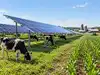
In 2024, a New York dairy farmer wanted solar income without losing his fields; the 6.5-megawatt project was designed around crops and cows
A pioneering dairy farmer in northern New York is merging the realms of agriculture and solar energy by partnering with a solar developer on a transformative agrivoltaics initiative. This groundbreaking design features ample spacing between solar panels, enhancing operational efficiency for farming tools. Expected to generate consistent revenue, the project aims to sustain existing agricultural work.
Load More

