
STRONG BINDING TO HUMAN CELLS

Ola Electric says demand outstrips supply, targets 25,000 vehicles in December
Ola Electric Mobility is experiencing high demand for its electric two-wheelers, causing supply constraints. The company plans to ramp up production to approximately 25,000 vehicles by December. Despite these plans, recent losses were reported along with a decline in consolidated revenue from operations. Ola Electric has significantly reduced its borrowings and expects to generate free cash flow soon.
Lupin partner Sandoz launches RanluspecTM across Europe for retinal disease treatment
Lupin Ltd has partnered with Sandoz to launch RanluspecTM, a biosimilar for Ranibizumab, across Europe. This launch will help to improve access to treatments for retinal and choroidal vascular diseases. The European Commission previously approved RanluspecTM in vial and syringe-filled presentations for medical use. The biosimilar targets conditions such as wet age-related macular degeneration and diabetic macular edema.
Why scientists call PJ.2.1 a ‘jump’ variant: The COVID strain that arrived with dozens of mutations at once and spreads by gripping your cells more tightly
A new variant of SARS-CoV-2, named PJ.2.1, was detected in Canada and has spread globally. It has over 25 mutations in its spike protein, which enhance its binding to human cells. Researchers are observing its spread in countries like the US, Spain, and Australia among others. Currently, there is no evidence linking PJ.2.1 to increased severity of illness or hospitalization.

Dario Amodei says AI could make cancer, Alzheimer’s ‘relics of the past’ in less than a decade as Anthropic expands AI-driven drug discovery push
Anthropic is collaborating with several pharmaceutical companies to utilize AI in drug development processes. These partnerships aim to improve the efficiency of drug discovery, addressing complex challenges in medical research. Notable projects include redesigning therapeutic molecules and accelerating antibody designs for various diseases. Anthropic has also initiated its own research on rare childhood muscular dystrophies, targeting potential clinical trials by late 2028.
MIT researchers traced the family history of over 1 million cells in developing mouse embryos; the map revealed when cells began becoming different organs
A research team from MIT has mapped the lineage of over a million cells in mouse embryos. This extensive study reveals how cells decide to form specific tissues during development. The new technique allows scientists to identify where developmental errors occur, which may lead to birth defects. It also provides insights for cancer research by highlighting early changes in healthy cells.

HEG Advanced Materials shares gain 5% after subsidiary secures Rs 610 crore incentive under ECMS
HEG Advanced Materials shares rise 5% after subsidiary TACC receives ₹609.50 crore incentive approval under the ECMS scheme for its Dewas synthetic graphite anode project, supporting domestic battery manufacturing, capacity expansion and India's advanced energy storage ecosystem. The first production phase targets commissioning by June 2027.
Govt bans export of unsorted battery waste, scrap
The government has implemented a ban on the export of unsorted waste and scrap from certain batteries. This ban applies specifically to primary cells, batteries, and electric accumulators lacking hazardous substances. The Directorate General of Foreign Trade issued a notification establishing this prohibition, which is effective immediately. Previous regulations classified these exports as 'Free', but now they are categorized as 'Prohibited'.

UN body agrees to postpone review of US rights record after Trump administration snub
The UN Human Rights Council has postponed its review of the United States' human rights record until January after the Trump administration refused to participate, making the US the first UN member state to fully reject the process. The 47-member council approved the delay by consensus to give Washington more time to reconsider its decision.

AI can now build an OS from scratch, claims Anthropic
In just eight days, Anthropic's Claude Fable 5.2 created a functional prototype operating system. This involved more than 1,000 dedicated AI agents who tirelessly collaborated to craft and evaluate the code.

US lawmakers introduce bill to make Diwali a federal holiday, 19 representatives back proposal
US lawmakers have reintroduced the Diwali Day Act in the House of Representatives, seeking to designate the festival as a federal holiday. Spearheaded by Congresswoman Grace Meng, the bill has secured the backing of 19 lawmakers, including five Indian-origin representatives. Its passage would make Diwali the 12th federally recognised US holiday.
'Liquid biopsy can ease financial burden for cancer patients': Scientists on how a $1,000 test could save $10,000 in treatment costs
Liquid biopsy, a blood-based test that detects and analyses cancer-related biomarkers, is gaining ground as a tool to monitor disease progression and guide treatment decisions. Scientists Catherine Alix-Panabieres and Klaus Pantel, who coined the term in 2010, spoke to ET about its growing role in cancer care, the potential to reduce treatment costs through personalised medicine, and the need for more clinical trials to establish its benefits for patients.
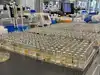
MIT scientists built over 400 tiny ecosystems with 12 to 20 bacterial species; after adding an outsider, the more changeable communities were easier to invade
Researchers at MIT have discovered that chaotic ecosystems easily accept new species while stable ones resist invasion. Conventional ecological beliefs suggest high biodiversity prevents invasions, but stability plays a crucial role. This finding has implications for the effectiveness of probiotic supplements in human gut microbiomes. Individuals with more stable guts may struggle to welcome beneficial probiotics. Future studies will further explore these dynamics and their relevance in wellness treatments.
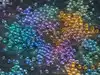
Northwestern scientists put tiny particles in liquid under an electric field; they began moving together without touching, and the liquid carried the signals
Engineers at Northwestern University have made a fascinating discovery: tiny plastic spheres can synchronize their movements within a liquid environment. Remarkably, this phenomenon arises from fluid interactions rather than direct communication or contact. These findings could illuminate the dynamics of coordination seen in nature, such as in fireflies or heart cells. Researchers hope to leverage this synchronization to explore potential applications across various fields.

DLF to invest Rs 3,750 crore for majority stake in JV with Everstone for IREO assets
DLF plans to invest Rs 3,750 crore to obtain a majority stake in a partnership with EverstoneGroup. The joint venture will focus on IREO Private Limited and other entities within the IREO group in India. It aims to acquire at least a 20% stake in the IREO India companies to secure governance rights. This transaction remains subject to regulatory approvals and is expected to conclude by 2027.

Ramayana movie in USA: Release date, tickets, advance booking and live streaming
Mark your calendars for the global cinematic debut of Ramayana: Rise of a Legend on November 5, 2026. This epic film stars renowned actors Ranbir Kapoor, Yash, and Sai Pallavi, running over three compelling hours. Helmed by Nitesh Tiwari, it brings the timeless Ramayana to life with contributions from musical legends like Hans Zimmer and A.R. Rahman. Secure your tickets through platforms such as Fandango and IMAX.
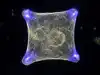
MIT scientists shone patterned light on starfish egg cells carrying a modified enzyme; the cells moved and changed shape, and some were stretched into squares
In a groundbreaking study, scientists have engineered starfish egg cells to respond to light stimuli, allowing them to dynamically alter their shapes. These cells can morph from elongated squares to contracted forms depending on the intensity of light exposure. This innovative research opens doors for potential advancements in synthetic biology, including tissue repair and targeted drug delivery systems that activate precisely where needed.
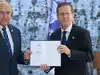
Israel's president Herzog takes first steps on building new government after accepting election results
Israeli President Isaac Herzog has accepted the election results and started consultations with party leaders. Netanyahu's bloc lost its majority in the Knesset, while Arab-led parties made significant gains. The elections commission reported no evidence of fraud, despite Netanyahu's allegations. Herzog emphasized the importance of public trust in the electoral process during his consultations. If coalition talks fail, Israel may face another election in the near future.

With most drug candidates failing in humans, India’s draft rules bet on the wrong science in animal lab testing
Recent draft rules in India threaten advancements in non-animal testing for drug development and safety. The new regulations may prioritize animal testing over innovative human-based methods, despite their proven reliability. Efforts to incorporate non-animal methodologies into national standards have gained support from various government initiatives. Significant funding has been allocated to promote alternative testing methods throughout the country.
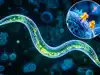
Rutgers scientists changed one gene in tiny worms to test a human kidney disease clue; the altered nerve protein fell to 15% of normal and missed its target
Researchers at Rutgers University have delved into the genetics of kidney disease by studying the miniature roundworm C. elegans. By manipulating a specific DNA segment, they discovered a drastic reduction in levels of polycystin-2, showing that this mutation hinders the protein's delivery to its cellular destination. This alteration also disrupts the functioning of polycystin-1, emphasizing the critical role of genetic mutations in disease understanding.
Load More


