
SPACE SHUTTLE PROGRAM
World Space Week 2026: How the ‘Rocket Revolution’ is changing the cost, speed and future of space travel
World Space Week 2026 will highlight the increasing accessibility of space through the theme 'Rocket Revolution' this October. Celebrations will include events from schools, space agencies, and aerospace companies worldwide. Participants will explore technological changes in rocketry and their significance for future space exploration. Various activities, including model rocket launches, will occur across several countries. The week aims to inspire interest in STEM and promote international cooperation among attendees.
Orbital Shift: India's space sector undergoing biggest transformation; pvt firms handle rockets, ISRO focus on more ambitious missions
India's space sector is undergoing significant changes as private companies engage in rocket production and management. The Indian Space Research Organisation is shifting its focus towards more ambitious missions and projects. This transition follows the introduction of the Indian Space Policy 2023, which emphasizes private sector participation. Concerns have been raised by ISRO employees regarding the agency's future and potential loss of capabilities.

In 1989, Jacksonville opened an automated train above downtown; in 2026, its free 2.5-mile Skyway with 8 stations is set to stop running
Jacksonville’s Skyway, an innovative automated transit system, will cease operations due to a major budget deficit. The Jacksonville Transportation Authority intends to reduce staff and scale back services to manage expenses. Currently, the service is minimal, operating with just one train complemented by a bus. Future considerations could involve either restructuring the Skyway or transforming it into a pathway for pedestrians.
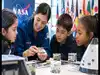
NASA sent seeds into space for nearly 6 years; after they returned, 132,000 experiment kits reached 3.3 million students in 30 countries
In April 1984, NASA launched a satellite carrying 12.5 million tomato seeds into orbit to test how space radiation affects biological life. The mission was originally scheduled to last a single year. However, the tragic loss of the Space Shuttle Challenger grounded the fleet and stranded the payload in space. By the time astronauts finally recovered the satellite in 1990, the seeds had orbited the Earth over 32,000 times.
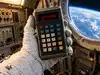
In 1975, NASA sent a pocket calculator on Apollo-Soyuz as a backup if its main computer failed; 37 years later, it ended up at the Smithsonian
NASA utilized an HP-65 calculator as a crucial backup system during the Apollo-Soyuz mission. This programmable device carried essential guidance equations in case the main computer failed. The Apollo-Soyuz mission marked the first joint spaceflight between American and Soviet crews. While the calculator never performed its backup function, its presence ensured mission safety. This historic calculator now resides in the Smithsonian National Air and Space Museum.
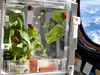
In 1999, NASA sent 4 ladybugs aboard Columbia for 5 days to chase aphids; the aphids lost their ability to escape by falling, and the ladybugs still caught and ate them
In 1999, four ladybugs embarked on an extraordinary journey aboard the space shuttle Columbia to investigate their predatory habits in a weightless environment. Researchers aimed to determine if ladybugs could effectively hunt aphids, which usually drop to evade their predators. Surprisingly, without gravity's pull, ladybugs adapted quickly, successfully preying on aphids that floated around them, providing insights into how animal behavior shifts in microgravity situations.
- Go To Page 1
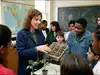
In 1984, NASA sent 12.5 million tomato seeds into orbit for nearly six years. After their return, 132,000 experiment kits were distributed across every US state and 30 countries
In 1984, NASA sent 12.5 million tomato seeds into orbit for nearly six years. After their return, 132,000 experiment kits were distributed across every US state and 30 countries. Students planted space-exposed seeds beside Earth-stored control seeds. The experiment compared germination and growth. Results showed 73.8% germination for space seeds against 70.3% for control seeds, giving NASA data on seeds and space exposure.
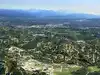
Since 2014, NASA has recycled over 75,000 tons of clean steel and asphalt from Santa Susana demolition. The cleanup has restored more than 22 acres to natural habitat
The Santa Susana Field Laboratory presents a multifaceted narrative of space exploration and nuclear events. Years of intensive rocket engine tests have resulted in significant contamination issues that necessitate a thorough cleanup process. Since 2014, NASA has been repurposing old structures while addressing the chemical remediation of the affected soil and groundwater. This effort underscores the profound ecological debts owed by historical industrial practices.
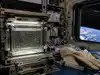
In 1992, NASA studied C. elegans worms exposed to space radiation on IML-1; the experiment reported higher mutation rates than in ground controls
In 1992, micro worms unveiled the troubling effects of space radiation on DNA, showcasing considerable genetic harm to these minuscule creatures. This finding raises alarm for astronauts who lack Earth's magnetic shield, exposing them to similar hazards. As NASA continues to grapple with radiation exposure limits for upcoming lunar and Martian expeditions, ensuring the genetic safety of astronauts on prolonged journeys remains a critical and unresolved challenge.
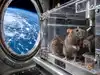
In 1983, NASA flew six rats in Challenger’s crew cabin for a 6-day test; the cage kept them healthy, but engineers called for a 20% more water safety margin
In 1983, six brave rats embarked on an experimental journey aboard the Challenger shuttle. Their specially designed enclosure ensured protection from any contamination caused by the animals. Despite successfully maintaining safety, the mission highlighted critical challenges in food distribution and water accessibility. This pivotal short flight yielded essential insights necessary for the development of long-term space missions, emphasizing the need for testing life support systems in adverse situations.
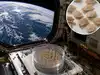
In 1990, NASA recovered tomato seeds after nearly 6 years on LDEF; classroom tests found space seeds germinated at 73.8% versus 70.3% for Earth controls
After nearly six years aboard NASA's LDEF satellite, Rutgers tomato seeds returned to Earth to inspire young scientists. Millions of students participated in classroom experiments where they planted both space-exposed and terrestrial seeds. Observations revealed that the seeds exposed to space conditions generally germinated at a faster pace and with higher success rates, providing intriguing evidence about the resilience of seeds after prolonged exposure to outer space.
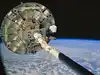
In 1994, the space shuttle Discovery held a Wake Shield disk behind it while still attached to its robot arm; the facility produced 5 good semiconductor films
In 1994, the space shuttle Discovery transported the Wake Shield Facility, designed to establish an ultra-clean vacuum environment. This groundbreaking experiment sought to cultivate purer semiconductor crystals than those achievable on Earth. Despite facing communication and navigation challenges, five high-quality films were successfully produced. Subsequent missions showcased the platform's capabilities for material production, propelling the idea of utilizing space for advanced manufacturing.
NASA sent Pseudomonas aeruginosa on shuttle Atlantis to space, where it formed denser biofilms with an unusual “column-and-canopy” structure
In groundbreaking space experiments, bacteria grown in synthetic urine were sent aboard the Atlantis space shuttle on two occasions. These microbes exhibited enhanced colony density and distinctive formations not observed on Earth. Spaceflight significantly amplified biofilm development in Pseudomonas aeruginosa, presenting major challenges for prolonged space missions and life support systems. Studying these bacterial modifications is crucial for future human exploration beyond Earth.
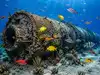
In 1996, NASA sank a 132-foot shuttle booster training device off Port Canaveral to become an artificial reef; marine life was expected to establish itself there within four months
A retired NASA training device became an artificial reef in the Atlantic Ocean. This structure provided a new underwater habitat for marine organisms. The Canaveral Port Authority also contributed to the reef's construction. Research indicates artificial reefs quickly attract diverse fish communities. The reef was named the Thomas William Hart Reef for a former diver.

In 1986, Challenger broke apart 73 seconds after liftoff; 36 years later, a TV dive team found a shuttle artifact with 8-inch tiles off Florida
Divers found a large, tiled object while filming a documentary series. This unexpected discovery was later identified as space shuttle Challenger debris. NASA confirmed the find as the largest piece recovered in decades. The discovery serves as a poignant reminder of the 1986 tragedy. It also highlights the ongoing importance of spaceflight safety protocols.
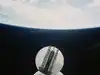
In 1985, NASA astronauts built two giant “flyswatters” aboard Space Shuttle Discovery; they used them in an attempt to activate a stranded satellite
In the remarkable year of 1985, astronauts faced a daunting challenge when they crafted makeshift tools from spare materials aboard their spacecraft to repair a satellite. Their first attempt, an unplanned spacewalk to activate the Syncom IV-3 satellite, didn't succeed, yet ingenuity prevailed as the satellite was ultimately restored. This incident showcases NASA's creative problem-solving using what they had on hand.
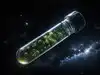
In 2006, NASA grew Salmonella in space; the bacteria returned more virulent than genetically identical germs cultivated on Earth
In a striking discovery, researchers found that Salmonella bacteria cultivated in space exhibited a heightened level of aggression, proving to be three times more hazardous than those on Earth. The unique microgravity environment mimics human digestive processes, providing insights into how these pathogens evolve. This vital research is poised to enhance the development of effective vaccines and treatments for various infections, marking a leap forward in medical science.
In 2003, NASA sent tiny worms aboard Space Shuttle Columbia. After the disaster, scientists discovered that an aluminium container had helped them survive the deadly impact
When Space Shuttle Columbiabroke apart on February 1, 2003, all seven astronauts lost their lives. Yet one NASA experiment survived. Tiny C. elegans worms, protected inside an aluminum research container, were recovered alive from the debris. Their survival transformed scientists' understanding of space biology,microgravity, and protective spacecraft design.

Today in US history on April 12: From the outbreak of civil war to civil rights, public health breakthroughs, and the dawn of the space shuttle era
April 12th holds significant weight in American history. It witnessed the start of the Civil War at Fort Sumter in 1861. President Franklin D. Roosevelt passed away in 1945, with Harry S. Truman assuming the presidency. The Salk polio vaccine was declared safe and effective in 1955. Martin Luther King Jr. penned his famous letter from Birmingham jail in 1963.
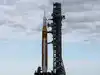
NASA marks 40 years since Challenger, prepares Artemis II amid safety and space governance concerns
Forty years after the Challenger disaster, NASA gets ready for its first crewed lunar mission since Apollo: Artemis II. Carrying four astronauts in the Orion capsule aboard the SLS rocket, the mission will evaluate spacecraft systems while confronting lingering hazards such as heat shield performance during reentry. Lessons from previous tragedies, which includes Columbia, guide safety decisions, highlighting crew protection and organizational accountability.

Boeing's Starliner set for first crewed mission to ISS
After years of delays, Boeing's Starliner capsule is set to ferry astronauts to the International Space Station (ISS) Monday, a milestone for the US aerospace giant and NASA. The flight, a final test before Starliner takes up regular service for the space agency, is critical for Boeing, whose reputation has suffered of late due to safety issues with its passenger jets. But problems since then have delayed Monday's crewed test flight, necessary for the capsule to be certified for NASA's use on regular ISS missions.

'SpaceX, this is Resilience': Four astronauts begin 6-month stay on space station
In NASA's first full-fledged mission ferrying a crew into orbit on a privately-owned spacecraft, the SpaceX Crew Dragon capsule dubbed Resilience opened its hatch door shortly after 1 a.m. EST (0600 GMT), two hours after docking and 27 hours after launching atop a Falcon 9 rocket from Cape Canaveral, Fla.

NASA astronauts arrive in Florida week before SpaceX flight
US astronauts have been flying to the International Space Station (ISS) on Russian Soyuz rockets since the shuttle program ended in 2011 -- a dependence they are keen to break.
Trump hails astronaut Kalpana Chawla as inspiration for millions of girls
Washington, May 1 (IANS) United States President Donald Trump has hailed the late Indian American astronaut Kalpana Chawla as an inspiration for millions of American girls.

NASA is tearing down one of the last vestiges of its shuttle program
The system utilized a central beam strung between a pair of 100 foot-tall towers that could be raised and lowered by a trio of 50-ton-rated hydraulic lifts.
Barack Obama under fire over commercial overhaul of human spaceflight plans
The United States is forced to depend on Russia's Soyuz capsules to ferry astronauts to the orbiting research laboratory until at least 2015.
NASA expects 3k job losses once shuttles stop flying
NASA told a US Senate panel on Monday that it anticipates losing 3,000 to 4,000 jobs at its launching site once the space shuttles stop flying in two more years, about half the cutback initially reported.
NASA says 3,000 to 4,000 job losses once shuttles stop flying
NASA has told a US Senate panel that it anticipates losing 3,000 to 4,000 jobs at its launching site once the space shuttles stop flying in two more years, about half the cutback initially reported
US shuttle heads for landing after successful mission
The US shuttle Discovery raced back to Earth on Saturday after a successful mission to deliver and open Japan's first space laboratory at the International Space Station.
Load More

