
SPACE SCIENCE DISCOVERY

Opening space sector unlocked new avenues for private players, startups: PM Modi
Prime Minister Narendra Modi said opening up India’s space sector to private companies and startups has created new opportunities for young innovators to build rockets and launch satellites. Speaking at the inauguration of the COSMOS-Mysuru Planetarium in Mysuru, he highlighted India’s progress in space exploration, including the Chandrayaan-3 lunar landing, the Aditya-L1 solar mission and its space docking capabilities.

Musk wants to hire Jensen Huang: Elon Musk says he would be honoured to recruit Nvidia CEO if board decides to replace him
Musk hiring Jensen Huang: Elon Musk has said he would be honoured to hire Nvidia CEO Jensen Huang if the chipmaker's board removes him. The comment followed reports of two alleged extramarital relationships involving Huang, including one with Nvidia executive Kimberly Powell and another with a Chinese woman suspected by US intelligence officials of spying for China.
In 2025, over 1,000 volunteers searched telescope images for galaxies that bend light; they helped find 497 possible cosmic lenses
Volunteers from around the world are actively participating in the Space Warps project to analyze galaxy images. They help identify rare gravitational lens candidates using data from the Euclid Space Telescope. This collaboration combines human observations with machine-learning systems for more accurate results. The project emphasizes the importance of citizen science in exploring vast astronomical datasets.

NASA job applications: $164,395 salary for astronaut posts as selected candidates can live on Moon and Mars; check direct link, eligibility and deadline
NASA astronaut applications: NASA has opened applications for its next astronaut class, with selected candidates potentially getting the opportunity to live and work on a future Moon base and participate in missions to Mars. Here's a look at the $164,395 annual salary, eligibility criteria, application requirements and December 3 deadline.
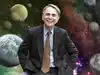
Quote of the day by Carl Sagan: 'We are like butterflies who flutter for a day and think it is forever' - A thought-provoking lesson on human life, mortality and our place in the universe by the American scientist
Carl Sagan’s famous quote from his 1980 book Cosmos compares human life to the brief existence of butterflies, highlighting how small our time on Earth is compared with the vast age of the universe. The American astronomer used his work to explore humanity’s place in the cosmos, the evolution of life and the possibility of extraterrestrial existence. Understand the meaning behind his observation and how his scientific work still shapes our understanding of the universe.
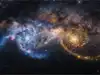
Indian scientists discover cosmic secret hiding 4,892 light years away; what was thought to be one star cluster turns out to be two
UBC 63 star cluster: A team led by Indian astronomers has found that UBC 63, located around 4,892 light years from Earth, consists of two distinct star clusters rather than one. Using data from the Gaia mission, researchers discovered that the clusters passed within 23 light years of each other around six million years ago and are now moving apart.
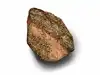
Pink rock found in Sahara turns out to be 4.1-billion-year-old Martian meteorite, reveals clues to ancient Mars
A meteorite named Teghaza 001, discovered in the Sahara Desert, reveals insights into ancient Martian geology. Scientists determined it originated on Mars over 4.1 billion years ago and underwent volcanic processes. Detailed analysis of zircon crystals indicated interactions with water, suggesting a more active early environment. Researchers identified potential geological regions on Mars related to the meteorite's origin.

Scientists caught a tiny piece of space dust outside the ISS. What they found was unusual
A tiny particle caught outside the International Space Station and brought back to Earth in 2005 turned out to have an unusual minerals mix. The particle, named Hoshi, was studied in a 2011 paper that looked at its texture, its minerals and its oxygen isotopes. The work gave researchers another way to study primitive material from the early Solar System.
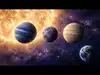
Three planets survived where they should have vanished: What does it mean for Earth and what did the Chinese scientists discover?
Three distant planetary systems are challenging expectations about what happens when stars grow old. The mystery offers a fresh way to examine planetary survival, including questions about Earth.

Talent, compute and R&D key to India's AI ambitions: Report
India will need to strengthen its talent pool, research and development (R&D) capabilities, computing infrastructure and data systems to translate advances in artificial intelligence (AI) and other emerging technologies into economic and social benefits, according to a report by KPMG.

In 1982, NASA engineer George Alcorn invented an imaging spectrometer designed to analyze high-energy sources
George Edward Alcorn's groundbreaking invention of the X-ray imaging spectrometer has revolutionized the field of space exploration, allowing for in-depth analysis of celestial phenomena. This innovative device merges imaging with energy detection, yielding essential data from various X-ray sources. His contributions significantly advanced astronomy, enabling detailed mapping of planetary surfaces and stellar charts. Recognized for his achievements, Alcorn was inducted into the National Inventors Hall of Fame in 2022.

Green star discovery: Why astronomers are calling this strange cosmic object a ‘zombie’ after it began consuming planetary debris
Astronomers have uncovered a remarkable white dwarf star named WD J1330+6435, situated 326 light-years away from our planet. This celestial body exhibits a striking green color, influenced by the elements present in its atmosphere, particularly sodium. This discovery broadens our perspective on the spectrum of colors that stellar remnants can possess, with the star affectionately dubbed a 'zombie star,' highlighting the intriguing afterlife saga of stars and their planetary systems.
Astronomers detect mysterious signal in empty space twice, leaving James Webb Telescope scientists searching for answers
Astronomers using the James Webb Space Telescope noticed a bright signal in the Hubble Ultra Deep Field. This mysterious signal was seen twice, yet no visible source was detected during earlier observations. Various theories about the origin of the signal have been considered, but none have been confirmed. Further observations are needed to understand the nature of this unusual phenomenon.
NASA’s SPHEREx finds brown dwarfs with water and methane, they drift in darkness without a host star and heated entirely from within
NASA's SPHEREx telescope has opened a fascinating window into the realm of brown dwarfs, the enigmatic celestial bodies that sit between stars and planets. Recent data reveals diverse chemical signatures and significant atmospheric variability, challenging existing models. Researchers aim to delve deeper into these findings, seeking to untangle the mysteries surrounding brown dwarfs and their complex atmospheres as they continue their groundbreaking analysis.

Groww Q2 profit jumps; Hocco eyes big funding scoop
Groww reported strong quarterly earnings in the July-September period. This and more in today’s ETtech Top 5.

Meet Wolf Cukier, the 17-year-old who discovered a planet with two Suns just 3 days into his NASA internship
Just three days into his summer internship at NASA’s Goddard Space Flight Center in Maryland, 17-year-old Wolf Cukier discovered a planet orbiting two stars. He picked out a strange signal from a distant star system using data from NASA's Transiting Exoplanet Survey Satellite (TESS) that at first looked like a stellar eclipse. Additional analysis confirmed the presence of TOI 1338 b, a planet roughly 6.9 times the size of Earth and located about 1,300 light-years away in the constellation Pictor. This discovery was the first circumbinary planet found by TESS.
World Space Week 2026: How the ‘Rocket Revolution’ is changing the cost, speed and future of space travel
World Space Week 2026 will highlight the increasing accessibility of space through the theme 'Rocket Revolution' this October. Celebrations will include events from schools, space agencies, and aerospace companies worldwide. Participants will explore technological changes in rocketry and their significance for future space exploration. Various activities, including model rocket launches, will occur across several countries. The week aims to inspire interest in STEM and promote international cooperation among attendees.
A US spacecraft accidently found evidence of ice on moon while taking a complete look at lunar surface in 1994
A US spacecraft known as Clementine was the first to get a complete view of the Moon and its pole regions. The ice on the bottom of a shadowed crater near the south pole of the Moon was found during the spacecraft's lunar survey mission. It was managed by the Ballistic Missile Defense Organization and NASA.
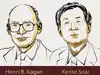
Nobel Prize 2026 in Chemistry awarded to Henri B. Kagan and Kenso Soai
Henri B. Kagan and Kenso Soai were awarded the 2026 Nobel Prize in Chemistry for their important discoveries. They were recognized for explaining chirality in chemical reactions and the amplification of mirror-image forms. Notably, this prize follows the recent awards in Medicine and Physics. The Nobel Prize has a rich history, with many scientists making significant contributions in various fields.
Load More


