
SPACE BLACK HOLES
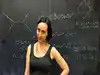
Is Sabrina Pasterski the next Einstein? Meet the physicist who built her own aircraft at 12 and is exploring Einstein’s biggest unanswered questions about gravity
Sabrina Pasterski's journey from building an aircraft as a teenager to studying Einstein's biggest unanswered questions has drawn attention to her work in physics. The MIT graduate now researches quantum gravity, black holes and space-time at Canada's Perimeter Institute. She also leads an $8 million research initiative exploring how gravity and quantum mechanics could fit together.
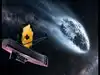
Interstellar comet 3I/ATLAS has a surprising chemical link to icy worlds beyond Neptune? What James Webb discovered and what it reveals about planets around other stars
A comet from another star system is giving scientists a fresh look at how planets form. NASA’s James Webb Space Telescope found chemical similarities between interstellar comet 3I/ATLAS and some icy objects beyond Neptune. The finding may help researchers understand whether distant planetary systems share similar building blocks, even when they formed around different stars.
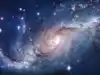
Fastest known star races around Milky Way’s black hole at 15,900 miles per second; how its orbit could reveal cosmic secrets
The discovery of the star S301 near Sagittarius A* offers unique insights into black hole properties. S301 travels at remarkable speeds, completing an orbit in just 8.7 years. Its proximity allows researchers to study the effects of black hole spin on space-time. Astronomers anticipate further observations to enhance understanding of these phenomena. S301 serves as a natural laboratory for examining gravity under extreme conditions around supermassive black holes.

Giant 'heat storms' are scorching the Earth. This is the story of the biggest one on record
Heat storms have increased dramatically, causing severe global consequences including excess deaths and environmental catastrophes. Recent heat storms have been identified as a new classification, representing larger and more persistent heat events. The intensity of these heat storms has worsened due to climate change and greenhouse gas emissions. Associated weather patterns have significantly disrupted ecosystems and agriculture worldwide.
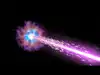
Astronomers detect mysterious signal in empty space twice, leaving James Webb Telescope scientists searching for answers
Astronomers using the James Webb Space Telescope noticed a bright signal in the Hubble Ultra Deep Field. This mysterious signal was seen twice, yet no visible source was detected during earlier observations. Various theories about the origin of the signal have been considered, but none have been confirmed. Further observations are needed to understand the nature of this unusual phenomenon.
From Black Clover Season 2 to Dragon Ball Super Beerus Arc: List of animes releasing in October, November and December 2026
Get ready for the Fall 2026 anime season, which brings a delightful mix of beloved series and exciting new entries. Fans can anticipate the return of Black Clover Season 2 and The Apothecary Diaries Season 3, alongside newcomers Overgeared and Firefly Wedding. From October to December, there’ll be a fantastic variety of options, ensuring that anime lovers have something exhilarating to watch as this season unfolds.
- Go To Page 1

Will Smith in 2015 bought a Hawaiian compound with two lava rock fireplaces that originally belonged basketball legend Kareem Abdul Jabbar for $10 million. In 2017, they sold it for $2 million profit
In 2015, Will Smith acquired a stunning property in Hawaii, previously owned by NBA legend Kareem Abdul-Jabbar. This beautiful estate, with its three bedrooms and guesthouse, was sold in 2017 for a handsome profit. Its luxurious amenities include a swimming pool, tennis court, and direct access to Secret Beach, complemented by scenic hiking trails and orchards that provide stunning ocean views across the property.
NASA’s $1.2 billion plan to explore the history and evolution of the universe enters Phase B
NASA has progressed the PRIMA mission into Phase B, concentrating on the creation of essential technologies and designs. This innovative space telescope is intended to perform detailed far-infrared surveys of our universe. With a scheduled launch in 2033, it aims to operate for five years, allowing scientists to delve into the formation and evolution of diverse cosmic phenomena.
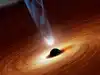
The strange 2% rule: Why black holes suddenly switch on their powerful jets
A new study reveals black holes become predictable when feeding. Jets emerge when accretion rates fall to two percent of the Eddington limit. This threshold applies to black holes of vastly different sizes. Tidal disruption events offer a rare view of this process. Future observations may predict when these powerful jets will appear.
Stephen Hawking's quote of the day on guilt: 'The human capacity for guilt is such that people can always...'
Stephen Hawking, an extraordinary theoretical physicist, delved into the enigmas of the cosmos. His groundbreaking work on black holes and Hawking radiation reshaped our understanding of the universe. The immensely popular book 'A Brief History of Time' bridged the gap between advanced science and public knowledge. Despite his physical challenges, his undying curiosity and intellect fueled transformative exploration, leaving a lasting impact that continues to inspire future generations of scientists.
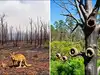
Australia used artificial tree hollows to replace vital wildlife homes lost to bushfires; new 3D-printed and drilled habitats could give threatened species a place to shelter
Innovative researchers are harnessing the power of 3D printing to construct homes for endangered Australian wildlife. By replicating the natural tree hollows that these species depend on, the new habitats promise to attract wildlife in distress. Additionally, a groundbreaking drilling technique is being used to create artificial hollows directly in living trees, aiming to provide a million new shelters amidst the aftermath of bushfires.
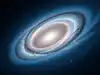
55 million light-years away, scientists spot something unusual: A strange galactic collision may have left this spiral galaxy with a centre that spins sideways
The Hubble telescope captured images of spiral galaxy NGC 4698. Its central bulge is tilted at an unusual angle to the main disk. Astronomers suggest this structure resulted from past gas absorption or a minor merger. This galaxy is located in the Virgo Cluster, approximately 55 million light-years away. Further observations will clarify NGC 4698's complex cosmic history.
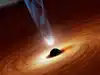
A black hole destroys a star, then fires off a powerful jet years later — scientists discover the 'burping' feeding pattern behind these cosmic outbursts
Scientists have found a new trend in black hole feeding patterns. Powerful jets emerge during two distinct phases of a black hole's feeding process. These jets appear during heavy feeding and later when feeding slows significantly. This discovery helps explain jet appearances long after a star's destruction. The findings may aid astronomers in planning future radio observations more efficiently.
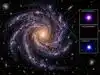
Scientists found 84 strange objects hiding inside six galaxies. Their unusual X-ray emissions could change what we know about the universe
Scientists have discovered 84 unusual “hypersoft X-ray sources” across six galaxies using archival data from NASA’s Chandra X-ray Observatory. The objects produce unusually low-energy X-rays and may emit intense ultraviolet radiation, unlike previously observed X-ray sources. Researchers believe they could be linked to X-ray binary systems and may help investigate the origins of Type Ia supernovae as well as the unexplained ionisation of gas between stars.

Quote of the day by Jennifer Lawrence: 'The internet to me is kind of like a black hole, and I never really go on it' - What Hollywood Oscar-winning actress' words teach us about digital detox
Jennifer Lawrence has officially entered the world of Instagram, making her feelings known about technology and the vastness of the online space. In her first post, she emphasised the need for positivity and stated that she would exit if negativity emerged. This move talks about the significance of digital well-being and personal boundaries. Read on!

Quote of the day by Stephen Hawking: 'What I have learned from life is to make the most of what you have got.' Life lessons from inspirational quote on resilience, limits, acceptance, complaints, obstacles, strengths and resources
Quote of the day by Stephen Hawking, “What I have learned from life is to make the most of what you have got,” explains how people can respond to limits and obstacles. The quote focuses on acceptance, resilience, strengths, available resources and action. Hawking’s life and work provide context for understanding how this approach can shape everyday decisions.
What’s really hiding around Einstein’s black holes? Scientists find a new gravitational wave clue, a ringing sound that could expose their mysterious ‘hair’
Scientists are exploring subtle changes in black hole ringdown signals. These gravitational wave echoes could reveal surrounding matter or new physics. Subtle mismatches in frequency and damping may indicate hidden structures. Spinning black holes offer additional directional clues for detection. Future observations could test gravity in extreme cosmic environments.
Science says black holes don’t actually suck everything around them: Here’s what really happens
Black Holes are called black because light cannot escape from inside their event horizons. Astronomers nevertheless detect black holes indirectly through their effects on nearby matter, gravitational lensing, stellar orbits and radiation from accretion disks.

Quote of the day by Stephen Hawking: 'It is very important for young people keep their sense of wonder and keep asking why.' Life lessons from motivational quote on curiosity, continuous learning, constant questioning, innovation, human discovery, scientific progress and exploring the unknown
Quote of the day by Stephen Hawking asks young people to keep their sense of wonder and continue asking why. The message connects curiosity with learning, innovation, discovery and scientific progress. Hawking believed that questions can challenge assumptions, expand knowledge and help people explore subjects that remain unknown.
What’s a black hole star? Astronomers spot a strange red object bigger than our entire solar system
Black Hole Star Discovery: Astronomers using Nasa’s James Webb Space Telescope may have discovered a new type of cosmic object called a “black hole star”. The strange red object, known as MoM-BH*-1, appears to combine features of stars and black holes and could offer new clues about how galaxies and supermassive black holes formed in the early universe.

How Giant Stars May Create the Supermassive Black Holes at the Centres of Galaxies
Astronomers are rethinking how supermassive black holes formed so quickly after the Big Bang. New evidence suggests that either giant stars or direct gas-cloud collapse produced larger initial black holes. These larger seeds grew faster, solving a cosmic timing puzzle. Telescopes such as the James Webb Space Telescope are providing crucial data; this research reshapes our understanding of the early universe's colossal objects.
Scientists stunned by monster Black Hole blasting winds at 130 million MPH across space
Astronomers have detected a supermassive black hole producing winds at unprecedented speeds. Situated 135 million light-years away in the NGC 3783 galaxy, the black hole generated a massive X-ray flare, leaving winds navigating at more than 37,000 miles per second, nearly one-fifth the speed of light. Researchers observed the phenomenon using ESA’s XMM-Newton and XRISM telescopes, connecting the outflows to the black hole’s magnetic field, which suddenly "untwisted."
A black hole event has revealed a truth physicists long suspected: Einstein and Hawking were right
Scientists have confirmed century-old predictions by Albert Einstein and Stephen Hawking after observing two black holes colliding about a billion light-years away. Using the Laser Interferometer Gravitational-Wave Observatory (LIGO), researchers detected gravitational waves in unprecedented detail, showing that the resulting black hole was larger than the two originals combined. This validates Einstein’s theory of relativity, first proposed in 1915, and Hawking’s 1971 prediction that a black hole’s event horizon can never shrink.

Scientists discover mysterious black hole roaming alone in the Milky Way. Here's why it is so surprising
Astronomers have detected a lone black hole drifting through the Milky Way—an unprecedented discovery made possible by gravitational lensing. Weighing seven times the Sun, it bends light from background stars without emitting any itself. This “invisible” giant, likely formed from a lopsided supernova, offers new hope for uncovering more hidden black holes across the galaxy.

Would a mini black hole vaporise you? Scientists break it down
A new study delves into the mind-bending question: what if a tiny primordial black hole passed through a human body? Scientists examine the impact of tidal forces and shockwaves, revealing that while such an encounter could be lethal, the odds of it happening are astronomically low. The research sheds light on the theoretical existence of these ancient black holes, their possible interactions with Earth, and why they remain one of the universe’s most elusive mysteries.

NASA releases video of black hole sound waves: Check how it sounds
NASA has made the sound waves created by a supermassive black hole at the center of the Perseus galaxy cluster audible for the first time. These sound waves, initially too low in frequency for human hearing, have been scaled up to be detectable. The discovery provides a unique insight into the cosmic symphony of the universe.

New NASA study shows how black holes can ‘create their own meals’
Astronomers have found that the most massive black holes can create their own food. Using data from NASA’s Chandra X-ray Observatory and the Very Large Telescope, the study shows how black holes outburst cool surrounding gas, enabling them to feed.
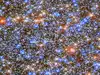
What is Intermediate-Mass Black Hole? Hubble Space Telescope helps astronomers discover it. Details here
Astronomers have found evidence of an intermediate-mass black hole (IMBH) in the Milky Way's Omega Centauri cluster using the Hubble Space Telescope. This discovery could help understand black hole formation and evolution, with further studies planned using the James Webb Space Telescope.
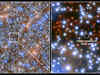
Astronomers find massive black hole closest to Earth that is 8,200 times the size of the Sun. Watch Nasa video here
Black Hole Omega Centauri (Google Trends): Astrophysicists using Hubble Space Telescope images have identified a potential intermediate-mass black hole in the Centauri star cluster, possibly 8,200 times the mass of the Sun. This could be the second-largest black hole in our Galaxy if confirmed. The discovery is based on the unusual movement of stars near the cluster’s center, suggesting a massive object's gravitational pull.
Load More

