
SOUTH KOREA ICO BAN

South Korea to unveil EV industry support measures as Chinese competition grows
South Korea plans to unveil measures to boost its electric vehicle industry competitiveness during a government meeting. The Finance Ministry is considering a tax credit proposal for locally produced EVs, although no decision has been finalized yet. Chinese electric vehicles have gained significant market share in South Korea, capturing over 43% of new registrations.
South Korea’s Kospi tumbles 5% as tech selloff revives AI concerns
South Korean shares tumbled nearly 5% as a selloff in US technology stocks reignited concerns over the sustainability of the AI trade. Profit-booking after Tuesday's rebound and uncertainty over additional US tariffs added to the pressure. Chipmakers Samsung Electronics and SK Hynix led the losses, while foreign investors emerged as significant net sellers.

South Korea proposes rules allowing banks to issue stablecoins, paving way for ICO revival
South Korea's financial regulator has proposed a framework allowing bank-led consortiums to issue stablecoins, potentially paving the way for domestic initial coin offerings to resume after a nine-year ban. The proposed legislation also introduces ownership limits for digital asset platforms and disclosure requirements for companies planning token offerings.

Nvidia suppliers, startups in Asia cheer Huang's return as uncertainty eases
Jensen Huang's return to the helm at Nvidia has instilled renewed confidence among Asian customers and partners alike. His experienced leadership is anticipated to boost product innovation and sustain investment in the burgeoning AI field. Following the announcement, stock exchanges in Taiwan and South Korea saw notable increases. Nevertheless, challenges related to national security and U.S.

South Korea says several Russian aircraft flew into its air defense zone
South Korea scrambled fighter jets on Tuesday after Russian military aircraft entered its air defence identification zone over waters between the Korean Peninsula and Japan. Seoul clarified that the aircraft had not violated its territorial airspace, correcting earlier government alerts that had prompted residents of Ulleung Island to evacuate.

South Korea’s Kospi rockets 8% as AI-linked stocks get breather after Jensen Huang’s return as Nvidia CEO. Worst over?
South Korean shares have bounced back sharply after previously hitting a ten-month low, with the KOSPI index climbing 7.19%. This surge was largely driven by a rebound in technology stocks, particularly following Nvidia CEO Jensen Huang's return to leadership. Notable AI companies such as Samsung Electronics and SK Hynix recorded substantial gains, while foreign investments showed a positive trend with net purchases totaling 497.3 billion won.
Trump warns US stock market crash will get worse after $6 trillion wipeout, but why are Dow Jones, S&P 500 and Nasdaq futures rebounding as South Korea’s KOSPI triggers trading halt?
US stock market crash warning: Trump says Democrats’ midterm wins drove a claimed $6 trillion loss in US stocks and warns the sell-off could worsen. Yet Dow Jones, S&P 500 and Nasdaq futures climbed 2.13%, 2.88% and 3.54% early Monday, pointing to a possible rebound. In South Korea, the KOSPI fell more than 5%, triggering a five-minute program-selling halt, before ending the session 3.31% lower.
South Korea vows market support as Kospi plunges 5%
South Korea’s benchmark KOSPI plunged 5% as fears over the AI trade and a broader technology selloff rattled investors, overshadowing government assurances of immediate market stabilisation measures if needed.
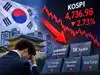
South Korean shares slump nearly 3% on AI-driven tech selloff despite policy pledge
South Korean shares fell approximately 3% on Monday amid government efforts to stabilize the market. The KOSPI index dropped to its lowest level since January, raising investor concerns. Major technology stocks, including Samsung Electronics and SK Hynix, experienced significant losses during this decline. Authorities pledged to use stabilization funds but faced skepticism from investors regarding future returns. This situation reflects broader doubts about AI investments affecting global technology stocks.

South Korea prepares market stabilisation funds after KOSPI hits 10-month low
In response to falling stock indices, South Korea's finance ministry is poised to activate market stabilisation funds. The KOSPI index has plummeted, marking its lowest point in the last ten months. An emergency meeting was convened by the finance minister to explore strategies for restoring investor confidence. Among the discussed actions are temporary regulations on stock buyback limits for publicly listed companies.

From eating tree bark to richest man: How a poor boy who ran away from home built one of the world's biggest car and ship company
From eating tree bark and grass roots during childhood to becoming one of South Korea's richest businessmen, Chung Ju-yung's journey was marked by poverty, repeated failures and extraordinary determination. The Hyundai founder ran away from home, lost businesses to fire and war, but eventually built a global empire spanning automobiles, construction and shipbuilding.

South Korea's Lee says speed is vital in AI race on data centre visit
During a recent visit to a data centre under construction in Ulsan, South Korean President Lee Jae Myung emphasized the need for swift advancement in the AI sector. He expressed optimism that the Ulsan initiative, being developed by SK Group and Amazon Web Services, will lure international investments and collaborations.
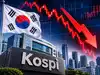
South Korea stocks face foreign investor exodus despite record AI profits
South Korea's KOSPI has plunged 44% from its June record high despite record earnings at Samsung Electronics and SK Hynix. Foreign investors are pulling out at a record pace, raising concerns over AI spending, fading buybacks and weakening market sentiment.

South Korea’s AI boom fails to boost consumer spending as stocks tumble
South Korea's AI boom is driving semiconductor exports and record bonus prospects at Samsung Electronics and SK Hynix. But a sharp stock market correction has wiped out retail investor wealth, threatening household spending. With consumer consumption contracting in the third quarter, concerns are growing over whether the benefits of the AI boom are reaching households.

US, South Korea issue urgent advisories over flaws in Java programming language
US and South Korean authorities have issued cybersecurity advisories, urging Java users to urgently install security updates after vulnerabilities were found in the popular programming language.

US, South Korea issue urgent cybersecurity advisories over flaws in Java programming language
US and South Korean authorities have issued cybersecurity advisories, urging Java users to urgently install security updates after vulnerabilities were found in the popular programming language.
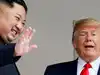
One Kremlin hint raises odds of Trump-Kim Jong Un meeting at APEC, analysts say
Chances for a meeting between US President Donald Trump and North Korean leader Kim Jong Un have increased. This follows indications from the Kremlin about a possible meeting at the APEC summit. Analysts suggest Russia's involvement may signal preparations for such a summit. Both South Korea and Japan are closely monitoring these developments concerning Trump and Kim.
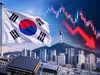
South Korean shares close at over 9-month low on Nvidia caution
South Korean shares experienced a significant decline of more than 2% amid concerns affecting chipmakers. The benchmark KOSPI closed at its lowest level since February due to persistent selling pressure. Foreign investors were noted as net sellers of shares worth approximately 1.4 trillion won. The Korean won weakened slightly against the dollar during this trading period. Additionally, South Korea's benchmark bond yields fell as market activities shifted.

Seven years after RCEP exit, conditions ripe for India to turn East
India's approach towards East Asia is evolving due to changing geopolitical landscapes and economic pressures. Japan and South Korea are reconsidering their ties with China, as companies exit the market. Southeast Asian nations are enacting measures against low-priced Chinese products amidst rising trade tensions. The upcoming meetings in Manila, including the East Asia Summit, are significant for India's strategic positioning.
Load More


