
SOLAR OBSERVANCE

Vrishchika Sankranti 2026: November 16 Date, Sun Transit Into Scorpio, Significance and Rituals
Vrishchika Sankranti 2026 will take place on November 16, when the Sun moves from Tula (Libra) into Vrishchika (Scorpio) at approximately 7:40 PM IST. The occasion marks an important transition in the Hindu solar calendar and is associated with Surya worship, holy bathing, charity and spiritual practices. Since the Sankranti moment occurs after sunset, some Panchang traditions observe the associated Punya Kaal on November 17.

DGTR begins anti-dumping probe against certain aluminium imports from China, others
The Directorate General of Trade Remedies (DGTR) has launched an anti-dumping investigation into aluminium extrusion imports from China, Malaysia, Vietnam and Thailand following a complaint by the Aluminium Extrusion Manufacturers Association of India.

Stocks in news: M&M, BHEL, Adani Enterprises, Wipro, Tata Steel, Siemens and Divi's Labs
Indian equity markets ended marginally lower on Sunday, breaking a seven-session winning streak. The NSE Nifty 50 decreased by 44 points, closing at 24,986. Several companies, including Adani Enterprises and Tata Steel, announced important corporate developments and new investments. Wipro appointed a new CEO for its Americas unit, while various firms reported their quarterly earnings. Overall, investors remain cautious as they monitor these announcements and future market movements.

Diwali 2026 Panchang Today: Tithi, Nakshatra, Lakshmi Puja Muhurat, Rahu Kaal and Shubh Timings
Diwali 2026 is being celebrated today, November 8, across India. Check the complete Hindu Panchang for Diwali, including Amavasya Tithi timings, Swati Nakshatra, Ayushman Yoga, Karana, Lakshmi-Ganesh Puja muhurat, Pradosh Kaal, Vrishabha Kaal, Rahu Kaal, Yamaganda, Gulika Kaal, Abhijit Muhurat and other auspicious and inauspicious timings for New Delhi.

White dwarf WD J1328-1450 has a double debris disc; one ring may be hiding a Pluto-sized survivor
Astronomers have discovered a white dwarf named WD J1328-1450, located 1,600 light-years away, has two separate rings of gaseous planetary debris. Unusual signals detected around the star suggest that two planetary bodies may be maintaining the rings, with the outer object potentially reaching Pluto-like or even Moon-like dimensions. The discovery offers a rare glimpse into what planetary systems may look like after their stars die.

How China's clean-tech machine is reshaping the global climate fight
In 2024, China took the lead as the top investor in global clean technology, directing $132 billion to developing nations to aid carbon reduction efforts. This unprecedented infusion of resources could potentially reshape the landscape of international climate finance.

Renewable energy could save India $240 billion in coal, gas imports by 2030: IEA
The savings are expected to increase as solar and wind power displace imported fossil fuels, with annual savings projected to reach around USD 35 billion by 2030, exceeding India's actual non-coking coal and natural gas import bill in the financial year 2024-25.
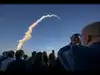
NASA's Artemis II rocket punched 3,100-mile-long holes in Earth's atmosphere, disrupted GPS signals: Study
NASA's Artemis II mission created large disturbances in the ionosphere that disrupted GPS signals across the United States. These disturbances were significantly more intense than those from prior rocket launches, causing potential issues for technologies reliant on precise positioning. Researchers noted that even minor positioning errors could impact autonomous vehicles, which rely on GPS data. The mission set new records for human distance from Earth during a lunar flyby.
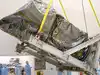
NASA space telescope plunges to Earth after two decades studying cosmic explosions
NASA's Swift Observatory has reentered Earth's atmosphere after more than two decades of effective research. Its mission, which began in 2004, far exceeded initial expectations by lasting 11 times longer than planned. A recent attempt to boost its orbit failed due to complications with a private rescue mission. Meanwhile, NASA is exploring options to save the Hubble Space Telescope, set to fall in the mid-2030s.
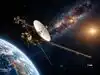
Voyager 1 lost? Where is NASA's spacecraft right now, and how long will it last?
As NASA's Voyager 1 and Voyager 2 traverse the vast reaches of interstellar space, they confront various power and communication obstacles. Recently, Voyager 1 encountered a setback, losing contact momentarily when its fault protection system triggered due to inactive thrusters. Thankfully, engineers swiftly restored communication and introduced power-saving strategies to prolong the mission.

November 2026 Moon Phases: New Moon and Full Moon Dates, Timings, Rituals and Zodiac Effects
As November 2026 begins, two major lunar events are approaching: the New Moon on November 9 and the Full Moon, traditionally known as the Beaver Moon, on November 24. These celestial events carry astronomical, cultural and astrological significance, with the New Moon associated with fresh beginnings and the Beaver Moon linked to seasonal traditions and reflection. Explore the exact dates and global timings, the significance of the Beaver Moon, simple New Moon and Full Moon rituals, and astrological interpretations for all 12 zodiac signs. The article also explains how to observe November’s lunar phases, their spiritual symbolism and the cultural traditions behind the Full Moon’s name.

The Old Farmer’s Almanac has survived for centuries, and its unusual mix of weather forecasts, folklore and gardening advice explains its lasting appeal
Published in 1792, The Old Farmer’s Almanac provides a wealth of information about weather and agriculture. It serves as a reference for gardening advice, recipes, and astronomical data. Originally intended to support farming, it has grown in scope over the years. The publication retains relevance as technology changes how people access information. Its enduring popularity illustrates the lasting interest in traditional sources of knowledge.

Interstellar Object 3I/ATLAS: 3I/ATLAS may have come from a star system older than our sun, James Webb Telescope observations suggest
Recent findings from the James Webb Space Telescope have unveiled intriguing chemical signatures surrounding the interstellar object 3I/ATLAS. This comet likely originated in a stellar nursery billions of years prior to the Sun's birth. Its significant methane presence hints at a primordial formation, coupled with low metallicity and high cosmic ray exposure. The uncommon water-ice grains shed light on the icy building blocks of other star systems.
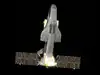
China's secret reusable spaceship spotted in US intelligence report: What we know about this mysterious plane and its mission
A recently declassified US intelligence report has revealed a satellite image that confirms China's reusable spaceplane is currently orbiting. This significant development has sparked concerns about China's expanding capabilities in space and the potential military implications. The spacecraft is noted for its ability to interact with smaller objects during missions, amplifying worries about the competitive landscape of space exploration, as tensions between nations continue to rise.

Interstellar comet 3I/ATLAS has a surprising chemical link to icy worlds beyond Neptune? What James Webb discovered and what it reveals about planets around other stars
A comet from another star system is giving scientists a fresh look at how planets form. NASA’s James Webb Space Telescope found chemical similarities between interstellar comet 3I/ATLAS and some icy objects beyond Neptune. The finding may help researchers understand whether distant planetary systems share similar building blocks, even when they formed around different stars.

Three planets survived where they should have vanished: What does it mean for Earth and what did the Chinese scientists discover?
Three distant planetary systems are challenging expectations about what happens when stars grow old. The mystery offers a fresh way to examine planetary survival, including questions about Earth.
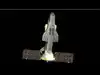
US releases rare photo of China's secretive Shenlong space plane: What does it reveal?
China's Shenlong space plane was recently photographed in orbit, showing its design and structure. The Defense Intelligence Agency included the photograph in a report assessing threats in space. This image revealed the spacecraft's delta-shaped wings and open payload bay doors while docked with another satellite. Shenlong's history includes missions in which it has released and interacted with objects in orbit.

Interstellar comet 3I/ATLAS, on its way out, surprises with something strange about our Solar System
Researchers have made groundbreaking observations of interstellar comet 3I/ATLAS using NASA's James Webb Space Telescope. This comet exhibited remarkable traits in its ice grains and dust, especially noteworthy was the diversity in water ice states compared to typical comets. The findings indicate that icy bodies from other systems may share traits with those in our solar system, deepening our insight into planetary formation across different stars.

India's deeptech dream remains import dependent for critical components
The founder of a spacetech startup developing rockets said geopolitical tensions, including the Russia-Ukraine war, disrupted the supply of critical components. “Parts that were earlier available within weeks are now taking months to arrive, making it harder for startups to plan development and testing schedules,” the founder said, requesting anonymity.
Load More


