
SOLAR FOR ALL PROGRAM

Stock Picks of the Week: 5 stocks with consistent score improvement and upside potential of up to 35% in 1 year, according to analysts
The market weathered a whole bad patch with almost no FPI money coming in. But it cuts the other way too. When so little has been flowing in, even a small amount of FPI buying can move the market more than it normally would. That said, the mood has turned from bearish to cautiously optimistic, thanks largely to dropping oil prices. None of that changes your basic job as an investor: Study companies, look at earnings, and keep quality front and centre.
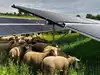
In 2022, North Carolina farmer Lance Tabor used a 40-acre solar site for sheep grazing; he brought 41 animals onto the property to expand his operation
Lance Tabor has pioneered an innovative sheep farming method by integrating his operation with solar panel installations in North Carolina. This dual-use approach not only enhances renewable energy production but also allows the sheep to effectively control vegetation, minimizing maintenance for the solar company. Ongoing research aims to optimize grazing methods within this unique intersection of agriculture and renewable energy, with rising interest in the promising field of agrivoltaics.

How China's clean-tech machine is reshaping the global climate fight
In 2024, China took the lead as the top investor in global clean technology, directing $132 billion to developing nations to aid carbon reduction efforts. This unprecedented infusion of resources could potentially reshape the landscape of international climate finance.

Interstellar comet 3I/ATLAS, on its way out, surprises with something strange about our Solar System
Researchers have made groundbreaking observations of interstellar comet 3I/ATLAS using NASA's James Webb Space Telescope. This comet exhibited remarkable traits in its ice grains and dust, especially noteworthy was the diversity in water ice states compared to typical comets. The findings indicate that icy bodies from other systems may share traits with those in our solar system, deepening our insight into planetary formation across different stars.

Singapore thrived on chokepoints. Now they’re a threat
Singapore faces challenges in maintaining its prosperity due to its dependence on larger neighboring countries for energy supplies. Recent tensions with Indonesia include energy supply cuts following Singapore's actions against companies linked to wildfires. The city-state's efforts to diversify energy sources through renewable projects are still limited and vulnerable to geopolitical pressures. Historical parallels to cities like Venice highlight the potential consequences of such dependencies in a changing global climate.

Forget the Moon’s south pole: 4 other lunar sites could help humans build a base and prepare for Mars, new report suggests
The southernmost region of the Moon has emerged as a crucial focus for contemporary lunar exploration, particularly in the quest for water ice. Other notable sites, such as Bhabha Crater and Orientale Basin, are also under consideration for study. These areas promise to offer vital information about the Moon's past and feasible locations for human settlement.

In 2010, scientists used electric fencing to protect Montana’s black-footed ferrets; coyote sightings in fenced areas fell from 42% to 7%
In Montana, scientists implemented portable electric fencing to reduce coyote predation on endangered black-footed ferrets. The fencing successfully decreased coyote sightings from 42 percent to 7 percent, protecting ferrets during their vulnerable stages. All ferrets monitored within the protected area survived, highlighting the fence's effectiveness. The project demonstrated that temporary measures can significantly aid conservation efforts while minimizing predator interactions.

Alaska spent $46.9 million to lower electric bills in 186 communities in FY2025, covering 148.5 million kWh, where rural power costs can be far higher
In fiscal year 2025, Alaska committed around $46.9 million to assist 186 remote communities with rising electricity expenses. By targeting the high costs associated with diesel-generated power, the initiative aims to lessen financial burdens on approximately 80,000 residents benefiting from the Power Cost Equalization Program. While this support is crucial, there remain significant challenges around transitioning to renewable energy sources, underscoring equity issues in rural energy access.
NASA’s $1.2 billion plan to explore the history and evolution of the universe enters Phase B
NASA has progressed the PRIMA mission into Phase B, concentrating on the creation of essential technologies and designs. This innovative space telescope is intended to perform detailed far-infrared surveys of our universe. With a scheduled launch in 2033, it aims to operate for five years, allowing scientists to delve into the formation and evolution of diverse cosmic phenomena.

Ohio solar farm is now home to more than 3 million honey bees. Veteran beekeepers turn land around panels into pollinator habitat
In Ohio, Big Plain Solar is pioneering a unique blend of renewable energy and agriculture by integrating over 50 hives of honey bees into its solar farm. The initiative employs pollinator-friendly plants, enhancing the ecosystem while producing electricity. Run by veterans, this project not only supports sustainable land use but also contributes to improved soil health and reduced maintenance costs, showcasing how innovative practices can benefit both energy and agriculture.
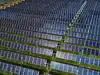
Trump administration illegally cancelled $7 billion solar programme, US judge rules
A federal judge ruled that US President Trump's administration unlawfully canceled a solar energy grant program. The judge found the Environmental Protection Agency exceeded its authority when rescinding grants. This program aimed to expand solar energy in low-income communities across the nation. The court vacated the EPA's termination of the Solar for All program. The EPA is currently reviewing the decision and considering an appeal.

Washington upgraded 7,474 low-income homes with insulation and repairs that stopped heat from escaping; households saved about $189 a year
Washington State's weatherization initiative made a significant impact in just one year by enhancing the quality of low-income homes. This program effectively sealed off air leaks and added crucial insulation, helping families cut down their energy bills by an average of $189 annually. Additionally, aside from cost savings, the program offered several non-energy benefits, improving overall comfort and health, which greatly contributed to the welfare of these households.

In 1998, Leonardo DiCaprio started an environmental foundation at 24; it later backed more than 200 projects across 50 countries
In 1998, Leonardo DiCaprio started an environmental foundation at 24; it later backed more than 200 projects across 50 countries. The Leonardo DiCaprio Foundation focused on climate change, wildlife, oceans, forests, indigenous rights and conservation. It awarded more than $80 million in grants and supported projects in 50 countries. DiCaprio also used films such as The 11th Hour and Before the Flood to reach audiences worldwide.
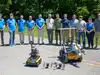
Three robots worked together like an independent science team in NASA’s latest test — it could change space exploration forever by making decisions without waiting for Earth
NASA tested three robots capable of independent scientific decision-making. These autonomous systems can assess risks and adjust plans without human input. The ASTRA project aims to enhance robotic missions in challenging environments. This technology could support future explorations on the Moon and Mars. Robots will handle exploration tasks while humans focus on broader mission objectives.
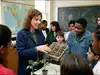
In 1984, NASA sent 12.5 million tomato seeds into orbit for nearly six years. After their return, 132,000 experiment kits were distributed across every US state and 30 countries
In 1984, NASA sent 12.5 million tomato seeds into orbit for nearly six years. After their return, 132,000 experiment kits were distributed across every US state and 30 countries. Students planted space-exposed seeds beside Earth-stored control seeds. The experiment compared germination and growth. Results showed 73.8% germination for space seeds against 70.3% for control seeds, giving NASA data on seeds and space exposure.
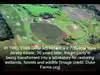
In 1993, Doris Duke left behind a 2,700-acre New Jersey estate; 30 years later, the property is being transformed into a laboratory for restoring wetlands, forests and wildlife
Duke Farms in New Jersey is a 2,700-acre living laboratory for conservation. The estate is testing nature restoration and clean energy strategies on its grounds. It aims to achieve carbon negativity by the year 2040. The campus has already achieved its goal of 100% clean electricity. This initiative serves as a model for other institutions seeking sustainability.
In 2013, Bryan Cranston finished a 2,450-square-foot net-zero beach house in Ventura County with a rooftop solar array; 8 years later, it sold for $5.45 million
Bryan Cranston's recent sale of his sustainable home highlights the growing value of green building practices in real estate. The eco-conscious property sold for more than the asking price and boasted Platinum LEED certification while generating its own power. Nonetheless, coastal risks may influence resale values despite the home's sustainable advantages, indicating that green building has a quantifiable effect on resale outcomes.

Seattle’s low-income efficiency programs served 376 households in 2021; ACEEE reported 1,996 MWh in energy savings across those customers
Seattle has launched innovative green initiatives aimed specifically at improving energy efficiency for low-income households. In 2021, the HomeWise program successfully assisted 376 families, resulting in an impressive saving of nearly 2,000 megawatt-hours of electricity. With many low-income families across the nation grappling with steep utility costs, Seattle's initiatives strive to alleviate this burdensome energy gap.
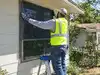
Austin weatherized 625 homes for low-income customers in 2021; Austin Energy estimated 687.5 MWh of annual savings after insulation, sealing and AC work
Austin Energy's weatherization initiative has made a notable impact on energy efficiency within low-income households. By providing no-cost upgrades such as insulation and duct sealing, families have seen a significant reduction in energy consumption and utility bills. The program's simplified application process and broadened eligibility criteria have further enhanced accessibility for residents, showcasing a successful approach to improving home safety and comfort across the community.
Load More


