
SMITHSONIAN INSTITUTION

New York woman wanted American children to experience Diwali. How a mother's rangoli kits became a funded business
Indian American businesswoman Akriti Babaria established Kulture Khazana to enhance the visibility of Diwali and Indian cultural customs in the US. What started as an idea at a kitchen table has expanded into a toy brand serving more than 45,000 families, schools, and organizations, familiarizing American children with Indian festivals via books, rangoli kits, puzzles, and crafts.

How Trump and Republicans lost the 2026 midterm elections, according to The AP Voter Poll
Voters are showing signs of exhaustion towards Donald Trump, affecting Republican candidates' performances in recent elections. Many voters are dissatisfied with the Republican Party's handling of inflation and government corruption issues. Trump's endorsements of candidates perceived as flawed also contributed to the Republican losses during the elections. Voters are demanding more accountability and oversight from Congress, seeking necessary changes in representation.

Jeff Bezos donated $200 million to the Smithsonian in 2021. Why $130 million was set aside for one project
Jeff Bezos donated $200 million to the Smithsonian Institution in 2021, with $130 million earmarked for a new learning center at the National Air and Space Museum in Washington, D.C. The remaining $70 million was designated for museum renovations and technological improvements to galleries and public spaces.

In Maryland, Smithsonian scientists planted 17,000 trees in plots with 1, 4, or 12 species; after years of monitoring, mixed forests grew faster and stored more carbon
A recent investigation in Maryland reveals that forests composed of mixed species grow at a much faster rate compared to those with a single species. The BiodiversiTREE experiment highlights enhanced canopy complexity, which allows for more effective light absorption and greater overall productivity. Researchers are advocating for diverse tree planting to maximize carbon capture. Although single-species forests are favored for timber production, this approach may require reassessment.

In 1961, Georgia waiter Dilmus Hall retired and began filling his home and yard with handmade figures; decades later, the Smithsonian was preserving his story
Dilmus Hall ingeniously transformed his residence into a vibrant artistic haven, brimming with sculptures shaped by his personal beliefs and life experiences. Retiring in 1961, he immersed himself in art, utilizing materials from his environment. His œuvre encompassed depictions of animals, humans, and spiritual motifs, serving as a testament to his unique perspective.
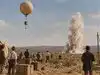
USA tried to make rain by bombing clouds with dynamite in 1891. The $7,000 experiment for drought-hit Texas produced unexpected result
In 1891, the US government funded an unusual experiment to make rain by bombarding the sky with dynamite, balloons and other explosives. Led by Robert G. Dyrenforth, the team tested the theory in drought-hit Texas after a Civil War veteran suggested that the sound of explosions could force clouds to release rain. Although showers followed some tests, the expedition's own meteorologist questioned the results, noting the lack of scientific evidence.
- Go To Page 1
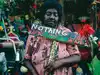
In 1974, Mississippi domestic worker L.V. Hull bought a 900-square-foot home with her wages; decades later, it became a restored art site and the L.V. Hull Legacy Center
L.V. Hull, a dedicated domestic worker and artist, acquired a modest home in Kosciusko, Mississippi, in 1974, infusing it with her unique art. While the house blossomed into a celebrated art destination, it fell into neglect after her death in 2008. Restoration efforts have since revitalized it, marking its place as the first historic home of a Black woman visual artist. Visitors are now welcome at the newly opened L.V.
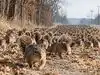
In 1968, 20 million squirrels suddenly began migrating across America. The mass exodus confused scientists but the answer was in what happened a year before
In 1968, millions of squirrels suddenly flooded roads, crossed lakes and abandoned their usual habitats across America, leaving scientists scrambling for answers. Some estimates put their numbers at 20 million, but the reason behind this extraordinary movement was not what many people expected. As researchers investigated the bizarre phenomenon, they uncovered a surprising connection to what had happened in the forests just a year earlier.
Archaeologists discover rare bronze ring engraved with the lighthouse of Alexandria at Egypt’s sunken royal palace
Underwater archaeologists have found a bronze signet ring engraved with an image believed to feature the Lighthouse of Alexandria, one of antiquity's most celebrated monuments. The discovery was made at Antirhodos, a submerged island that once held a royal palace in Alexandria’s Great Harbor, the European Institute for Underwater Archeology said. The engraving looks like pictures of lighthouses on coins from the second century AD, so the ring could be from that period.
Rick Norsigian paid $45 for dusty glass negatives in 2000. Years later, they were linked to Ansel Adams, turning a garage-sale find into a multimillion-dollar mystery
Fresno painter Rick Norsigian purchased 65 old glass negatives for $45 at a garage sale ten years ago and later believed they were early works by legendary photographer Ansel Adams. Attorney Arnold Peter assembled experts who reportedly concluded the negatives were Adams’ work, with handwriting analysis and other details mentioned as evidence.

Indian-American philanthropist inducted into National Women's Hall of Fame
Sharmila Mona Sinha has been inducted into the National Women's Hall of Fame in Seneca Falls, New York. She is the second woman of Indian origin to receive this honor, following Indra Nooyi. Sinha's career includes significant positions in investment banking and philanthropy for women's rights. During her induction, she spoke about power and the importance of sharing it with others.

Sharmila Mona Sinha: The third daughter who turned deficit into dividend and became a US Hall of Famer
Sharmila Mona Sinha, who grew up in Kolkata, has been inducted into the National Women’s Hall of Fame. She became the second Indian woman to receive this honor, following Indra Nooyi. Sinha's journey has included time in investment banking and philanthropic efforts for women's rights. She currently serves as CEO of Equality Now, addressing issues affecting women globally.

In 1967, Robert Kearns patented a windshield wiper that paused between sweeps; Ford later used the idea, and a jury awarded him $10.2 million in 1990
In the 1960s, inventor Robert W. Kearns developed a groundbreaking windshield wiper system featuring intermittent operation. After Ford appropriated his design without permission, Kearns found himself embroiled in an arduous legal fight to reclaim ownership. He endured various personal and financial hardships but triumphed in 1990 with a monumental $10.2 million judgment against Ford. Kearns' journey highlights the immense struggles inventors face in safeguarding their creations.

Frances Bones was buried at Carlisle in 1895: How researchers finally traced her Comanche family after 131 years and returned her remains to Oklahoma
Frances Bones was a Native American child who died at the Carlisle Indian Industrial School in 1895. After more than a century, her remains were returned to Oklahoma on September 26, 2026. This repatriation was made possible through family connections discovered by Audrey Whitefeather Herrera. The return is part of a larger initiative to bring Native children's remains back to their communities.

In 1825, Boston piano maker Alpheus Babcock replaced part of the wooden frame with one piece of iron; the change let pianos become louder and more powerful
Alpheus Babcock's revolutionary cast iron piano frame marked a pivotal shift in piano craftsmanship and tuning practices. Though initially met with skepticism, this innovation found its way into the hearts of piano makers. Jonas Chickering subsequently refined the concept, producing sturdier pianos with richer sound. Today, the cast iron frame is a staple in piano manufacturing, enriching our musical experiences across various genres.
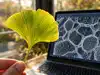
In 2017–18, 2,500 volunteers counted tiny pores on ginkgo leaves to study the ancient atmosphere; 24,000 classifications helped process the images
Ginkgo trees, which have existed for millions of years, provide valuable information on historical carbon dioxide levels. Researchers employ citizen volunteers to count leaf pores, enhancing the study's efficiency. Initial test phases revealed varying accuracy levels among volunteers but still yielded useful data. Methods to correct classifications have improved the reliability of the results significantly. This collaborative effort fosters public engagement with climate science and enhances research productivity.
In 1858, American inventor Ezra Warner patented a can opener, replacing the hammer-and-chisel method for the US Army and grocers
Canning began in 1795, sparked by a French inventor who aimed to create food preservation solutions for military purposes. By 1858, a Connecticut businessman had patented an early can opener, designed for grocery and military use, though it resulted in sharp edges. It would be many years before a safer version became widely available, thanks to innovators like Warner, who focused on making such tools user-friendly for all.

In 1937, Oklahoma grocer Sylvan Goldman introduced the first shopping cart after noticing customers bought only what they could carry; it changed supermarket shopping
Sylvan Goldman invented the shopping cart in the 1930s to help customers carry more items in stores. Initial reactions were negative, as women compared carts to baby strollers while men felt they were unmanly. To boost interest, Goldman employed attractive individuals to demonstrate the carts in stores. The invention resulted in customers purchasing more items and spending more money.
A man paid $4 for an old document at a Pennsylvania flea market; decades later, experts identified it as a rare Declaration of Independence copy worth $2.4 million
The story of the man who paid $4 for an old document at a Pennsylvania flea market is a remarkable reminder that history can sometimes hide behind the most ordinary objects. The discovery transformed a forgotten sheet of paper into a rare window into July 1776, when John Dunlap printed the Declaration of Independence for rapid distribution across the colonies.

In 2011, 'Occupy Wall Street' started in New York, prompting similar protests around the U.S., world, decade later Manhattan lady was rich by $431,000
Occupy Wall Street quickly became known for the slogan “We are the 99%,” which was used to express concerns about the distribution of wealth and economic opportunity in the United States. Protesters sought to draw public attention to financial inequality and what they viewed as the influence of powerful financial institutions.
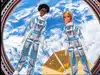
In 2022, Mattel sent two Barbie dolls to the ISS for Mission DreamStar, and their filmed trip became part of a STEM video series
In 2022, two Barbie dolls took a stellar trip to the International Space Station as part of the exciting Mission DreamStar. These dolls, beloved by many, orbited Earth for weeks and starred in a captivating video with NASA astronauts. The mission's goal was to inspire young girls to envision themselves in science and engineering roles, countering prevailing stereotypes.
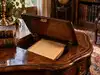
In 1984, Lincoln's handwritten final public address emerged from a secret compartment in an antique table; the forgotten manuscript later sold for $231,000
A remarkable manuscript discovery at New York City’s Morris-Jumel Mansion brought an overlooked piece of Revolutionary-era history back into focus. In 2013, archives intern Emilie Gruchow was cataloguing old manuscripts in the mansion’s hot attic when she found fragments of a document misfiled among the papers of 18th-century doctor Nicholas Roche. She recognised the text as a draft of “The Twelve United Colonies, by their Delegates in Congress, to the Inhabitants of Great Britain.” Experts authenticated the manuscript and linked its primary authorship to Robert R. Livingston. The museum later sold the 12-page document at auction for $912,500.

At 18, this Irish student invented plant-based plastic that doesn't just biodegrade; it is designed to break down microplastics too
A creative solution emerges from Ireland, where a student has pioneered Eco Purge, a biodegradable substance that emits enzymes aimed at degrading microplastic waste in multiple environments. Demonstrated effectiveness has been recorded in soil, freshwater, and marine settings. Although still in the prototype phase, Eco Purge has earned acclaim as the recipient of the European Earth Prize for its novel concept.

Indonesia's 'Ring of Fire': Key facts about the world's most volcanic nation
Mount Anak Krakatau's latest eruptions have caused major air travel interruptions, impacting numerous passengers in Indonesia. With a staggering 127 active volcanoes under surveillance, Indonesia holds the record for the most in the world. Currently, numerous volcanoes, including Anak Krakatau, sit at a heightened alert level. Notably, the 2018 eruption was linked to a deadly tsunami, highlighting the severe consequences of volcanic eruptions in this region.

In 1929, archaeologist Pei Wenzhong uncovered a skullcap in a cave near Beijing: Peking Man forced the world to take Asia’s deep human past seriously
In 1929, the unearthing of Peking Man in China dramatically altered the landscape of human evolutionary studies. This pivotal Homo erectus skull cap unearthed crucial insights from East Asia, a region that had been largely overlooked. Not only did it shed light on what defines Asian Homo erectus, but it also ignited vigorous discussions about their age and behavior.
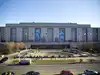
White House orders major Smithsonian review to remove divisive content and highlight American values
The White House is conducting an internal review of Smithsonian Institution exhibits, prompted by President Trump's order to remove divisive content and promote American exceptionalism. The review, targeting eight museums initially, will assess exhibit content, selection processes, and future plans. The Smithsonian is cooperating while emphasizing its commitment to factual history and nonpartisanship.

Trump moves to ‘fix’ US history at Smithsonian Institution: Here’s what it means
US President Donald Trump has issued an executive order aimed at reshaping the Smithsonian Institution, arguing that it has embraced a "divisive, race-centred ideology." The order directs Vice President JD Vance to oversee changes, restricting funding for exhibitions that "degrade shared American values." The directive also mandates a review of historical monuments and calls for the restoration of Independence Hall ahead of the US's 250th anniversary. The Smithsonian has yet to comment.

Trump executive order on Smithsonian targets funding to programmes with 'improper ideology'
US President Donald Trump issued an executive order aiming to reshape the Smithsonian Institution by targeting funding for programmes with divisive narratives and improper ideology. The order appoints Vice President J D Vance to oversee the removal of such ideology from the Smithsonian, including the National Museum of African American History and Culture, and the Women's History Museum.

Jeff Bezos gives $200 mn to National Air and Space Museum, its biggest philanthropic gift since 1846
The gift comes as the nation’s museum sector has been hit hard by the pandemic, with closures and deep financial losses.
Load More

