
SILICON DIOXIDE
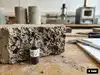
Indian scientists develop a new concrete using human waste to make it significantly stronger than conventional cement
Scientists have found that biochar made from treated human waste, or faecal sludge, can partially replace cement in concrete and improve its strength. A study published inScientific Reportsfound that replacing 10% of cement with faecal sludge-derived biochar increased compressive strength by 21% and flexural strength by 42% after 91 days. However, higher replacement levels, particularly 15%, reduced performance.

In 2017, UC Riverside turned waste glass bottles into lithium-battery anode material; one bottle could supply 3-5 pouch cells, while coin cells kept 1,420 mAh/g after 400 cycles
Engineers have ingeniously repurposed discarded glass bottles, converting them into battery anode material. This innovative method turns waste glass into nano-silicon, suitable for energy storage applications. A single glass bottle can produce either hundreds of miniature coin cells or multiple larger pouch cells, resulting in batteries that maintain impressive performance even after extensive charge cycles. This groundbreaking approach not only addresses battery demands but also tackles waste accumulation effectively.

In 1991, EPFL scientists Brian O’Regan and Michael Grätzel developed solar cells inspired by plant photosynthesis. 34 years later, the technology had reached 12% efficiency
In 1991, EPFL scientists Brian O’Regan and Michael Grätzel developed a solar cell inspired by plant photosynthesis. Their dye-sensitized solar cell offered a new way to capture sunlight and turn it into electricity. The idea was simple, but improving its performance took decades of research. About 34 years later, the technology had reached roughly 12% efficiency in laboratory testing, showing how a plant-inspired idea had matured into a practical clean-energy technology.

Columbia Engineering built a pigment-free paint filled with microscopic air pores; it stayed 6°C below surrounding air during hot desert tests in Arizona
Researchers at Columbia University and Purdue University have unveiled an experimental paint-like coating that can cool surfaces to temperatures below the ambient environment. This cutting-edge material reflects over ninety-six percent of solar energy and effectively radiates heat by utilizing air pockets instead of traditional pigments. Although this promising technology is in the exploratory phase, it is not yet available for commercial use.
In 2024, a Nature Sustainability study tested radiative cooling film on crops; field trials lowered air temperatures by up to 4.6°C and increased biomass by up to 370%
Innovative films designed for dryland crops are making a remarkable impact by minimizing heat and water loss. These films effectively permit essential sunlight needed for photosynthesis while limiting excessive heat exposure. Impressive field tests have demonstrated crop yield increases of up to 370 percent. This development provides a crucial new solution for enhancing agriculture in the world's arid regions, which encompass forty-one percent of the planet's land.
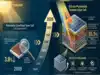
In 2009, scientists began with a 3.8% perovskite solar cell. 17 years later, LONGi's silicon-perovskite tandem set a 35.5% world record
Solar cell efficiency has dramatically increased from 3.8% in 2009 to 35.5% today. This new crystalline silicon-perovskite tandem cell was independently certified by ESTI. The technology combines two absorbers to capture more of the solar spectrum. Researchers are now focusing on long-term stability and manufacturing scalability.

Tired of ants taking over your home? This natural powder could help eliminate them without harsh chemicals in minutes
Diatomaceous earth offers a natural solution for household pest problems. This fossilized diatom powder dehydrates insects, providing effective pest elimination. Homeowners report success where other remedies previously failed. Experts confirm its insect-killing properties have been recognized for decades. The product is generally safe for pets and the environment when used correctly.
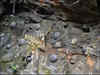
All about the mysterious 'egg-laying mountain' in China
In China's Guizhou Province, the Chan Da Ya cliff in Gulu Zhai village is known for producing large, round rocks that fall every 30 years. These stone eggs, dating back to the Cambrian Period, are highly valued by locals for their believed protective qualities. The phenomenon is due to natural erosion of the surrounding calcareous rock.

Critical mineral mission to aid overseas assets acquisition and setting up local processing
India is set to launch a Critical Minerals Mission to improve facilities for critical commodities, including lithium and copper. Finance Minister Nirmala Sitharaman announced the mission in her budget speech, which will include technology development, skilled workforce, extended producer responsibility framework, and a suitable financing mechanism.
Centre says 19 coal mines allocated to 13 thermal power plants for fly ash disposal
In 2023, 19 coal mines were allocated to 13 TPPs for responsible fly ash disposal. Overseen by the Central Level Working Group and Additional Secretary, with the Central Electricity Authority, the initiative promotes sustainability. Fly ash's valuable composition allows for various applications, reducing the carbon footprint and addressing environmental concerns in the coal sector.

Hindalco signs MoU with UltraTech Cement to deliver 1.2 mn metric tonne of bauxite residue annually
With this deal, Hindalco has become the world’s first aluminium company to achieve 100% red mud utilisation across three of its refineries. The initiative is in line with the company's objective of achieving a sustainability-first approch to business.

IIT Guwahati researchers develop materials to produce energy from water on a small scale
According to IIT-Guwahati these new ways of producing energy can be employed in household environments to support the concept of decentralization of energy sources. In the centralized energy generation model, one large plant produces energy for an entire region, in contrast, the decentralized energy model introduces a large number of small generation devices.

State-run Mineral Firms may Float a JV to Scout for Lithium, Cobalt Reserves Abroad
India, which has set a target of achieving an all-electric vehicle fleet by 2030, has almost no reserve of these minerals and is keen on building up a strategic reserve of these minerals.

Hindustan Copper chalks out strategy to ramp up output to 20 MT by 2024
The company, which plans to pump in Rs 5,500 crore over the next six years to scale up its output by six times, is looking to reopen its Rakha copper mine soon.
Fossilised algae may soon power electric vehicles
New York, Oct 23 (IANS) Inexpensive and energy-efficient lithium-ion batteries from fossilised remains of single-celled algae called diatoms can soon power electric vehicles, a team of researcher has found.

CLRI scientists find way to build plane from leather waste
Scientists at Central Leather Research Institute (CLRI) have found a way to use leather solid waste to make a nano-composite material that is tough enough to make the body of a car, bike or aircraft.
Artificial photosynthesis method turns waste CO2 into fuels
Researchers have developed new system that uses sunlight to convert waste carbon dioxide into valuable chemical products such as biodegradable plastics,etc.

Use beach sand to make your phone battery last longer
A new study in Scientific Reports discovered that sand found in beaches is a fantastic source of silicon for lithium-ion batteries.
Load More


