
SIBERIA PLAGUE

Russia tells WHO there are no plague cases in Siberian city
Russian authorities have informed the World Health Organization there are no plague cases in Irkutsk. They confirmed the investigation into a laboratory worker's death was ongoing and pneumonic plague was considered. All individuals in contact with the deceased have been identified and tested negative for infectious pathogens. The WHO stated that the overall risk of plague to the general population appears low.

What happened inside Russia’s 'plague' lab: Was it a bioweapon leak? Here's what officials revealed about the mystery
Plague is an infectious disease caused by the bacterium Yersinia pestis. Pneumonic plague occurs when the infection affects the lungs. It can spread from one person to another through respiratory droplets.

Trump says US will help Russia after plague lab worker dies in Siberia
President Donald Trump expressed concern over a recent incident in Siberia where a laboratory worker died. Russian authorities confirmed the situation was under control, although many public health fears arose. Trump mentioned that the US is willing to help Russia with the outbreak. He emphasized cooperation with Russian President Vladimir Putin despite existing tensions. The US aims to provide assistance for this health crisis as needed.

Plague panic: Russia says "situation under control"
Reports on Friday that plague had killed a 28-year-old woman named Darya Shipilova, who had been working for the anti-plague institute in Siberia's Irkutsk region, sparked alarm. The news outlet People of Baikal, citing sources close to the regional security services, said she may have contracted pneumonic plague from a broken test tube.

Russia quarantines Siberia hospital after plague lab worker dies of unknown pneumonia
Russian authorities have implemented a quarantine at a hospital where a lab technician died from pneumonia. The woman had worked at the Irkutsk Anti-Plague Research Institute in Siberia and raised concerns about a potential infectious disease. Health officials are monitoring individuals who had contact with her and have not confirmed any infectious source. Reports suggest she might have died from pneumonic plague, but this remains unverified.

- Go To Page 1
Siberia's 'mysterious illness': All about bubonic plague, how it spreads and whether the world should worry
In response to a laboratory worker's suspected death from bubonic plague, Russian officials have enforced quarantine protocols. Approximately 200 individuals are under watch for potential exposure to the infection, which mainly spreads via flea bites or contact with infected wildlife. Despite its serious nature, bubonic plague is treatable with antibiotics, though the pneumonic variant poses a greater threat due to its direct human transmission.

Russia pneumonic plague scare: US lawmaker invokes Ukraine bio labs after Irkutsk lab death; worker had broken test tube. Are Americans at risk?
Pneumonic plague Russia: Russia's Irkutsk plague scare has sparked fresh questions after a laboratory worker died from pneumonia of unknown origin and more than 200 people were reportedly placed under isolation. A US lawmaker has also invoked longstanding Russian claims about Ukraine's alleged “bio labs,” while American officials monitor the situation. Here's what we know about the suspected case and whether Americans could be at risk.

Russian Plague scare: Did a broken test tube lead to a researcher’s death? Why is the White House watching and are Americans at risk?
Russian Plague is not the medical name of a newly discovered disease. The term is being used in connection with concerns over an incident at an anti-plague research facility near Irkutsk. Plague itself is an infectious disease caused by the bacterium Yersinia pestis.

Russia pneumonic plague: New point of conflict emerges between Moscow based Kremlin and Donald Trump administration? All you need to know
Russia Irkutsk Pneumonic Plague: Plague is a bacterial disease that can occur in several forms, including pneumonic plague, the most contagious type. Pneumonic plague can be fatal if not treated early, according to the World Health Organization (WHO).

Russia plague news: What to know about the disease and which countries have been affected as lab worker dies in Siberia?
At the Irkutsk Anti-Plague Research Institute, a tragic incident led to the death of a 28-year-old woman, suspected to have contracted pneumonic plague from live bacteria. This alarming development has prompted local health authorities to place nearly 200 individuals who interacted with her under medical observation. While the exact cause of death remains unconfirmed, hospitals are implementing necessary quarantine measures as investigations continue in light of fluctuating global plague cases.

All about the Russian anti-plague research center in Siberia from where an unknown and dangerous infection got leaked
Last week, a laboratory technician at a Russian anti-plague research institute succumbed to pneumonia of unknown origin, prompting worldwide alarm. This unsettling event took place at the Anti-Plague Research Institute in Shelekhov, Irkutsk. Rospotrebnadzor indicated the infection's source remains a mystery while assuring the public that local conditions are stable. In response, strict safety protocols have been enhanced, with nearly 200 individuals placed under medical observation.

Russian plague lab researcher dies of pneumonia of ‘unknown’ origin, nearly 200 under observation
A 28-year-old worker at an Anti-Plague Research Institute in Shelekhov, Siberia, died from unknown pneumonia. Russian authorities are investigating the incident, and special measures have been implemented in the region. Although there are concerns about pneumonic plague, officials emphasize that there is no outbreak. Close contacts of the deceased worker are under medical supervision and show no symptoms of illness.

Russia plague scare: ‘Dangerous infection’ that killed one may have been released after researcher broke a test tube. Here’s what we know
In a shocking incident, a female researcher from the Irkutsk Anti-Plague Institute has died due to severe pneumonia of unknown cause. Close to 200 people who could have been exposed are being carefully observed by health officials. It appears she accidently broke a test tube filled with live plague bacteria while working on experiments.

US urges Russia to share details on suspected fatal pneumonic plague case
The US State Department is investigating reports of a suspected fatal case of pneumonic plague in Russia. Authorities in Washington are urging Russian officials to share accurate information about the incident. The situation is monitored in collaboration with the CDC and other agencies for public safety. Treatment for pneumonic plague can be effective if started early with antibiotics.

Plague outbreak: How ancient teeth help scientist decode deadly disease took place 5,500 years ago
Plague outbreak was particularly deadly for the young, judging from the burial sites, and attributed this to genetic traits in these strains that no longer are present in today's iteration of the pathogen.
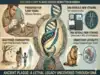
The deadly secret locked inside ancient Siberian remains for 5500 years has finally been unearthed
Ancient Siberian plague discovery: Ancient DNA unearthed in Siberia has rewritten the history of plague. Researchers discovered highly lethal strains of the bacterium Yersinia pestis dating back over 5,000 years, affecting early hunter-gatherer communities. Evidence suggests these ancient strains were devastatingly potent, causing widespread mortality, particularly among the young.

Quote of the Day by Fyodor Dostoyevsky: 'The mystery of human existence lies not in…'—Inspiring quotes by one of history's greatest novelists
Quote of the Day: Fyodor Dostoyevsky, a renowned Russian writer, explored life's deepest questions. His famous quote highlights that survival is not enough. Finding purpose, meaning, and belief transforms existence into life. Dostoyevsky's own life, including a near-death experience and Siberian exile, shaped his profound insights into human suffering and the search for meaning. His works continue to inspire readers worldwide.
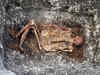
5,000-yr-old skeletons revealed that people suffered from multiple sclerosis in ancient times
Many researchers suspect that the disease is triggered by a virus, known as Epstein-Barr, which causes the immune system to attack the nerves and can leave patients struggling to walk or talk. But the virus can't be the whole story, since nearly everyone is infected with it at some point in life.

Russia's isolation takes toll on Arctic climate science
Glaciologist Andrew Hodson laments the disruption in Arctic research collaboration due to severed ties with Russian scientists post-Ukraine war. The rift, exacerbated by Putin's policies, hampers critical climate studies in a region warming rapidly. Data drought from Russia impacts permafrost and wildfire insights, escalating uncertainties in climate projections. The Arctic Council faces division, suspending projects and delaying reports. Russian researchers fear cooperation due to espionage accusations, worsening a previous brain drain.

Strategising India’s “Cooperative Geocultural” approach in Central Asia
The geopolitical scenario is undergoing a sea change in the last few years in this part of the world. These radical transformations in the geopolitical front of Central Asia are taking place largely due to the interplay of both global and regional forces and their subsequent impact on the region.

Here’s how climate change is viewed around the world
In many countries, climate and the environment has become a political battlefield on which elections are increasingly being fought.
Non-OPEC oil producers hampered in efforts to boost output
Oil producers outside the OPEC cartel are unable to pump enough oil to reduce crude prices, hampered by robust domestic demand, weak investment and exhausted oil fields.
Load More

