
SEMICONDUCTOR SELF RELIANCE

Nvidia's Huang returns to cheers in China, but political hurdles mount on both sides
Jensen Huang has been reinstated as Nvidia CEO, reflecting his influence in US-China technology relations. His return comes amidst rising tensions, with the US tightening chip restrictions on China. Huang is set to face scrutiny from Congress regarding export controls shortly. Despite his popularity, the changing political landscape poses challenges for his role in bridging the two economies.
China’s spies set sights on AI chips years before Nvidia scandal: Report
China's Ministry of State Security has reportedly been running a secret campaign to acquire advanced AI chips. This initiative aims to overcome Western export restrictions and achieve technological self-reliance. A dedicated working group has been established to assist Chinese companies in smuggling chips into the country. Additionally, the campaign is part of a broader strategy orchestrated by China's Central Science and Technology Commission.

As Trump prepares to meet Xi, the Nvidia controversy threatens to complicate the AI truce
Jensen Huang, the former CEO of Nvidia, is involved in a scandal concerning a suspected Chinese spy. This affair heightens existing tensions between the U.S. and China over technology exports, particularly in artificial intelligence. Lawmakers are now demanding stricter controls on advanced AI chip sales amid security concerns. The situation may impact ongoing discussions about AI safety between the nations.
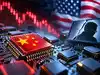
Chinese AI stocks, hardware suppliers slide as Nvidia CEO exit fuels US-China chip fears
Chinese AI and semiconductor stocks decline amid concerns over Nvidia leadership changes and tighter US chip export restrictions. Fears of disrupted technology access intensify pressure on AI developers and hardware suppliers, while domestic chipmakers gain.

Nvidia scandal: The AI arms race puts human spies back into the game
The Nvidia controversy involving CEO Jensen Huang and a woman suspected by US intelligence of having links to Beijing has renewed concerns over corporate espionage in the AI industry. Recent cases involving OpenAI and Google have also highlighted risks from insiders and traditional spying methods.

Hong Kong stocks jump 3%, China shares edge higher as tech stocks rally
Hong Kong stocks rallied sharply, led by technology and gold shares, as investors welcomed the US midterm election outcome. Alibaba and Tencent drove gains, while mainland Chinese equities advanced modestly. Energy stocks tumbled as crude oil prices plunged on hopes of easing geopolitical tensions.
- Go To Page 1

India needs indigenous technologies to ensure energy security: Union Minister G Kishan Reddy
At the NIT Raipur convocation, Union Minister G Kishan Reddy emphasized India's need for innovations in energy, mining, and healthcare. He noted significant growth in higher education infrastructure and international rankings over the past decade. Reddy mentioned government initiatives aimed at supporting research and development in technology sectors. He encouraged graduates to tackle real-world challenges in their fields over the next three years.

India aims to be globally competitive semiconductor powerhouse by 2047: MoD
India is working towards becoming a globally competitive semiconductor powerhouse by 2047 and focuses on next-generation technologies. The Defence Research and Development Organisation participated in the Emerging Science, Technology and Innovation Conclave 2026 themed 'Creative Minds, Catalysing Science, Empowering Society'.
India's deeptech dream remains import dependent for critical components
The founder of a spacetech startup developing rockets said geopolitical tensions, including the Russia-Ukraine war, disrupted the supply of critical components. “Parts that were earlier available within weeks are now taking months to arrive, making it harder for startups to plan development and testing schedules,” the founder said, requesting anonymity.
From 700% gains to a 50% plunge: China's AI stocks are crashing despite Beijing's tech ambitions. Here's why
China's artificial intelligence stock market has faced a steep decline, losing around $480 billion in market value. Many leading technology stocks that previously soared have now lost significant value in recent months. As investor enthusiasm wanes, concerns over future profits and valuations are becoming pronounced. Additionally, export restrictions on technology could further complicate the sector's recovery. Policymakers in China now face challenges in bolstering investor confidence while promoting industry growth.
US designates helium as a critical material, citing its importance for semiconductors
The U.S. remains the largest producer of helium globally, with production primarily from natural gas processing. Helium is crucial for semiconductors, medical imaging, and renewable energy technologies.
Why sovereign AI is critical to India’s next growth leap?
India has already created considerable momentum. The priority now is to connect government initiatives, industry investments, academic research and startup innovation into a coherent ecosystem.

Get a tech list to tick: Can India achieve true self-reliance without an evidence-based technology list?
India aims to achieve self-reliance by systematically identifying critical technologies for its national strategy. The government has established initiatives, such as the Anusandhan National Research Foundation, to drive research and development. A clear list of vital technologies will help prioritize investments and reduce dependency on foreign entities. Strategic instruments can then be directed toward fostering domestic capabilities in specified sectors.

India eyes reduced critical tech dependence over next 20-25 years: Ashwini Vaishnaw
India is planning over a 20-25 year horizon to reduce critical technology dependencies and strengthen its ability to withstand global disruptions, Union Minister Ashwini Vaishnaw said, emphasising that the country aims to become a trusted partner across global technology supply chains rather than pursue complete self-sufficiency.
ISM 2.0 to catalyse investments, boost self reliance: NITI Aayog's Abhay Karandikar
India's recently unveiled India Semiconductor Mission phase 2 or ISM 2.0 which focuses on design and Intellectual Property (IP) creation, helping complete the value chain and making the country Atmanirbhar (self-reliant). The new phase is focused on producing semiconductor equipment and materials in India as well as designing full-stack semiconductor intellectual property. The Union Cabinet had also approved the Research, Development and Innovation (RDI) Scheme, aiming to boost private sector investment.
Semiconductor push, govt support driving EMS sector's growth, but valuation remains a concern: How 3 stocks with most buy calls are placed
Investor enthusiasm around the sector is visible in the performance of nine EMS stocks covered by multiple brokerages. The group has delivered an equal weighted average return of 55.3% so far in 2026, compared with 1.1% for the Nifty 500 Equal Weighted Index. Seven of the nine stocks have delivered posi tive returns, while three have gained over 100%. The analysis is based on closing prices as of 28 September 2026.

India needs competitive capabilities, import diversification: PK Mishra
P K Mishra emphasized India's approach to economic resilience during the Kautilya Economic Conclave. He noted the importance of maintaining substantial stocks and diversifying procurement strategies. Mishra highlighted the growth in the number of countries from which India imports crude oil significantly.

Yohan and Michelle Poonawalla make strategic investment in Optimized Solutions Ltd
The investment will focus on supporting indigenous technology, innovation and advanced manufacturing in areas spanning defence, aerospace, space and critical technologies, including nuclear power.
Govt starts consultation to develop indigenous chips, modules for power grids
According to details shared by MeitY on its website, the initiative aims to build domestic capability across the power semiconductor value chain - device design, module engineering, fabrication, packaging, assembly, testing, qualification and system integration.
View: The US is badly losing its trade war with China
Xi Jinping's upcoming visit marks the first Chinese state visit to the United States since 2015. US-China trade policies initiated in 2018 have not achieved their intended goals, despite some superficial successes. China's trade position has strengthened, and it continues to be a leading manufacturer and exporter. US tariffs and export controls have led to unintended consequences that impact American companies and consumers.

China surveys Broadcom switch use in state data centers, FT reports
Chinese authorities are examining Broadcom's hardware in state-controlled data centres to enhance domestic production capabilities. This initiative aims to reduce reliance on foreign technology amid increasing US-China rivalry. Reports indicate Broadcom's switches may compose 90% of the current equipment in these facilities. The State-owned Assets Supervision and Administration Commission could recommend scaling back on these switches soon. This aligns with Beijing's efforts to promote local semiconductor and AI technology usage.

China's Alibaba launches international data centre push
Chinese tech giant Alibaba unveiled plans on Wednesday to expand its overseas data centres, targeting markets across Europe and the Middle East. Alibaba is targeting more than 20 gigawatts of global data centre capacity by 2032, Wu said during the firm's annual flagship conference in Hangzhou.

India’s chip strategy: Build sovereign strengths, partner globally, says Vikram Misri at SEMICON 2026
India’s semiconductor self-reliance does not mean building every capability domestically, Foreign Secretary Vikram Misri said at SEMICON India 2026. He said India must develop sovereign strengths in areas such as design, packaging and manufacturing while partnering global equipment makers, material suppliers and design companies where collaboration offers greater value.

US sanctions were meant to slow China’s tech industry. Instead, a 72% rise in science-linked patents reveals how restricted firms are building their own path to innovation
Chinese firms sanctioned by the US are increasing patent citations of academic research. This shift suggests a move towards domestic expertise and self-reliance in innovation. Sanctioned companies show a 72 percent rise in science-linked patents after restrictions were imposed. While Chinese research output is growing, US firms still lead in scientific depth. Prolonged decoupling could lead to separate technology ecosystems, researchers warn.

Global Market: Hong Kong unveils first five-year plan, targets bigger push into technology
Hong Kong has unveiled its first Five-Year Plan through 2030, targeting higher innovation spending and greater investment in AI, robotics, microelectronics and advanced manufacturing. The strategy also focuses on the Northern Metropolis and deeper technology and economic integration with mainland China.

DRDO develops GaN chip: Meet Dr Meena Mishra, scientist behind the technology that was denied by other countries and why it matters for Indian defence platforms
Dr Meena Mishra, director of DRDO’s Solid State Physics Laboratory, has led work on indigenous Gallium Nitride-based Monolithic Microwave Integrated Circuit technology for high-frequency defence systems. The technology can support radars, electronic warfare, communications and unmanned platforms. A 3.5 mm x 3 mm indigenous GaN chip can deliver up to 30 watts of power and operate at speeds the ministry says are 300 times faster than silicon.
DRDO develops indigenous GaN technology for next-gen radars, electronic warfare; Tiny 3.5×3 mm chip delivers up to 30W power: Defence Ministry report
India's Defence Research and Development Organisation has made remarkable progress with the successful demonstration of cutting-edge high-frequency defence technology. This advancement is key to strengthening national security by fortifying next-generation radar and electronic warfare systems. The use of Gallium Nitride chips, known for their exceptional power and speed compared to traditional silicon, highlights the country's journey towards semiconductor self-reliance in defence applications.

Semicon saga: Can India do an NvI(n)DIA?
In China, Huawei and Alibaba are developing AI chips to rival Nvidia and have stepped up domestic manufacturing in recent years. According to reports, Alibaba’s AI chip could rival the performance of Nvidia’s H20 chips designed for the Chinese market. In the past year, at least two companies--C2i Semiconductors and Agrani Labs--have started developing AI computing chips in India, drawing investor interest.

Semiconductor units will strengthen India's transformative journey for tech self-reliance: PM Modi
The Union Cabinet on Thursday approved proposals to set up three semiconductor plants, including a mega fab by Tata Group, at a cumulative investment of Rs 1.26 lakh crore, as India moves to position itself as a global powerhouse in chip manufacturing.
Load More

