
SECURITY DOCTRINE NETANYAHU
Israel says 'limited counterterrorism' operation launched in Hebron after two IDF soldiers killed in West Bank
Israel Defense Forces initiated a counterterrorism operation in Hebron after two soldiers were killed in a shooting. Israeli Prime Minister Benjamin Netanyahu ordered a lockdown of the area due to increased violence. The operation seeks to dismantle terrorist infrastructure and involves targeted searches and resident screenings. Two terrorists involved in the original attack have already been killed during the operations.

How a merged SpaceX-Tesla might navigate its China problem
Elon Musk's proposed merger of Tesla and SpaceX may encounter significant hurdles from US and Chinese regulators. Concerns about national security and technology sharing complicate the merger discussions. Tesla's reliance on China for manufacturing and SpaceX's defense contracts raise potential risks. Analysts suggest creating a firewall around Tesla's Chinese operations as a possible solution. However, divesting Tesla's China operations could prove challenging, considering the deep integration with local suppliers.

Beyond the ballot: Why Israel's next leader may stick to Netanyahu's doctrine
Israel's upcoming election is unlikely to change its aggressive stance towards Iran and Palestinian statehood. Even if Benjamin Netanyahu retains power, he may escalate military actions and settlement expansions. The election reflects a broader trend of hardline politics, where consensus exists against Palestinian statehood. Regional policymakers expect continued confrontations while underlying issues remain unaddressed. The situation may lead to prolonged tensions in the Middle East with unresolved conflicts persisting.

A look at the major candidates in Israel's election Tuesday
Next Tuesday, Israeli citizens will vote for their next prime minister amid a tense political landscape. Benjamin Netanyahu has led Israel for years and faces strong opposition from Gadi Eisenkot. Eisenkot, a former military chief, has positioned himself as a moderate alternative but maintains a focus on security. Other prominent figures include Naftali Bennett, Itamar Ben-Gvir, and Mansour Abbas, each with unique political stances.
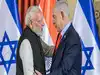
Israeli PM Netanyahu warns of potentially hostile future US president, calls for alliances with India, Latin America
Israeli Prime Minister Benjamin Netanyahu warned about the possible hostility of a future US president towards Israel. He advocated for strengthening alliances with countries like India and nations in Latin America as alternatives. Netanyahu emphasized the importance of preparing Israel's position during the remaining years of President Donald Trump's term. His main challenger, Gadi Eisenkot, criticized this approach as an empty political exercise lacking substance.

The key issues that will shape Israel's elections
When Israel goes to the polls this year, voters will weigh in on conscription, the economy and how the state should investigate its inability to prevent Hamas's October 7, 2023 attack. - Accountability for October 7 - Many Israelis have demanded an independent state commission of inquiry into the failures that allowed Hamas's October 7, 2023 attack on Israel, which resulted in the death of more than 1,200 people.
- Go To Page 1

The ex-general turning Israel's election into a two-horse race
Gadi Eisenkot is challenging Prime Minister Benjamin Netanyahu in Israel's upcoming general election. Eisenkot's new party, Yashar, is currently polling ahead of Netanyahu's Likud party. His campaign focuses on restoring Israel's security and democratic institutions. Eisenkot advocates for universal national service, including ultra-Orthodox and Arab citizens. He is seen as a strong alternative for voters seeking change.

West Asia War: Two drones from Lebanon strike northern Israel, says military
Two drones suspected to be from Hezbollah hit northern Israel on Sunday. No injuries were reported. Following the incident, two Israeli ministers demanded retaliatory strikes on Dahiyeh, a Hezbollah stronghold in Beirut. They urged Prime Minister Netanyahu to implement a declared doctrine of retaliation for such attacks. Israel has previously warned of strikes on Dahiyeh if Hezbollah targets northern communities.

‘Israel is stronger than ever, our pilots can reach any point in Iranian skies,’ says Prime Minister Netanyahu
Israel's Prime Minister Benjamin Netanyahu stated the nation is stronger than ever. He outlined a new defense strategy focusing on strengthening capabilities and achieving independence. This includes acquiring advanced aircraft and boosting domestic arms manufacturing. The move aims to reduce reliance on foreign suppliers following recent conflicts. Israel is also developing new projects to counter drone threats.
Iran pulling Hormuz 'lever' to maximum in US standoff
Iran has blocked the Strait of Hormuz, a vital global energy route. This move is Iran's main bargaining chip in potential peace talks with the United States. The blockade has caused worldwide economic problems, including rising energy prices and potential food shortages. The US has responded with its own blockade on Iranian oil shipments.

As US and Iran talk ceasefire, Israel digs in for a 'forever war'
Israel is establishing buffer zones in Gaza, Syria, and Lebanon. This marks a strategic shift following the October 7 attacks. The country is preparing for a prolonged conflict across the Middle East. This new doctrine acknowledges that regional adversaries cannot be eliminated. Israel is preemptively attacking emerging threats. This strategy aims to secure its borders and communities.

Mosaic Defence: Iran’s war tactic that keeps Tehran fighting despite top leaders' deaths
Iran War: Iran's military continues to operate despite significant losses to its leadership. A decentralized defense system, known as Mosaic Defence, allows regional units to act autonomously. This strategy makes it difficult for external forces to halt operations. The system is designed to survive strikes on the capital. This approach ensures continued defense capabilities even without central direction.

Trump and Rubio's vision of war: The art of destroy and deal
Secretary of State Marco Rubio has emerged as a pivotal architect of President Trump's bold foreign policy, steering a course that prioritizes a raw exercise of power and strategic negotiations. His vision diverges from the conventional focus on overthrowing regimes, instead advocating for a pragmatic stance that compels authoritarian regimes to acquiesce.

Trust, trade and the slow architecture of India-Middle East-Europe Economic Corridor
Launched in 2024, the Indo-Mediterranean Initiative, embodied by the India-Middle East-Europe Economic Corridor (IMEC), is evolving as a strategic, layered process. Despite regional conflicts, IMEC is being built through trade agreements, defense cooperation, and infrastructure partnerships, prioritizing trust and resilience over mere connectivity.

Trump is drafting a new ally to attack Iran. What can happen
Reports suggest the Trump administration considered arming Kurdish groups to create unrest within Iran. This strategy leverages ethnic fault lines to pressure Tehran. The US has a history of transactional relationships with Kurdish movements, marked by both partnership and perceived betrayal. Such an action could have significant regional consequences, impacting Iraq and Turkey, and potentially leading to instability.

‘Too late’ for Iran to seek talks, says Trump amid escalating conflict
United States President Donald Trump has declared that Iran's window for negotiations has closed. He stated that Iran's military leadership and defense capabilities have been significantly diminished. Trump asserted that Iran's air defense, air force, navy, and leadership are gone. He indicated that Iran now wishes to talk, but he has responded with 'Too Late'.

Iran vs US-Israel war: The legality, or illegality, of killing a foreign leader, explained
America and Israel have initiated a war against Iran. A surprise strike eliminated Iran's supreme leader, Ayatollah Ali Khamenei. This action raises serious legal questions regarding the targeting of sovereign nation leaders. The United States stated the strike was to defend its personnel and bases. The conflict's legality under international law and the UN Charter is being debated.

Netanyahu says Israel 'tightening alliances' with allies, calls India 'gigantic power'
Prime Minister Benjamin Netanyahu announced that Israel is strengthening alliances, highlighting the upcoming visit of Indian Prime Minister Narendra Modi, a "gigantic power." Netanyahu emphasized Israel's proactive approach to security and its designation as a "model ally" by the US, underscoring the significant alliance between Israel and India.

Iran says missile programme ‘never negotiable’ as hopes rise for US talks
Iran's Foreign Minister Abbas Araghchi hopes for renewed talks with the United States soon. He stressed Iran's missile program is non-negotiable and warned of retaliation if attacked. US officials visited an aircraft carrier in the Arabian Sea. The US has imposed new sanctions on Iran. Talks are expected to resume next week.

West Asia imbroglio: Lessons on geo political stratagems for India
In 2025, a regional conflict erupted in West Asia between Iran and Israel, drawing in the USA. The conflict stemmed from Iran's 'deterrence' strategy against Israel and Israel's efforts to dismantle Iran's 'axis of resistance'. Israel strategically marginalized Iranian proxies, leading to direct confrontation and strikes on Iranian nuclear assets, highlighting key lessons for India's security challenges.

Israel emerges stronger from Iran war, but risks blowback
Israel's recent military dominance in the Middle East, highlighted by its actions against Hamas, Hezbollah, and Iran, has solidified its regional power. However, this assertiveness has come at a cost, leading to international condemnation over the Gaza conflict and raising concerns about potential retaliation from Iran and its proxies.

Iran vs Israel: One has nukes, the other has numbers – who has the edge in West Asia’s war game?
As airstrikes criss-cross the skies over Tehran and Tel Aviv, and the region plunges deeper into conflict, the world’s attention is fixed not just on bombs and missiles, but on the deeper question: who is militarily superior, Israel or Iran?

All about GBU-57, the 30,000-pound U.S. beast that could help Israel neutralize Iran’s deepest threat
Amidst escalating tensions, Israel's offensive against Iran intensifies, targeting military and nuclear sites, including the heavily fortified Fordo enrichment facility. The GBU-57 Massive Ordnance Penetrator, a powerful U.S. bunker-buster, emerges as a potential game-changer for destroying deeply buried targets. Speculation rises about possible U.S.

1979–1983: When Israel was ready to help India denuclearise Pakistan but the plan was called off
In the 1980s, Israel offered India a joint operation to strike Pakistan’s nuclear facility at Kahuta, fearing the rise of an “Islamic bomb.” The plan mirrored Israel’s earlier Osirak raid in Iraq, but India ultimately backed off. Fresh debate was reignited in June 2025 by Assam CM Himanta Biswa Sarma, who labelled the Congress-era inaction a “historic blunder.” With intelligence in place and Israeli support ready, the operation was shelved amid political caution, global pressure, and growing regional instability.

Iran-Israel conflict: How secret friends turned bitter enemies
In a dramatic escalation, Israel has launched 'Operation Rising Lion,' targeting Iranian nuclear facilities and military assets, signaling a prolonged effort to neutralize what it perceives as an existential threat. Prime Minister Netanyahu declared this a decisive moment for Israel's survival.

Why is an end to the war in Gaza so elusive?
After 19 months of conflict, the Israel-Hamas war persists due to irreconcilable demands. Israel aims to dismantle Hamas, while Hamas seeks a full Israeli withdrawal and end to the war. Political factors, including Netanyahu's coalition and Trump's support, further complicate prospects for resolution, prolonging the bloodshed and humanitarian crisis in Gaza.
How Iran's Fattah and Ghadr missiles defeated Israel’s advanced air defence systems
The ongoing conflict between Iran and Israel has intensified, with both nations bolstering their missile capabilities. Israel is bolstering its defensive and offensive systems, while Iran is expanding its arsenal with a focus on precision-guided missiles. This arms race raises concerns about regional stability.

Far-right groups that block aid to Gaza receive tax-deductible donations from US and Israel
Under American pressure, Israel has agreed to send aid to Gaza, but tax-deductible donations to far-right groups have hindered its delivery. These groups, backed by donors in the U.S. and Israel, have raised over $200,000. Despite U.S. sanctions on one group, Israel has not taken action. The groups claim aid is misused by Hamas, while critics accuse them of obstructing humanitarian efforts.
Load More


