SEA OTTERS
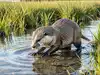
Sea otters reduce erosion of California’s coastal wetlands by 69%, says study
California's sea otters are preserving wetlands in Elkhorn Slough of Monterey County. They have decreased the rate of erosion on tidal creeks and salt marshes. The areas with high sea otter numbers have seen an average decrease in the rate of erosion of 69%, a study published in Nature said.

Taylor Swift wore an old aquarium T-shirt. Her fans raised more than $2 million for sea otters
Taylor Swift ignited a surprising fundraising success after wearing a vintage Monterey Bay Aquarium T-shirt showcasing two sea otters in a release-party film for her album The Life of a Showgirl. Fans rushed to discover the design, prompting the California aquarium to reissue it as part of a conservation campaign.
Mary Zmudowski was a California schoolteacher when she donated 155 acres of coastal land to the state in 1950; today it is a 220-acre state beach bearing her name
Zmudowski State Beach, a treasured spot north of Monterey, owes its existence to Mary Zmudowski's generous donation in 1950. While facing threats of closure during California's 2011 budget crisis, the beach was rescued through dedicated political efforts. However, rising tides continue to erode its coastline, raising concerns about its future stability. Zmudowski's legacy underscores the importance of philanthropy in preserving public spaces amidst environmental challenges.
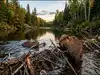
Two beavers built a 115-foot dam in Dorset in just a year. Formed a shaded woodland and is now a wetland where otters fish and barn owls hunt
In Dorset, the reintroduction of beavers has led to significant landscape transformation, creating a wetland habitat. Their dam-building activities are attracting various species, including otters and barn owls. The beavers' actions also help hold back water, potentially reducing flooding in adjacent areas. Although there have been challenges during the reintroduction, the project provides valuable insights into ecosystem restoration. Conservationists emphasize the importance of allowing natural processes to shape environments effectively.

Science says some sea otters rarely use rocks while others use them for almost every meal, their teeth may explain why
Sea otters survive largely on marine invertebrates such as sea urchins, crabs, clams, mussels and snails. Getting to that food, however, isn't always easy. Many of these animals are protected by tough shells or hard exoskeletons that can withstand substantial force, leaving otters with the challenge of breaking through these natural defenses before they can eat.
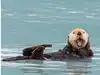
In 1980s, sea otters gradually returned to California's coastlines after being nearly extinct. Their return restored kelp forests, reduced carbon emissions and flooding
Once hunted to extinction for their pelts, sea otters gradually returned to the Californian coastlines. Their comeback reduced the sea urchin and crap populations allowing kelp forests and coastal marshes to heal. These ecosystems help prevent carbon emissions to the ecosystem and also provide natural protection against flooding. Helping one small predator have a stale habitat can also help the environment recover in various ways.
- Go To Page 1

In 1980s, scientists moved 140 sea otters to a California island as an insurance policy; most disappeared, but the population eventually rebounded
In the late 1980s, wildlife officials initiated a relocation effort by moving southern sea otters to San Nicolas Island. Initially, many of the otters left the island, which led to a significant population decline. However, those that remained began to reproduce, and over time, the colony gradually flourished. By 2019, the population reached about one hundred, highlighting the effectiveness of wildlife relocation and restoration initiatives.

Two Parsi-owned Perry Cross Road bungalows to be torn down for Rs 1,500 crore luxury project
Bungalows on Perry Cross Road in Bandra, Gladhurst and Kavas Lodge, are set to be torn down by Supreme Universal to make way for two luxury towers valued at roughly Rs 1,500 crore. Dating back to the early 1900s and owned by Parsi families, the properties join a wider trend of bungalow redevelopment in the area, following similar deals tied to John Abraham, Aspect Realty and JSW Realty. Four Parsi tenants currently residing in the bungalows have already agreed to relocation terms with the developer.

A river otter attacked a mother and toddler at a Washington marina. Their family just got a $350,000 settlement
A river otter attacked a toddler at Bremerton Marina in Washington in September 2024, dragging the child into the water before biting his mother. Both needed medical treatment and rabies shots. The family sued the Port of Bremerton, which agreed to a $350,000 settlement without admitting wrongdoing, ending the legal dispute.

Did you know sea otters have a personal favorite rock they keep forever? Here's the surprisingly sweet reason why
Sea otters are highly intelligent marine mammals known for their unique survival skills and playful nature. One of their most fascinating behaviors is using rocks as tools to open hard-shelled prey like clams, crabs, and mussels. Many sea otters even keep a preferred rock in a special skin pocket, using it repeatedly over time.
Why Do Animals Deliberately Swallow Stones? The Strange Survival Trick Hidden in Their Stomachs
Animals across diverse species, from crocodiles to birds and even young sea lions, intentionally swallow stones, a practice known as gastrolith ingestion. These stones aid digestion by grinding tough foods in specialized stomach chambers, a remarkable evolutionary solution for creatures lacking teeth. Some reptiles may also use them for buoyancy, highlighting a simple yet effective survival strategy.

Why Do Sea Otters Hold Hands While Sleeping? The Surprising Science Behind the Sweet Scene
Sea otters hold hands while sleeping to prevent drifting apart in ocean currents. This behavior, along with wrapping in kelp, forms protective rafts. These rafts enhance safety from predators and help conserve body heat in cold waters. Scientists suggest this habit might also be learned, revealing a complex survival strategy.

You really can see Russia from Alaska, things to know ahead of Friday's Trump-Putin summit
Alaska's history is intertwined with Russia, dating back to Siberian fur traders in the 18th century. Once a Russian territory, Alaska was sold to the US in 1867 and later became strategically important during World War II and the Cold War.

Death of 5 billion sea stars mystery solved: Scientists reveal what killed the iconic star-shaped creatures
After a decade-long search, scientists have pinpointed the cause of the massive sea star die-off along North America's Pacific coast: the Vibrio pectenicida bacteria. This discovery solves the mystery behind the sea star wasting disease, which decimated populations, especially the sunflower sea star.
Climate change draws great white sharks north, threatening ecosystem
There never used to be young great white sharks basking off the busy beaches of central California, but as climate change starts to bite, warmer waters are enticing them north -- with possibly catastrophic consequences for a whole ecosystem.

Mischievous otter causes chaos for California surfers
A mischievous five-year-old sea otter, named Otter 841, has been disturbing surfers in California. The otter uses its paws to displace surfers from their boards and damage the boards in the process. Wildlife officials have failed to capture Otter 841 so far and are urging surfers to maintain a safe distance from marine wildlife and reminding them that they enter the water at their own risk.
10 best marine theme parks in the world: Attractions, ticket price, timings, airfare
The parks showcase a variety of sea animals, providing not only access to dolphins, sea lions, sharks and aquatic birds, but also entertainment in the form of water parks with rides, roller coasters, dining, and much more.

IAF reactivates Mechuka ALG near Indo-China border
The Indian Air Force (IAF) has re-activated its strategic Advanced Landing Grounds (ALG) of Mechuka in West Siang district of Arunachal Pradesh.

₹257cr aquatic park soon at Gujarat's Science City
Work order for the Rs 257 crore project has already been issued by the state government to a firm consortium of Marinescape and Shapoorji.

Scotland's Ulva Island is up for sale at £4.2 mn for the first time in 70 years
The secluded Hebridean island has a population of six.

Rs 7,500 crore Bandra-Versova sea link plan cleared
The main four by four lane bridge of VBSL will be 9.60 kms. The cable stayed bridge will be 0.30 kms long and the Balance Cantilever Bridge will be 0.10 km long.

Wilderness vacation: It will help you rejuvenate and relax
This is going to make for the ideal vacation, with not a single dull moment.

Hike in the rainforests or trudge up to an active volcano’s crater, Costa Rica is a must on your travel list
As one of the most photographed natural formations, the waterfalls of Costa Rica astound everyone.

The Alaskan cruise is a visual treat of a lifetime
This is one of the world’s most popular cruise destinations, with more than a million people taking an Alaskan cruise every year.

Readers' choice monsoon spot: Delhi, Shimla, Bharatpore Bund and Kumta near Gokarna
You might be amazed at how beautiful and different a place can look like, post a delightful quick shower.

Plan a quick & relaxing trip to Tapola, the 'Mini-Kashmir' in Maharashtra, or Dhanachuli in HP
ET-Travel suggests you take a casual day off at work to make the most of an extended weekend in coming months. Here's where you can head to.
Loss of large predators damaging ecosystems
The decline of large predators such as lions, wolves and bears is threatening the Earth’s delicate ecosystems, changing the face of landscapes from the tropics to the Arctic, scientists have warned.
Load More