
SCOTT BESSENT CHINA
US-friendly nations slash treasury purchases by 60%, led by Asia
In the first eight months of 2026, countries aligned with the US purchased a net total of $174.3 billion in Treasuries. This amount represents a significant decline, reflecting a drop of over 60% from the previous year. It marks the lowest investment level recorded for this period since 2021. The data highlights a shift in fiscal relationships between the US and its partners.
US sanctions have India cornered. BRICS charts an escape route
US sanctions have significant implications on international trade, especially concerning countries like India. As BRICS countries explore alternative payment systems, the renminbi could become an attractive option. This change might reduce reliance on the US dollar and offer nations more strategic autonomy. The recent discussions emphasize the importance of cross-border interoperability and local-currency settlements among BRICS members. These developments highlight a potential shift in global economic power dynamics.
Waiver 60-day pause; Europe refused to sanction China, India over Russia oil, says US
The US announced a 60-day pause on sanctions against Russia to analyze the effects on the global economy. Officials clarified that no sanctions were lifted as part of the Graham Act. Secretary of State Marco Rubio emphasized the need for this evaluation amid geopolitical tensions. Critics from both parties expressed their discontent regarding Trump's decision to waive the sanctions.

Iran ships some LPG, jet fuel despite US blockade, data shows
Iran has managed to export limited liquefied petroleum gas and jet fuel despite ongoing US naval blockades. The Iranian methodology involves concealing cargoes among shipments from other Gulf producers off Oman, making it challenging to monitor. Shipping data indicates that a limited number of gas tankers have left the Gulf of Oman since mid-July. The US military maintains that its blockade is effective, consistently monitoring vessel activities.
Bessent urges World Bank to end restrictions on upstream oil, gas financing
US Treasury Secretary Scott Bessent urged the World Bank to ease restrictions on oil and gas financing, support deep-sea mining, and reform procurement policies. He also advocated nuclear energy investments and stronger IMF scrutiny of global economic imbalances, reflecting the Trump administration’s push to reshape multilateral institutions around American priorities.

Slow outflows, sure, but inflows? That’s RBI’s real challenge
RBI is currently dealing with substantial capital outflows and currency devaluation pressures in the economy. Recent market operations indicate underlying issues despite maintaining a 7.8 percent growth rate. The ineffective measures may not resolve the fundamental demand stemming from trade concerns. Foreign direct investment needs to focus on long-term capital and technology rather than short-term financial inflows.
- Go To Page 1

Spy chief Jay Clayton, the Trump loyalist tech bosses trust on AI
The 60-year-old lawyer, who will keep his post as director of national intelligence, is unlikely to question the central place of artificial intelligence in the US economy, even as opposition to the technology grows among American voters.

Trump names Jay Clayton as AI czar to lead America's ‘Super Intelligence Force’
US President Donald Trump has named DNI chief Jay Clayton as his AI czar, tasking him with leading a new White House “Super Intelligence Force”. The panel will assess AI risks and opportunities and report within 120 days on federal oversight, as Washington grapples with growing concerns over safety, security and competitiveness.
Trump names DNI chief Jay Clayton as AI czar to lead new White House task force: Report
Jay Clayton has been appointed as the AI czar by Donald Trump to lead a new panel. This group is tasked with identifying risks and opportunities related to artificial intelligence within a 120-day timeframe. The panel will review current government response mechanisms, focusing on breaches and hacks. Vice President JD Vance, Defense Secretary Pete Hegseth, and others will also be part of the task force.

Scott Bessent says AI industry must own its risks and find solutions
Anthropic PBC Chief Executive Officer Dario Amodei, OpenAI chief Sam Altman and SpaceAI Corp.’s Elon Musk in September called for the industry to slow development of its most advanced models, citing growing risks for humanity.
Trump says Europe to unlock ‘massive amount of Diesel’; G7 agrees 100 million-barrel oil release amid global crunch
US President Donald Trump said Friday that Europe had agreed to release a “massive amount” of heavily stocked diesel oil, with the process beginning immediately. His announcement comes as governments respond to a tightening global diesel market, disrupted supplies and elevated fuel prices, putting strategic inventories under renewed scrutiny.

Dollar firms as US-Iran tensions lift oil, hawkish Fed bets build
The dollar showed strength as investors anticipated inflation data and central bank decisions this week. Oil prices increased due to ongoing US-Iran tensions, which raised concerns about energy supply. Analysts predict potential interest rate hikes from the Federal Reserve given current inflationary pressures. The Australian dollar is also expected to see a rate increase in a near-15-year high scenario.
US Treasury chief Bessent claims successes in isolating Iran
US Treasury Secretary Scott Bessent has initiated global efforts to economically isolate Iran through new restrictions. These restrictions target airlines and banking operations in various countries. Turkey and Oman have stopped flights from Mahan Air and the UAE has prohibited Iranian airline flights. Additionally, banking transactions involving Iran's Bank Melli have been blocked due to legal violations.

Slowing down AI ‘unrealistic’: Palo Alto CEO Nikesh Arora
Arora dismissed the idea that AI has a 10% probability of wiping out humanity, saying it was "highly unlikely," although he did not reject it entirely.
Why are American Airlines, United Airlines, Delta Air Lines, others U.S. carriers opposing China President Xi Jinping's idea of adding more direct flights between two countries?
US President Donald Trump welcomed Chinese President Xi Jinping to the White House on Thursday, with talks on trade and artificial intelligence and the growing strategic rivalry between the countries all in the spotlight during an elaborate state visit.
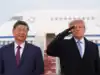
Trump gives Xi rare planeside welcome with 30m red carpet; trade truce extended
Chinese President Xi Jinping is visiting Washington to meet US President Donald Trump as part of a three-day event. During the visit, they are extending their trade truce until January 10 to allow further negotiations. The leaders will discuss a variety of topics, including trade, artificial intelligence, and tensions over Taiwan. A formal arrival ceremony at the White House is scheduled, along with a state dinner.
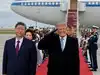
US President Trump says ‘Super Intelligence’ will be on the agenda with Xi Jinping
US President Donald Trump is set to meet Chinese President Xi Jinping to discuss artificial intelligence. The two nations aim to establish communication mechanisms for AI-related national security incidents. Current discussions focus on shared visions of common threats and coordination efforts in the AI sector.
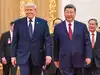
China, US reach consensus on multiple economic and trade issues: Chinese Commerce Ministry
China and the US reached consensus on multiple economic and trade issues during their eighth round of consultations in New York, including reciprocal tariff reductions, trade and investment councils, and extending arrangements from their Kuala Lumpur talks. The two sides also held their first dialogue on artificial intelligence, China said.
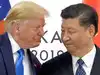
'Busan Agreement' explained: What the US-China trade truce means for world trade
US Treasury Secretary Scott Bessent announced the extension of the Busan Agreement until January 10, 2027. This extension allows both sides more time to negotiate without facing immediate tariff threats. The Busan Agreement was initially established to ease trade tensions between the US and China last year. Key areas of focus include agriculture and non-tariff barriers that require further discussion.
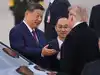
Xi Jinping says China, US should be 'partners rather than rivals'
Chinese President Xi Jinping received a welcoming gesture from US President Donald Trump during a recent visit. Both leaders emphasized the importance of partnership between their nations rather than rivalry. Officials from both nations agreed to extend a trade truce until January, which minimizes tariffs and trade restrictions. This extension provides leaders the opportunity to address ongoing issues at upcoming international summits.
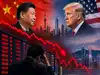
China, Hong Kong stocks decline as Trump-Xi talks face investor scepticism
China and Hong Kong stocks dropped on Thursday as investors doubted a meeting between US President Donald Trump and Chinese President Xi Jinping would yield key breakthroughs. Despite a two-month trade truce extension, market sentiment was dampened by tariff uncertainties, chip export curbs, and Wall Street weakness.
Global Market: Chinese yuan dips as dollar gains on Fed hike bets; Trump-Xi talks eyed
China’s yuan weakened against the US dollar as expectations of a near-term Federal Reserve rate hike lifted the greenback, while investors awaited US President Donald Trump’s meeting with Chinese President Xi Jinping.
After Trump-Xi handshake, Bessent says US-China 'Busan Agreement' extended till January 10
US Treasury Secretary Scott Bessent announced the extension of the trade truce with China until January 10. This agreement allows more time for both nations to pursue a broader economic deal. Bessent also discussed the growing economic pressure on Iran and potential outcomes for the conflict. Furthermore, he highlighted discussions on artificial intelligence and proposed a safety notification mechanism.
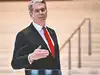
Treasury Secretary Bessent may become 'AI czar'
Scott Bessent is being considered to take on the role of AI czar amid growing concerns. President Donald Trump has indicated plans to appoint an artificial intelligence adviser and create an AI force. Recent discussions between Bessent and Chinese Vice Premier He Lifeng focused on AI regulations and national security. The Treasury has yet to comment on Bessent's potential new position.
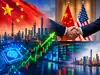
Global Market: China stocks climb on AI boost, US-China talks in focus
Mainland China and Hong Kong stocks rose on Tuesday, driven by strong gains in artificial intelligence shares following agreements between the US and China to continue talks on AI safety. Investors remain focused on upcoming policy signals from Beijing and President Xi Jinping's scheduled state visit to the US.
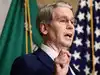
'All Iranian airlines will be shut down around the world': Bessent threatens secondary sanctions against foreign airports, fuel suppliers
United States Treasury Secretary Scott Bessent warned Iranian airlines face international shutdown. Foreign companies providing services risk secondary sanctions and exclusion from the dollar system. This action escalates economic pressure on Tehran's aviation sector. Iran's airlines already face significant restrictions due to prior US sanctions. Discussions with China are ongoing regarding compliance with these new measures.
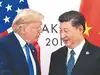
US, China seek to steady ties ahead of Trump-Xi summit
China's top trade negotiator, Li Chenggang, said the talks were held in a "good atmosphere" as he left JPMorgan Chase & Co.'s headquarters in New York on Sunday, while US Treasury Secretary Scott Bessent described the discussions as "very successful." China's official Xinhua News Agency called the exchange "candid, in-depth and constructive."
US, China to hold more AI safety meetings in two months in Shenzhen, Scott Bessent says
Senior US and Chinese officials will meet again to discuss artificial intelligence dangers and communications protocols in about two months in Shenzhen, China, US Treasury Secretary Scott Bessent said on Monday.
Bessent says US to shut down Iranian airlines with secondary sanctions
US Treasury Secretary Scott Bessent said Iranian airlines would face a shutdown from September 23 through the threat of secondary sanctions on foreign aviation service providers. He said providers could lose access to the US dollar system if they fuel, service or sell tickets for Iranian carriers, while Chinese financial officials have been engaged in discussions over compliance with US sanctions.
Load More

