
SCIENTISTS
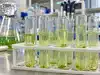
MIT scientists kept growing ocean microbes that clung to test tubes; the sticky share rose from 6% to 85%, revealing a hidden way they release carbon into water
Prochlorococcus, a small but abundant marine microbe, was thought to exist mainly as solitary cells. New research findings reveal that it can form biofilms and attach to particles. This discovery has implications for understanding the biological carbon pump in the oceans. While these microbes can switch between free-floating and attached forms, they contribute significantly to carbon transport. Scientists are further investigating the role of attached Prochlorococcus in marine ecosystems.

Humanity’s farthest spacecraft Voyager 1 nears one light-day from Earth: Its 26 billion km journey equals 650,000 trips around Earth
NASA's Voyager 1 was launched in September 1977 and is approaching one light-day away from Earth. This distance translates to approximately 26 billion kilometers, revealing the vastness of space. In practical terms, a message sent to Voyager 1 will take a full day to arrive. Voyager 1 is currently traveling at about 38,000 miles per hour through interstellar space.

Bengaluru couple sold Rs 80 lakh flat to sell samosas; how their business which once earned just Rs 500 daily, is now a Rs 200 crore empire
Bengaluru duo Nidhi and Shikhar Veer Singh had it made – with high-paying corporate jobs and even a fairytale Rs 80 lakh home. However, the couple, who had one simple agenda – to become the #1 samosa brand, had to sacrifice their dream home and cushy jobs. Today, Samos Singh has over 50 outlets across the nation and is valued at Rs 200 crore.

Can petting dogs ease stress? Here's what the researchers found when pets left the room
University of Innsbruck researchers asked 64 dog owners to complete two stressful tasks. Petting their dogs during a break didn’t help them recover faster from the first task. During the next challenge, owners who had touched their dogs showed a weaker physical stress response.
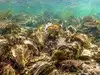
By 2014, South Carolina volunteers had reused 1,100 tons of discarded oyster shells to build 225 living reefs across 69 sites along the state’s coast
In South Carolina, volunteers are collecting discarded oyster shells and returning them to coastal waters for habitat restoration. The SCORE program has seen significant community involvement, with over 25,000 volunteers participating in oyster reef projects. Recycled shells create environments where marine life can thrive and support local ecosystems. The restoration began to reveal positive changes just a few years after implementation.

NASA fired an electron beam into Earth’s atmosphere in 1969; it created an artificial aurora
In January 1969, a rocket launched from Virginia carried an electron accelerator built to make artificial auroral rays in the upper atmosphere. Cameras on the ground recorded the light. The experiment gave scientists a controlled way to study how energetic electrons interact with atmospheric gases and Earth’s magnetic field.
- Go To Page 1

After joining the USDA in 1953, chemist Ruth Benerito helped develop wrinkle-resistant cotton that made clothes easier to wash and wear without ironing
Ruth Benerito transformed the cotton industry with her innovative work on wrinkle prevention and fabric durability. Her breakthroughs led to the creation of stain-resistant and flame-retardant cotton used widely in various sectors. Overcoming numerous challenges post her scientific journey, she also made vital contributions to medical advancements during the Korean War, leaving a lasting legacy that still shapes contemporary fabric technology and clothing today.

Why might obesity affect men and women differently? Scientists looked inside fat tissues
A UC Riverside study found that immune cells in fat tissue behaved differently in male and female mice. Female mice had a greater share of cells linked to keeping fat tissue stable. Male mice had a greater share linked to inflammation. The findings offer a clue about obesity, but researchers have yet to confirm the same pattern in people
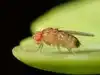
Scientists compared flies from cool California forests with those from hot Southwestern deserts; a 2025 study found their brains responded differently to heat
Two fly species, Drosophila persimilis and Drosophila mojavensis, showcase fascinating adaptations to their environments, revealing their opposing responses to heat. While forest-dwelling flies evade warmth, their desert counterparts thrive in it. These contrasting behaviors highlight significant neural changes that not only reflect physical adaptations but also altered sensory processing. This research is pivotal in predicting how species may cope with the challenges of climate change.
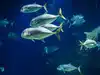
In 2024, 1,865 volunteers reviewed underwater videos; cameras recorded 4 fish species missed by traditional traps
The Where's Walleye? project showcases how researchers leveraged traditional fish traps and high-tech underwater cameras to refine fish survey methods. With assistance from 1,865 citizen scientists, the project analyzed video footage to identify diverse fish species. Remarkably, the underwater cameras uncovered four species previously missed by conventional techniques, enhancing our comprehension of aquatic ecosystems and aiding in rare species monitoring.

Astrobase to invest Rs 800 crore in Andhra Pradesh to expand rocket testing facility
The company has signed a memorandum of understanding with the Andhra Pradesh Economic Development Board to add 339 acres to the facility. The expanded infrastructure will support launch vehicle stage development, static hot-fire testing, stage-level hop tests and reusability validation.

In a Florence library, a 1551 astronomy book held handwritten notes that went unnoticed for centuries; a historian recognised them as Galileo’s writing from around 1590
A historian in Florence has discovered handwritten annotations believed to be Galileo Galilei’s in a 1551 copy of Ptolemy’s Almagest. The discovery sheds light on Galileo’s early engagement with geocentric astronomy before he became a leading supporter of heliocentrism. The mathematical notes and an accompanying biblical passage offer a rare glimpse into his intellectual and personal life, demonstrating how forgotten marginalia can reveal fascinating insights into history’s greatest minds.
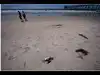
Around 2,000 seabirds have washed ashore in California. Is intense El Niño reshaping marine life along the Pacific Coast?
Pacific Wildlife Care is treating an unprecedented number of seabirds suffering from starvation this year. The increase is attributed to climate change and the El Niño phenomenon, leading to warmer ocean temperatures. Many seabirds, particularly common murres, are arriving in poor condition and need medical assistance. A significant number of dead seabirds have been found along California beaches this autumn.

Do recent electoral setbacks for right-wing parties signal a turning of the illiberal tide?
Recent election setbacks for leaders such as Viktor Orban in Hungary, Aleksandar Vucic in Serbia, Jair Bolsonaro's political camp in Brazil, Benjamin Netanyahu in Israel and Donald Trump's Republicans in the US point to growing challenges for illiberal politics, according to the writer. These countries have experienced different degrees of democratic decline, with leaders using electoral victories to weaken institutions such as courts, the media and other checks on executive power.

Dario Amodei says AI could make cancer, Alzheimer’s ‘relics of the past’ in less than a decade as Anthropic expands AI-driven drug discovery push
Anthropic is collaborating with several pharmaceutical companies to utilize AI in drug development processes. These partnerships aim to improve the efficiency of drug discovery, addressing complex challenges in medical research. Notable projects include redesigning therapeutic molecules and accelerating antibody designs for various diseases. Anthropic has also initiated its own research on rare childhood muscular dystrophies, targeting potential clinical trials by late 2028.

Army transformation goes beyond modern equipment and restructuring: General Dhiraj Seth
The COAS delivered an address on "Vision for Future Warfighting in the Indian Subcontinent" at the Mechanised Forces Symposium 2026, held at Manekshaw Centre, New Delhi. The two-day symposium, organised by the Cavalry Officers' Association in collaboration with the Directorate General of Mechanised Forces, brings together senior serving officers, veterans, defence scientists, industry representatives and strategic thinkers to deliberate on the changing character of warfare.

NECTAR to host international workshop on cold plasma and pulse power in Shillong
The Northeast Center for Technology Application and Reach will hold the COFHA workshop in Shillong in December 2026. Participants will include scientists, engineers, and researchers from India and abroad. The workshop aims to explore cold plasma applications in various sectors, including food and agriculture. Sessions will cover food safety, seed treatment, and biomedical applications, focusing on emerging technologies. Keynote speakers will include experts from prominent universities around the world.
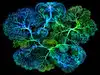
MIT researchers traced the family history of over 1 million cells in developing mouse embryos; the map revealed when cells began becoming different organs
A research team from MIT has mapped the lineage of over a million cells in mouse embryos. This extensive study reveals how cells decide to form specific tissues during development. The new technique allows scientists to identify where developmental errors occur, which may lead to birth defects. It also provides insights for cancer research by highlighting early changes in healthy cells.

In 1954, Bell Labs scientists Daryl Chapin, Calvin Fuller and Gerald Pearson unveiled a solar battery that helped advance solar-powered technology
On April 25, 1954, Bell Telephone Laboratories made a significant breakthrough by introducing a solar battery designed to power telephone systems. The focus was on enhancing efficiency, enabling solar cells to transform 6% of sunlight into usable electricity. While it started as a specialized technology, solar energy has seen remarkable adoption, with projections suggesting that by 2026, it will represent a major share of new energy production.

Since 2023, over 3,000 volunteers have searched satellite images for clouds; their answers are helping scientists check what computers miss
Thousands of volunteers are analyzing satellite images to assist in accurate cloud classification and detection. The CloudCatcher project aims to enhance the understanding of cloud patterns and their effects on climate. Human input provides valuable data to refine the capabilities of automated systems used in cloud detection. This collaboration showcases the growing trend of involving the public in environmental research efforts.
In 2025, over 1,000 volunteers searched telescope images for galaxies that bend light; they helped find 497 possible cosmic lenses
Volunteers from around the world are actively participating in the Space Warps project to analyze galaxy images. They help identify rare gravitational lens candidates using data from the Euclid Space Telescope. This collaboration combines human observations with machine-learning systems for more accurate results. The project emphasizes the importance of citizen science in exploring vast astronomical datasets.

Arunachal Pradesh inaugurates geothermal-powered drying unit to boost farmers' incomes
Arunachal Pradesh Science and Technology Minister Dasanglu Pul inaugurated a geothermal-powered drying unit in Dirang, West Kameng district, to promote renewable energy, reduce post-harvest losses and improve farmers' incomes. Developed with support from India, Norway and Iceland, the facility will use natural geothermal heat to preserve local agricultural and livestock products. Pul also urged the Centre to expedite the Seismic Microzonation Project to strengthen earthquake preparedness in the state.

Heat-trapping carbon pollution drops, but scientists cite the Iran war rather than energy progress
This year, global carbon emissions fell by 0.4%, driven by oil supply disruptions from the conflict in Iran. While oil and natural gas emissions experienced notable declines, there was a small uptick in coal emissions. Experts caution that these improvements may not be guaranteed, attributing them primarily to external influences.

Indian sector of Southern Ocean sees rising oxygen levels, contrary to global trend: Study
Research reveals that oxygen levels in the Indian sector of the Southern Ocean increased significantly from 1993 to 2025. This rise is attributed to enhanced ocean ventilation processes affecting the deeper water layers. Results indicate that the Antarctic Zone experienced notable increases in dissolved oxygen concentration. Observations show a retreat of winter water layers, indicating changes in ocean structure.
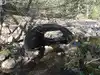
In 2017, California replaced a fish-blocking road crossing on Upper Green Valley Creek; surveys later found 136 young steelhead upstream of the former barrier
In 2017, engineers undertook a significant project to replace an old culvert that hindered fish migration in Upper Green Valley Creek. The successful replacement is evidenced by the discovery of 136 young steelhead fish in previously unreachable habitats. Researchers are actively studying the long-term effects on these fish populations and their growth.

COP31 a 'moment of truth': UN chief Guterres urges world leaders to act now on climate change
António Guterres has urged global leaders to take immediate action against climate change ahead of the COP31 summit. He emphasizes that responsibility should not be shifted and that everyone must commit to change now. Guterres highlights the worsening impact of climate disasters and the interplay between climate change and other global challenges. Additionally, he believes that fossil fuel companies should contribute by being taxed on their profits.

Moral judgments can be manipulated using magnetic waves. How MIT scientists discovered a way to change people's sense of right and wrong
Scientists at MIT discovered that magnetic pulses targeting a specific brain region can temporarily influence how people judge right and wrong. In an experiment, participants became more likely to consider harmful actions acceptable when the intended harm did not occur, revealing how the brain processes intentions and outcomes when making moral decisions.
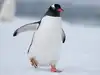
World's largest penguin colony loses 63% of its Penguins; scientists say climate change is to blame, not volcano
Zavodovski Island, located in the frigid reaches of Antarctica, has witnessed a staggering decline of nearly two-thirds in its breeding chinstrap penguin population since 2011. Researchers attribute this worrying trend to environmental changes and rising ocean temperatures. In contrast, macaroni penguins have thrived, experiencing a 28% increase in numbers, highlighting a shift in biodiversity.
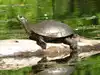
In Yosemite, scientists monitored 4 ponds for 7 years as invasive bullfrogs were removed; juvenile native turtles reappeared at affected ponds by 2019
Scientists observed a decline in juvenile turtles in Yosemite due to invasive bullfrogs preying on them. After nearly eradicating the bullfrog population, baby turtles began reappearing in the affected ponds. The study involved monitoring turtle populations over seven years to measure recovery and changes. Northwestern pond turtles are critical to California's freshwater ecosystems, and conserving them is crucial. The findings highlight how controlling invasive species can benefit native wildlife populations.
Load More

