SCIENTIFIC STUDY ON GLACIERS
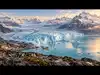
Did humans cancel the next ice age? Ancient moss reveals an ice cap growing for centuries and global warming may have reversed it, here's what scientists found
Plants uncovered by melting Arctic ice have revealed a surprising change in its history. Scientists believe that the findings could alter how we identify the beginning of an ice age.

Hanging glacier above Badrinath could trigger avalanche affecting helipad, roads and nearly 400 buildings: Study
A hanging glacier in Badrinath has been identified as a significant avalanche risk to various buildings. The glacier could potentially impact agricultural land, forests, and critical infrastructure in the area. Research simulations suggest that the threat level is serious, but not imminent. Recommendations include improved monitoring systems and public awareness to mitigate risks from glacier-related hazards.
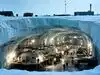
A secret nuclear city was built under Greenland's ice by the USA. In 1967, it was abandoned but something dangerous got left behind
NASA rediscovered the remains of Camp Century, a secret US military base buried beneath Greenland’s ice, during a 2024 research flight. Built during the Cold War, the underground facility was linked to Project Iceworm, a plan to deploy hundreds of nuclear missiles against the Soviet Union. The project was abandoned in 1967, but nuclear waste, diesel fuel and toxic chemicals were left behind.
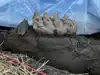
New York homeowner finds huge fossil teeth while mowing lawn; excavation revealed rare 11,000-year-old mastodon jaw, which will help study Ice Age ecosystem
While mowing his lawn in Orange County, New York, a homeowner stumbled upon fossilised mastodon teeth, sparking the interest of researchers. Upon investigation, they unearthed a complete jaw and additional bones, marking the first significant Ice Age find in over a decade. This rare discovery may unlock secrets about ancient ecosystems, prompting plans for carbon dating and further analysis, shedding light on potential prehistoric remains still hidden in developed areas.

Greenland is in the global spotlight after the new US security deal — now scientists have mapped the hidden world beneath its ice
Scientists have revealed the intricate landscape hidden beneath the Greenland Ice Sheet, mapping nearly 2,000 subglacial valleys. These valleys influence the movement of ice above them, affecting how glaciers behave as conditions change. The researchers used Ice Flow Perturbation Analysis to detect subtle changes in the ice surface. This new understanding helps improve long-term projections about Greenland's ice response. These findings contribute to the ongoing discussion regarding Greenland's geographical significance.
134-Partner Himalay Unnati Mission Coalition Seeks Himalayan Authority, Early-Warning Network as Disasters Intensify
Coalition led by The Art of Living and theInternational Association for Human Values to study cloudbursts, landslides andglacier hazards across India, Nepal and Bhutan, building on five years ofdisaster-resilience work across 13 Himalayan states and Union Territories
- Go To Page 1
'Earth has lost over 12 trillion tonnes of ice in 47 years'
About 12.5 trillion tonnes of ice have melted from polar regions since 1979. Warmer ocean waters are causing five-sixths of this significant ice sheet melt. This accelerated melting poses a serious threat to global sea levels. Coastal regions worldwide will experience increased vulnerability due to rising waters. Scientists report the polar ice sheets are melting away at a fast pace.
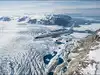
In 2009, NASA started conducting the largest airborne survey of Earth's polar ice under Operation IceBridge to bridge the observational gap between ICESat and ICESat-2
In 2009, NASA started conducting the largest airborne survey of Earth's polar ice under Operation IceBridge to bridge the observational gap between the ICESat and ICESat-2 satellite missions. The campaign used research aircraft, laser altimeters, radar and imaging systems to track changes in Greenland, Antarctica, the Arctic and Alaskan glaciers. Its data helped scientists study ice thickness, glacier changes, sea ice and possible effects on sea-level rise.
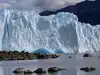
Can artificial snow save a melting glacier? Scientists tested cloud seeding on China’s Muz Taw Glacier and found a surprising change in ice loss
Scientists experimented with cloud seeding to encourage snowfall on China's Muz Taw Glacier. This artificial snow increased the glacier's reflectivity, reducing heat absorption. Mass loss decreased by fourteen to seventeen percent after the snowfall experiment. Researchers noted this method requires suitable clouds and further extensive studies. The experiment offers a glimpse into unusual interventions for slowing glacier retreat.
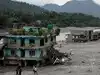
Global warming: From Nepal to Assam to Kerala, nature’s fury is colliding with unchecked development
The Himalayan region is facing increasingly frequent and unpredictable extreme weather, with glacier collapses, flash floods and landslides becoming more dangerous. Climate change is a key driver, but rapid and poorly planned development is worsening the risks by putting more people and infrastructure in fragile, flood- and landslide-prone areas.
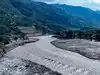
Does the Nepal glacier collapse signal a new climate risk?
Does the devastating flooding unleashed by the collapse of a section of glacier in the Nepalese Himalayas signal a new kind of risk in a world warmed by climate change? Here's what scientists told AFP. On Friday, Nepal issued an alert about the risks posed by a large body of water formed in China's Tibet region, following the collapse of a glacier section two days ago.
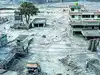
Rock-ice avalanches: The silent Himalayan killer behind Nepal's deadly flood
Recent floods in Nepal's Rasuwa district highlight rock-ice avalanches. These events, which can trigger destructive downstream floods, are becoming more frequent. Scientists are investigating a recent rock-ice avalanche as the cause of the August 26 flood. Similar incidents, like the 2021 Chamoli disaster, have caused significant loss of life. Climate change is increasing the risk of these dangerous Himalayan hazards.
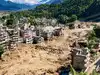
What is a glacial collapse? The science behind the Nepal-Tibet floods
A glacial collapse occurs when a large mass of ice and rock suddenly breaks from a mountain slope, potentially triggering avalanches, debris flows and flash floods. The Nepal-Tibet disaster shows how such cascading Himalayan hazards can travel vast distances and overwhelm conventional early-warning systems.
Disaster in Nepal once again intensifies debate regarding risks posed by climate change
Himalayan glaciers are receding due to rising temperatures, leaving unstable debris behind. Shifting precipitation patterns cause rainfall in areas previously receiving snow. Intense rainfall saturates loose debris, triggering landslides and debris flows. Blocked water flow by snow or debris creates temporary dams which then break. These combined factors intensify disaster severity in the geologically active Himalayas.

67 vulnerable glacial lakes identified in Himachal; early warning systems planned for four in Kinnaur, Lahaul-Spiti
Himachal Pradesh has identified sixty-seven vulnerable glacial lakes across its high-altitude regions. Early warning systems are being established for four of the most critical lakes. These systems will monitor changes and transmit real-time data from remote locations. The state is also marking high flood levels in downstream areas. This comprehensive approach aims to mitigate risks from glacial lake outburst floods.
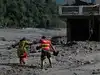
China-Nepal glacial flood alert system warned of seven disasters – but missed this one
A China-Nepal warning system had successfully issued seven alerts for glacial hazards, but Wednesday’s deadly ice-rock avalanche exposed its limits. Experts say cross-border monitoring gaps and the speed of such disasters can leave downstream communities with as little as 20 minutes to respond.
Thousands of glaciers to melt each year by mid-century: study
A new study warns that thousands of the world’s glaciers could disappear every year in the coming decades, with climate policy determining how severe the loss becomes. Researchers found that even if global warming is limited to 1.5°C, glacier extinction will accelerate, peaking around 2040, while weaker action could push annual losses as high as 4,000 by mid-century.

Glaciers are melting at rate of 3 Olympic swimming pools per second, reveals study
Glaciers play a major role in maintaining global ecosystems, regulating sea levels and supporting biodiversity. But a recent study reveals that climate change is accelerating their melting at an alarming rate. Between 2019 and 2023, glaciers lost an average of over 400 billion metric tons of ice each year — a record-breaking figure.

Third of world heritage glaciers under threat, warns UNESCO study
A third of the glaciers on the UNESCO World Heritage list are under threat, regardless of efforts to limit temperature increases, a study conducted by the UN body has found.
Government overlooks glacier studies, claim experts
In 2017, scientists at the Wadia Institute of Himalayan Geology (WIHG) had filed a detailed report on floods in the Himalayas, including the Nanda Devi Valley. This was among many reports on glaciers in the region that were never considered for any new power project. Researchers said that scientists fail when the government overlooks their suggestions and assessments.
J&K glaciers melting at 'significant' rate, study finds
The study, published in the journal Scientific Reports, was carried over the Jammu, Kashmir, and Ladakh region, including areas across the Line of Control (LoC) and Line of Actual Control (LAC), and in all 12,243 glaciers were studied for thickness and mass changes.

Uttarakhand forest fires could melt glaciers faster, say experts
According to experts, 'black carbon' from smog and ash is covering the glaciers, thereby making them prone to melting.
Global warming can alter Earth's shape: Study
Climate change is not only causing warmer oceans and erratic weather, it also has the capacity to alter the shape of our planet, a new study warns.

Tibetan glaciers retreating, earlier study flawed: Report
Most glaciers on the Tibetan plateau and around it are rapidly melting says the latest study based on 30 years of satellite data and also actual measurements.
Isro: 75% of Himalayan glaciers retreating
While 75% of Himalayan glaciers are on the retreat the average shrinkage is 3.75km during the 15 years under study of Isro satellite images.
India launches black carbon initiative
Black carbon is a form of particulate air pollution, produced from incomplete combustion from biomass burning, cooking with solid fuels, and diesel exhaust.

Pachauri mum on Himalayan blunder
With the credibility of the UN climate panel under a cloud, IPCC chairman RK Pachauri chose to steer clear of the Himalayan glacier controversy.
Smaller glaciers more vulnerable to climate change: Study
Smaller Himalayan glaciers are proving much more vulnerable to climate change than the area's larger glaciers, says a new report contradicting the recent environment ministry backed study which claimed that glacier melting can't be linked to global warming.
Load More