
SCIENTIFIC AND INTELLIGENCE GATHERING

November 13, 2026 Doomsday: The 1960 paper that predicted the end of the world on this Friday?
November 13 Doomsday: In 1960, Science published a paper by Heinz von Foerster and colleagues predicting that world population, growing hyperbolically, would approach infinity on Friday, November 13, 2026. The prediction failed. Falling birth rates and the Green Revolution bent the curve, and population now sits near 8.3 billion. The paper endures as a warning about extrapolating runaway trends, including today’s AI forecasts.

Watch: Jensen Huang’s reported extramarital partner Kimberly Powell walks the show floor in NVIDIA video
During her talk at BIO 2026, Kimberly Powell of NVIDIA showcased exciting advancements in AI and healthcare technology. Yet, the spotlight has shifted as reports of a claimed affair with CEO Jensen Huang emerged, who recently acknowledged his infidelity, impacting his family. Concurrent investigations are exploring links to foreign intelligence, and NVIDIA assures a thorough and transparent approach to these weighty accusations.

Since 2023, over 3,000 volunteers have searched satellite images for clouds; their answers are helping scientists check what computers miss
Thousands of volunteers are analyzing satellite images to assist in accurate cloud classification and detection. The CloudCatcher project aims to enhance the understanding of cloud patterns and their effects on climate. Human input provides valuable data to refine the capabilities of automated systems used in cloud detection. This collaboration showcases the growing trend of involving the public in environmental research efforts.

Nvidia scandal: The AI arms race puts human spies back into the game
The Nvidia controversy involving CEO Jensen Huang and a woman suspected by US intelligence of having links to Beijing has renewed concerns over corporate espionage in the AI industry. Recent cases involving OpenAI and Google have also highlighted risks from insiders and traditional spying methods.

Sam Altman on why India is optimistic about AI, while the US is sceptical
Sam Altman, CEO of OpenAI, recently praised India's swift embrace of AI, identifying it as ChatGPT's largest market. He observed that Indian users are innovatively utilizing AI to address challenges and foster entrepreneurship. In stark contrast, Altman noted the prevalent scepticism toward AI in the United States. He also raised alarms about the dangers of unchecked AI advancement, stressing the need for diversified efforts to avoid a concentration of power.

India needs indigenous technologies to ensure energy security: Union Minister G Kishan Reddy
At the NIT Raipur convocation, Union Minister G Kishan Reddy emphasized India's need for innovations in energy, mining, and healthcare. He noted significant growth in higher education infrastructure and international rankings over the past decade. Reddy mentioned government initiatives aimed at supporting research and development in technology sectors. He encouraged graduates to tackle real-world challenges in their fields over the next three years.
- Go To Page 1

Pope Leo warns AI agents are 'tools, not persons'
The debate over the risks of the technology has intensified in recent months, fuelled by several incidents of systems taking unauthorized actions and apocalyptic warnings from industry professionals.

AI engineers became hot property. Now they’re targets for seduction
AI engineers face heightened risks as foreign intelligence ambitions escalate, targeting them for company secrets. OpenAI has alert its employees about potential espionage tactics, including romantic seduction for information extraction. High-profile cases like Abdulrahman Alfozan's highlight the concrete dangers AI companies encounter.

Three out of four Americans say AI firms not doing enough to prevent disaster, Reuters/Ipsos poll finds
Three-quarters of Americans, some 73%, worry that AI companies haven't gone far enough to prevent AI from causing serious harm to society, as concerns grow about where the technology may lead, according to a new Reuters/Ipsos poll.
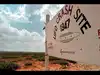
A sheep rancher from New Mexico found strange debris scattered across the desert near Roswell in 1947. Newspapers declared a ‘flying saucer’ had been captured, and 47 years later, investigators linked it to a secret Cold War program
1947 Roswell UFO incident: In 1947, a rancher stumbled upon strange debris, initially hailed as a flying saucer. However, the military later clarified it was merely a weather balloon and radar reflector. In 1978, the tale gained momentum, fueled by reports of alien corpses and alleged cover-ups. Investigations ultimately traced the debris back to the secretive Project Mogul balloon, yet the enigma of the Roswell incident continues to captivate imaginations.

Shoma Chaudhury on why technology needs conscience, not just innovation
In today's fast-paced world, technology evolves at an unprecedented rate, affecting every aspect of human existence from birth to death. The Synapse Conclave delves deep into the pressing questions of accountability and human choice as machines become increasingly autonomous. By exploring realms like genetics, neuroscience, and cosmic innovation, the conclave illuminates potential futures and their impact on society.
Anthropic disrupts state-backed surveillance campaigns using AI in China, Iran, Africa
Anthropic AI company has stopped several state-sponsored surveillance operations. These operations used its artificial intelligence models for spying purposes. Governments and state-aligned actors are increasingly using AI for surveillance. Chinese developers also deceptively used Anthropic's AI models for their own development. The company also blocked efforts to design weapons and conduct biological research.

Forget tanks, fighter jets: US, Russia & China are preparing for battles beyond Earth, where destroying one satellite could disrupt an entire military network
Space is now a contested military domain as nations develop capabilities to disrupt satellites. The United States, Russia, and China are enhancing their space-based military infrastructure. Modern warfare increasingly relies on interconnected sensors and autonomous weapons systems. Destructive anti-satellite tests create debris, posing risks to all spacecraft. The conflict in Ukraine demonstrated cyberattacks and electronic warfare's impact on space assets.
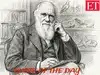
Quote of the day by Charles Darwin: ''From my early youth I have had the strongest desire to understand or explain whatever I...'' — Life lessons from an inspiring quote on curiosity, patience, observation, self-doubt, perseverance, critical thinking and personal growth from the pioneering naturalist who transformed our understanding of evolution
Quote of the day by Charles Darwin explores his lifelong desire to understand what he observed. It speaks to staying curious through uncertainty, difficult questions, failure and personal decisions. The article examines patience, careful thinking, self-understanding, persistence and the value of questioning what we do not yet understand.

Himachal signs MoU with ISB to unlock Rs 22,600 crore forest economy potential
Himachal Pradesh Forest Department and ISB-BIPP signed a five-year pact. This partnership aims to unlock the state's forest economy potential. Science and technology will enable better forest governance and resource utilization. The initiative focuses on community-led enterprises and sustainable livelihood opportunities. This collaboration will strengthen rural economies and conserve forest wealth.

A Latvian astronomer and his wife drove 190 miles to a secret Soviet ghost town in 1994; found a 600-ton telescope the Russians had poured acid on - adapted the Cold War machine built to spy on the West and listen to the stars
After the retreat of Russian forces from Latvia, a concealed Soviet-era radio telescope came to light. Astronomer Juris Zhagars dedicated his efforts to repairing the damaged equipment for research purposes. Alongside his wife, he revitalized a forsaken structure within the old military zone. Now, this telescope supports international scientific initiatives, focusing on terrestrial measurements and astronomical exploration, thriving as a modernized radio astronomy hub.
400 goodbye messages, yoga and late-night soccer: Jeff Dean’s final 48 hours after 27 years at Google, co-leading Gemini and becoming ‘unemployed’ for one minute
After 27 years at Google and helping oversee and co-lead the development of Gemini, Jeff Dean’s final 48 hours were filled with emotional goodbyes, 400 messages, yoga, soccer and a surprising one-minute stint as “unemployed” before he started his new AI venture. Dean had responded to almost all of the messages within Google's chat system but they kept coming in.

NASA is training AI on billions of Earth observations and the results could change climate research
NASA is expanding its AI strategy to transform decades of Earth observation data into actionable scientific insights. By combining artificial intelligence, machine learning, climate research, satellite imagery, and Earth science, the agency aims to accelerate discoveries, improve climate monitoring, support environmental research, and help scientists analyze vast datasets more efficiently, making scientific knowledge more accessible and impactful.

Quote of the day by Charles Darwin: 'It is not the strongest of the species that survives, nor the most intelligent, but the one most...' Father of evolution explains why adaptability matters more than strength or intelligence
Charles Darwin’s work transformed the understanding of life by showing that survival is driven less by strength or intelligence and more by the ability to adapt to change. His famous idea emphasizes that environments are constantly shifting, and only those organisms that adjust their behavior, traits, or habits are able to survive and continue over time. This principle, rooted in his theory of natural selection, explains how species evolve as those best suited to their surroundings pass on their traits to future generations.

Man with no medical degree creates cancer vaccine using ChatGPT for his sick pet. Open AI CEO Sam Altman reacts: ‘This should be easy ….’
An Australian businessman, Paul Conyngham, used AI tools like ChatGPT and AlphaFold to develop a personalized mRNA cancer treatment for his dog, Rosie. This remarkable endeavor, which involved collaboration with scientists and veterinarians, has sparked discussions about AI's potential in personalized healthcare, though experts urge caution due to limited evidence of efficacy and the need for rigorous validation.

India to co-chair Paris AI summit in February: France
A French-organised summit on AI set for early February will be co-chaired with India, featuring industry leaders such as OpenAI's Sam Altman and DeepMind's Demis Hassabis. The summit will focus on sustainable, ethical AI and inclusive global governance, with discussions and an artistic program.

Why relying heavily on AI for scientific discovery can lead to deskilling of human researchers
AI is playing a significant role in enhancing the speed and scope of scientific discoveries by aiding in hypothesis generation, experimental design, and analysis of large datasets. It has led to breakthroughs like self-supervised learning and geometric deep learning, revolutionizing traditional scientific methods. However, the use of AI raises philosophical questions about the authenticity and reliability of AI-generated insights compared to conventional scientific approaches.

ChatGPT is dumb... No change needed in engineering education as AI is just a hype: IIT Mandi Director
IIT Mandi's Director, Laxmidhar Behera, has dismissed the effectiveness of AI, stating ChatGPT's limitations. Behera emphasizes that AI lacks the capability to educate students effectively in engineering disciplines. He argues against altering engineering curricula, asserting that AI remains overhyped. Behera also outlines expansion plans for IIT Mandi, aiming to increase faculty and student numbers while maintaining traditional educational principles.

The Bletchley Declaration: 29 countries form coalition to tackle risks of advanced AI
In an agreement signed on November 1, 29 countries including US, the UK, China, Australia, Brazil, India and the European Union, have mutually agreed that while AI has the potential to transform and enhance human well-being, peace and prosperity, it also poses significant risks, including in those domains of daily life.

Do aliens exist? Nasa releases long-awaited report on UFOs. Key findings
People have always found the subject of aliens and UFOs interesting. NASA has released a report on its yearlong study into UFOs, stating that new scientific techniques and advanced satellites are needed for further investigation. The report emphasizes the need to shift the perception of UFOs and reduce the stigma surrounding them. It also highlights the importance of artificial intelligence and machine learning in identifying rare occurrences, including UFO sightings.

Here's the tactic that makes China's espionage activities so effective
Unlike other nations, China uses a broad array of both professional and citizen spies to gather data, Peter Mattis explains for War On The Rocks.

PM Narendra Modi's mantra for police forces - SMART
Modi on Sunday said there is a need for the people in the country to change their perception about police and that would be possible only after becoming aware of ground realities.

Personal computers, private data users 'weak link' in cyber security: NTRO
"Personal computers and other private users of data are "weak links" when it comes to implementing cyber security norms."

Retd IAS officer Rentala Chandrasekhar to head NTRO as IPS loses race for the post
Rentala Chandrasekhar, who retired as Telecom Secretary on March 31 this year, was named as the Chairman of NTRO.
Load More

