
SATELLITE OBSERVATIONS

Two PSLV failures, one modified rocket stage: How ISRO is trying to restore launch vehicle reliability
ISRO has tested a modified third-stage motor of its PSLV after two consecutive launch failures involving anomalies in the same stage. The changes cover the motor's nozzle, mechanical connections, sealing arrangements and quality-control procedures. The space agency will analyse the test data before deciding on further testing.

Since 2023, over 3,000 volunteers have searched satellite images for clouds; their answers are helping scientists check what computers miss
Thousands of volunteers are analyzing satellite images to assist in accurate cloud classification and detection. The CloudCatcher project aims to enhance the understanding of cloud patterns and their effects on climate. Human input provides valuable data to refine the capabilities of automated systems used in cloud detection. This collaboration showcases the growing trend of involving the public in environmental research efforts.

Indian sector of Southern Ocean sees rising oxygen levels, contrary to global trend: Study
Research reveals that oxygen levels in the Indian sector of the Southern Ocean increased significantly from 1993 to 2025. This rise is attributed to enhanced ocean ventilation processes affecting the deeper water layers. Results indicate that the Antarctic Zone experienced notable increases in dissolved oxygen concentration. Observations show a retreat of winter water layers, indicating changes in ocean structure.
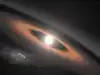
White dwarf WD J1328-1450 has a double debris disc; one ring may be hiding a Pluto-sized survivor
Astronomers have discovered a white dwarf named WD J1328-1450, located 1,600 light-years away, has two separate rings of gaseous planetary debris. Unusual signals detected around the star suggest that two planetary bodies may be maintaining the rings, with the outer object potentially reaching Pluto-like or even Moon-like dimensions. The discovery offers a rare glimpse into what planetary systems may look like after their stars die.
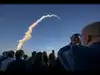
NASA's Artemis II rocket punched 3,100-mile-long holes in Earth's atmosphere, disrupted GPS signals: Study
NASA's Artemis II mission created large disturbances in the ionosphere that disrupted GPS signals across the United States. These disturbances were significantly more intense than those from prior rocket launches, causing potential issues for technologies reliant on precise positioning. Researchers noted that even minor positioning errors could impact autonomous vehicles, which rely on GPS data. The mission set new records for human distance from Earth during a lunar flyby.

Pixxel's Indian ownership comes under scrutiny
Pixxel founder and chief executive Awais Ahmed in a blog post on X said the company remains “headquartered, owned, managed and controlled in India,” on Monday. Indian investors, including the founders, collectively hold the largest shareholding in the company, followed by investors from Singapore, the UK and the US, he added.
- Go To Page 1

The Moon is shrinking. What happens when its surface can’t take the pressure?
The Moon may look the same from one evening to the next, but its surface records a slow transformation. Multiple researches reveal a different kind of reasons to explain the shrinking and this findings impact not the skywatchers but those who planning a future on the moon.

A desi AI kill chain? Indian military steps towards battlefield AI
India's armed forces are working alongside Sarvam AI to establish a unified framework for military operations. The initiative focuses on improving battlefield intelligence, refining target acquisition, and streamlining decision-making across all service branches. Emphasizing a blend of cutting-edge technology and human judgment, this project signifies India’s dedication to enhancing its sovereign AI resources in the defense arena, with promising implications for operational effectiveness and data management.

Largescale cyberattacks test the limits of insurance cover
While businesses rush to enhance their cyber insurance cover, the incidents have triggered a debate over whether existing policies adequately cover emerging cyber risks. The biggest question insurers are policyholders seem to be confronting is: who pays when a vulnerability exposes thousands of organisations to the same threat?
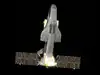
China's secret reusable spaceship spotted in US intelligence report: What we know about this mysterious plane and its mission
A recently declassified US intelligence report has revealed a satellite image that confirms China's reusable spaceplane is currently orbiting. This significant development has sparked concerns about China's expanding capabilities in space and the potential military implications. The spacecraft is noted for its ability to interact with smaller objects during missions, amplifying worries about the competitive landscape of space exploration, as tensions between nations continue to rise.

Pixxel sets up US subsidiary to serve federal agencies
Pixxel in September raised $100 million (around Rs 945 crore) in the largest funding round in India’s spacetech sector, co-led by Singapore sovereign wealth fund Temasek and UK-based space investor Seraphim, ET reported.

Three planets survived where they should have vanished: What does it mean for Earth and what did the Chinese scientists discover?
Three distant planetary systems are challenging expectations about what happens when stars grow old. The mystery offers a fresh way to examine planetary survival, including questions about Earth.
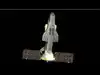
US releases rare photo of China's secretive Shenlong space plane: What does it reveal?
China's Shenlong space plane was recently photographed in orbit, showing its design and structure. The Defense Intelligence Agency included the photograph in a report assessing threats in space. This image revealed the spacecraft's delta-shaped wings and open payload bay doors while docked with another satellite. Shenlong's history includes missions in which it has released and interacted with objects in orbit.
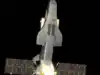
China's secretive Shenlong spaceplane: What the US report reveals
A newly released report by the US Defense Intelligence Agency showcases an intriguing image of China's Shenlong spaceplane operating in orbit. Notably, a second spacecraft is docked to Shenlong, prompting speculation about the spaceplane's mission and technological abilities. Concerns have been raised over China's advancing space technologies and counterspace capabilities, with whispers of potential developments in space-based weaponry that could jeopardize international satellite safety.
India's deeptech dream remains import dependent for critical components
The founder of a spacetech startup developing rockets said geopolitical tensions, including the Russia-Ukraine war, disrupted the supply of critical components. “Parts that were earlier available within weeks are now taking months to arrive, making it harder for startups to plan development and testing schedules,” the founder said, requesting anonymity.
A ceasefire in a Russian-occupied Ukrainian city holds for its first 30 hours, officials say
A six-day ceasefire has been initiated in Oleshky, allowing much-needed humanitarian aid for around 2,000 residents. Both Ukraine and Russia have reported no violations of the ceasefire in the first 30 hours. Negotiations continue for future discussions to de-escalate the ongoing war, despite both sides holding firm on key demands. Meanwhile, attacks have intensified elsewhere, including drone strikes causing injuries in cities like Kharkiv.
Russian satellites help Iran's allies strike Saudi Arabia, data and officials say
Crucial to the strikes' success was what was happening in the skies overhead: For days beforehand, a constellation of Russian spy satellites converged over the pipeline and the air base to gather intelligence.
India aims to expand space economy from USD 8.4 billion to USD 44 billion amid rising private participation: IN-SPACe official
Rising demand for low Earth orbit satellites is expected to enhance India's space industry growth. A new Small Satellite Launch Vehicle launch pad will increase launch capacity in Tamil Nadu. The government's reforms have facilitated increased private participation in space activities. Various funds and technology transfers aim to support startups and enhance their capabilities. The Indian space economy is targeted to expand significantly over the next decade.

Musk says he was behind Starlink speed restriction after service in Ukraine restored
Ukraine's Starlink services were restored after speed restrictions affected military operations for over a week. President Volodymyr Zelenskyy confirmed that the restored speeds were sufficient for front-line logistics. Elon Musk admitted to throttling Starlink for offensive use, sparking tensions between Ukraine and the US. Meanwhile, missile attacks continue to impact civilians in Ukraine, with reported casualties in several regions. Ukrainian forces also targeted military sites across Russia, indicating ongoing conflict.

Assam cabinet approves Welspun Group's investment proposal to set up manufacturing unit in Rangia
Assam's cabinet approved an investment proposal from Weetek Plastic Private Limited to set up a manufacturing unit. The cabinet also amended rules to categorize extracted limestone into different grades for royalty purposes. A new award named 'Bharat Ratna Dr. Bhupen Hazarika Award' will honor significant contributions to music and culture. The grand finale of Hazarika's birth centenary celebrations will take place in New Delhi on November 29, 2026.
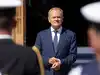
Polish PM Tusk seeks deeper tech, AI and space ties with India
During a recent meeting, Polish Prime Minister Donald Tusk called for strengthened collaboration with India, zeroing in on advancements in AI and space technology. He pointed out potential synergies in manufacturing automation and data analysis. Karnataka's Chief Minister DK Shivakumar invited Polish participation in the 2027 Global Investors Meet, stressing the importance of joint ventures in renewable energy and advanced manufacturing, given Bengaluru's pivotal role in tech innovation.

NASA's 12-foot-wide satellite lost its radio signal in space; scientists still got the data they needed
A sphere launched by NASA in 1961 named Explorer 9 was made to measure how dense the air is above the Earth. Its radio beacon did not work, but scientists tracked the sphere through visual contact and got the desired data. This helped researchers understand how thin air affects satellites in orbit.
Ukraine’s drone strikes hit Yandex, Sberbank and VKontakte. Is Russia’s AI future at risk?
Ukrainian drone strikes have damaged data centers belonging to Yandex, Sberbank and VKontakte, disrupting digital services across Russia. While many services have resumed, damage to key AI supercomputers and difficulties replacing high-end chips could make recovery more challenging for Russia’s AI ambitions.
In 1965, NASA unfolded a 96 feet satellite in space to test what could puncture an Apollo spacecraft
NASA’s Pegasus I, launched in 1965, opened wings 96 feet wide in orbit to count hits from particles too small to see. The readings helped engineers understand what could damage spacecraft carrying astronauts. Pegasus I and two more satellites sent back data in the years before the Apollo Moon missions.

I&B ministry cautions TV channels against AI misuse, calls for stronger editorial oversight
The Ministry of Information and Broadcasting has issued an advisory regarding AI use in news broadcasts. It cautioned channels to strengthen editorial oversight while adhering to the Programme Code. Concerns were raised about similar broadcasts and violations relating to sensitive content coverage. Broadcasters are encouraged to undertake regular training for editorial staff to ensure compliance. Violations of the Programme Code could lead to regulatory actions under applicable laws.

Govt flags Programme Code violations by TV channels, urges caution on AI use
The Ministry of Information and Broadcasting has issued an advisory to private television channels regarding compliance with the Programme Code. Channels are urged to exercise caution in their use of artificial intelligence for news content production. Strict adherence to statutory provisions is emphasized following observed violations by various channels in past broadcasts. Additionally, the ministry reiterated prohibitions on inappropriate content and live coverage of anti-terrorist operations.
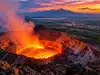
Volcano near which 2 million people live tracked by scientists for 2 years. They found hidden underground movements
Research on Nicaragua's Masaya volcano has unveiled the dynamic nature of its underground magma reservoirs over time. An analysis of satellite imagery from 2018 to 2024 has detected alterations in the caldera and Santiago crater. Some areas exhibited ground uplift, indicating rising magma, while others experienced subsidence. This continuous observation is vital to understanding potential volcanic risks and guiding local communities.

EU is making its own satellite system like Elon Musk's Starlink. Its first satellites are expected to launch in 2029
Since Russia's invasion, Ukraine has heavily depended on Elon Musk's Starlink for its military communication needs. However, recent limitations on military connectivity have sparked worries regarding this reliance on private corporations. The EU meanwhile is creating IRIS, a satellite network aimed at ensuring secure communications for governmental and military use by 2029, lessening dependence on providers like Starlink.
A satellite was launched for the first time with frequency division multiple access in 1966. After functioning for nearly 20 years, it slipped into a useless orbit almost 7 years after official deactivation
ATS-1 was launched on December 7, 1966, to test satellite communications, weather observation and orbital technologies. The spacecraft was the first to use frequency division multiple access to combine independently transmitted signals for delivery over a downlink carrier. After getting deactivated on December 1, 1978, the satellite continued to function for years. It finally failed to respond to commands in 1985.
Load More

