
SALMON SPAWNING GROUNDS
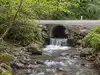
For 20 years, a road culvert blocked fish in California’s Sharber-Peckham Creek; crews replaced it in 2016, and 2017 monitoring found 740 juvenile coho upstream
In Northern California, a four-foot metal pipe had hindered salmon migration for two decades. After its replacement, juvenile coho salmon gained access to essential spawning habitats. This case underscores the critical situation of culverts obstructing fish passage nationwide. Recent research has identified the need to evaluate these structures for effective prioritization in upgrades. Continuous investment, study, and conservation efforts are essential for sustaining fish habitats.

Washington used 1 pneumatic fish cannon to solve salmon passage past a 60m hydroelectric dam; the result transformed blocked rivers into thriving spawning grounds
Washington used 1 pneumatic fish cannon to solve salmon passage past a 60m hydroelectric dam, using a pneumatic tube system to move migrating fish over major barriers. The Whooshh PassagePortal, also called the Salmon Cannon, helped transport salmon around dams while reducing handling. The system uses scanning, sorting, water mist and controlled air pressure. The technology helped reopen access to upstream waters used by salmon for spawning.
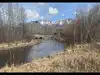
In 2022, Alaska began replacing a fish-blocking culvert with a 100-foot bridge at Little Tonsina River with a $1.3 million budget. 1 year later, 70.4 miles of salmon habitat were reopened to fish safely
A flood-damaged culvert along Alaska’s Little Tonsina River long prevented salmon from swimming upstream. In July 2022, crews began replacing the failing structure with a 100-foot bridge. The $1.3 million project, backed by federal infrastructure funds, finished one year later. By restoring natural currents, engineers successfully reopened 70.4 miles of vital spawning streams, allowing wild Pacific salmon to migrate freely once again.
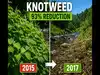
In 2015, California EPMT discovered Japanese knotweed along Lagunitas Creek. 2 years later, treatment cut knotweed by 93% on National Park Service land, a major gain now
Japanese knotweed can spread quietly along waterways, making an early discovery especially valuable. In 2015, California’s Early Detection and Monitoring Team found the invasive plant along Lagunitas Creek. The finding allowed land managers to respond while the infestation was still manageable. Two years later, treatment on National Park Service land had reduced knotweed by 93 percent. The result showed how early detection, followed by focused treatment, can sharply limit an invasive plant before it gains ground.
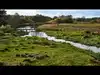
In 1987, Denmark launched restoration of 2,200 hectares around the Skjern River. 19 years later, SPA status arrived in 2006 as wildlife returned to the restored wetlands
Denmark restored the Skjern River wetlands after agricultural decline and pollution. The project re-meandered over twenty kilometers of river and restored habitats. Wildlife returned, meeting conservation targets for Special Protection Area status. New shallow lakes and improved conditions benefited various species and salmon. The restored landscape also became accessible for public recreation and tourism.
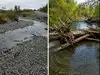
Since 2022, Alaska crews have placed more than 1,000 whole trees in a creek damaged by gold mining, helping restore 2.3 miles of salmon habitat
Resurrection Creek in Alaska has been revitalized into a thriving river thanks to comprehensive restoration efforts. By introducing entire trees for stream channel construction, vital salmon habitats have been reestablished. This endeavor has enabled salmon to return to their ancestral spawning areas, while also minimizing flood threats and bolstering the local economy and food web. This successful restoration model holds promise for similar efforts on other impaired rivers throughout Alaska.
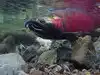
In 2006, Canada launched a mission to save Atlantic salmon. Nearly 20 years later, the fish are returning
Atlantic salmon populations declined due to habitat destruction and overfishing. Conservation efforts involving captive breeding and habitat restoration began in the mid-2000s. The Respectful Returns project improved survival rates for migrating juvenile salmon. Indigenous knowledge and scientific monitoring guided successful restoration initiatives. These combined efforts have led to the encouraging return of salmon to native rivers.
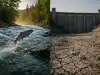
In 1942, America completed Friant Dam and diverted most of the San Joaquin River into farms; a salmon run once numbering nearly 50,000 adults collapsed
Friant Dam construction in California significantly altered the San Joaquin River's flow. This action disconnected salmon from their spawning grounds, causing their disappearance. Agricultural development thrived, but the river's ecosystem suffered environmental damage. Environmental groups campaigned for restoration, leading to a settlement and ongoing efforts. Young salmon are now being released, showing signs of return to the river.

Fish are adapting to rivers shaped by dams and barriers, and that may be changing how man-made rivers function over time
For decades, river restoration has focused on returning waterways to conditions that existed before dams, weirs and large-scale human intervention. But new research suggests fish living in altered rivers may already be adapting to those environments. The findings raise a new challenge for conservationists: if fish populations are evolving in response to human-made rivers, restoring habitats alone may no longer be enough.

Most money for endangered species goes to a small number of creatures, leaving others in limbo
Since the passage of the Endangered Species Act, over 1,700 species in the US have been listed as threatened or endangered. However, there are disparities in funding allocation, with half of the $1.2 billion spent annually going towards the recovery of salmon and steelhead trout. Many species, including the Virginia fringed mountain snail, stoneflies, and California tiger salamander, receive little or no funding. The plant kingdom, which was almost excluded from the conservation law, also receives inadequate funding. Scientists suggest redirecting funds from species with excessive funding to those with none or less.

The annual migration of 'Homo NRIensis'
During winter in India, along with migratory birds like Siberian Cranes and Bluethroats, a human species called Homo NRIensis returns. These are Indians living worldwide who flock back, lightly clad, defying the local chill. Distinguished by foreign attire, accents, and accessories, they join family gatherings. The migration's essence lies in warm reunions—a unique diasporic tradition, though its continuity rests on how India feels like home for the newer generation.
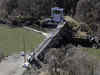
US regulators to vote on largest dam demolition, Klamath Basin in history
The Klamath Basin watershed covers more than 14,500 square miles (37,500 square kilometres) and the Klamath itself was once the third-largest salmon producing river on the West Coast. But the dams, constructed between 1918 and 1962, essentially cut the river in half and prevent salmon from reaching spawning grounds upstream. Consequently, salmon runs have been dwindling for years.

Between a rock and a hard place (to be) for this chunk of Mars
A solid Martian finding way back home after 450,000 years shows perseverance pays.
Poor social ties more likely to kill male whales
London, Oct 25 (IANS) Male killer whales who remain socially isolated are three times more likely to die in hard times than those in the centre of their social group, researchers warn.

First Sampling: Floyd Cardoz, the poster boy of modern Indian food, returns to India with Bombay Canteen
Cardoz has been quite the poster boy of contemporary Indian food abroad; most famously at the helm of New York’s Tabla that tasted heady critical.

Rapid decline in commercially important fishes in Ganga
It is ironical that Patnaites consume fishes imported from Andhra Pradesh despite the city situated on the bank of the Ganga.The number of fishes like Rehu, Catla, Hilsa, Jasar and Mrigal (Naini) is rare in the Ganga. Jasar, Pangas and prawns are also on the verge of extinction.
Norway smokes a salmon for Indian diners
In this year’s budget, the finance minister made an odd little change. He reduced duty on import of Atlantic salmon from 30% to 10%.
Load More


