
SALMON MIGRATION
California replaced a fish-blocking pipe on Fort Goff Creek with a bridge in 2014; later monitoring found 64 Chinook salmon nests upstream
In California, the removal of the culvert on Fort Goff Creek has significantly enhanced fish passage, particularly for salmon. Completed in 2014, a new bridge now connects fish to breeding grounds that were previously inaccessible. Biologists found 64 nests of Chinook salmon in this newly opened habitat, highlighting the importance of addressing culverts nationwide to improve aquatic ecosystems and connectivity.
For 20 years, a road culvert blocked fish in California’s Sharber-Peckham Creek; crews replaced it in 2016, and 2017 monitoring found 740 juvenile coho upstream
In Northern California, a four-foot metal pipe had hindered salmon migration for two decades. After its replacement, juvenile coho salmon gained access to essential spawning habitats. This case underscores the critical situation of culverts obstructing fish passage nationwide. Recent research has identified the need to evaluate these structures for effective prioritization in upgrades. Continuous investment, study, and conservation efforts are essential for sustaining fish habitats.

Lake Champlain began killing invasive sea lampreys in 1990; native lake trout survival rose 25%, and Atlantic salmon returns to the main lake fishery tripled
Lake Champlain experienced significant ecological harm due to the invasive sea lamprey, which posed a threat to local fish populations. However, an experimental control initiative launched in 1990 led to a marked decrease in lamprey numbers and better fish survival. Economic evaluations revealed positive returns from the control efforts, benefiting both local tourism and fisheries. Ongoing initiatives have further bolstered the lake trout population, restoring its self-sufficiency.
Washington used 1 pneumatic fish cannon to solve salmon passage past a 60m hydroelectric dam; the result transformed blocked rivers into thriving spawning grounds
Washington used 1 pneumatic fish cannon to solve salmon passage past a 60m hydroelectric dam, using a pneumatic tube system to move migrating fish over major barriers. The Whooshh PassagePortal, also called the Salmon Cannon, helped transport salmon around dams while reducing handling. The system uses scanning, sorting, water mist and controlled air pressure. The technology helped reopen access to upstream waters used by salmon for spawning.
In 2024, four dams were removed from an American river. Over 400 miles of Salmon habitat reopened. Scientists are now watching an ecosystem rebuilding itself
Four hydroelectric dams on the Klamath River were removed in 2024. This project opened over 400 miles of historic salmon habitat. Indigenous communities and ecosystems will benefit from this significant ecological recovery. Scientists are now monitoring the river's health and salmon populations. The dam removal marks a new chapter for the Klamath River's future.
The U.S. Army Corps of Engineers spent $7 million on fish ladders in 1938 to move salmon past Bonneville Dam; decades later, the system carries 1 million a season in good years
The Bonneville Dam’s fish ladders, designed as part of a New Deal initiative, remain operational after decades of service. The construction saw a notable increase in budget allocation. Annually, millions of fish traverse these ladders, predominantly hatchery-reared. However, wild salmon populations continue to dwindle, impacted by upstream dams and climate change, underscoring persistent environmental challenges despite the fish ladders' effectiveness.
- Go To Page 1
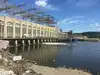
Maryland spent $12 million on a fish lift in 1991 to move American shad past Conowingo Dam; decades later, annual runs remained far below the 2 million-fish target
Maryland invested $12 million in a fish lift to help migrating shad overcome the Conowingo Dam. This technological solution proved ineffective, moving only a fraction of the targeted fish annually. Experts now favor dam removal over fish passage structures like lifts and ladders. The state is investing $340 million in environmental upgrades and trucking fish past the dam. This situation reflects costly infrastructure projects that under-delivered on their initial goals.
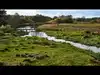
In 1987, Denmark launched restoration of 2,200 hectares around the Skjern River. 19 years later, SPA status arrived in 2006 as wildlife returned to the restored wetlands
Denmark restored the Skjern River wetlands after agricultural decline and pollution. The project re-meandered over twenty kilometers of river and restored habitats. Wildlife returned, meeting conservation targets for Special Protection Area status. New shallow lakes and improved conditions benefited various species and salmon. The restored landscape also became accessible for public recreation and tourism.
In 1992, Congress authorized the removal of 2 dams that had blocked salmon for a century. 24 years later, the Elwha River once again flowed freely from the Olympic Mountains to the sea
Elwha River Restoration changed one of America’s most remarkable river recovery stories. Two dams once blocked salmon from reaching upstream habitat in Washington’s Olympic Peninsula. Their removal reopened more than 70 miles of river and tributary habitat. Salmon began returning soon after the dams came down. The river also regained its natural sediment flow. Today, scientists are watching this ecosystem rebuild itself in real time.

In 2021, scientists tested 20 bonnethead sharks at Florida State and found they use Earth’s magnetic field to navigate: Study suggests sharks may have a magnetic map
Sharks possess an incredible ability to roam the expansive oceans, utilizing the Earth's magnetic field as their guide. Recent studies have shown that bonnethead sharks can detect these magnetic cues to navigate. This innate skill allows them to journey home across vast distances, potentially learned through their explorations. Gaining insight into their navigation methods is crucial for safeguarding their essential migratory paths.
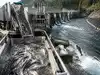
In 2012, PacifiCorp launched a trap-and-haul program to move adult salmon upstream past Merwin Dam. 14 years later, researchers found 2 stages in the system but 1 decisive bottleneck: young salmon failing to find the artificial current downstream
A trap-and-haul program on Washington’s Lewis River helps adult Chinook salmon bypass Merwin Dam by transporting them in trucks to upstream spawning habitat. But researchers tracking the salmon life cycle have identified a major weakness on the return journey. Juvenile salmon, or smolts, must travel downstream toward the Pacific Ocean, yet many struggle to locate the artificial current leading to a floating collection system near Swift Dam. Once captured, they can be transported safely downstream, but low capture rates remain the program’s primary bottleneck.
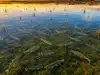
In 2011, California turned dormant rice fields into winter salmon nurseries; the young fish grew up to eight times faster than in rivers
Flooded rice fields in California's Yolo Bypass are helping young salmon grow significantly faster. These fields provide a rich food source and calm waters, which are essential for salmon survival. Scientists discovered that salmon in these fields grew eight times faster than in the Sacramento River. This innovative approach recreates natural floodplains which are crucial for salmon populations. Farmers are partnering with conservationists to create these vital aquatic nurseries.
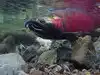
In 2006, Canada launched a mission to save Atlantic salmon. Nearly 20 years later, the fish are returning
Atlantic salmon populations declined due to habitat destruction and overfishing. Conservation efforts involving captive breeding and habitat restoration began in the mid-2000s. The Respectful Returns project improved survival rates for migrating juvenile salmon. Indigenous knowledge and scientific monitoring guided successful restoration initiatives. These combined efforts have led to the encouraging return of salmon to native rivers.
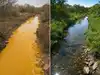
A Seattle veteran was told he had four months to live; he began cleaning polluted Hamm Creek, and salmon, beavers and river otters later returned
A Vietnam veteran found a new purpose cleaning a polluted creek near his home. This personal mission extended his life by twenty-seven years beyond his diagnosis. His efforts transformed Hamm Creek into a thriving habitat for wildlife. Beal's dedication inspired environmental stewardship and ongoing restoration efforts. His legacy continues through his daughter and local community groups.
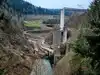
In 1948, America built Mud Mountain Dam for flood control; decades later, a $112 million facility was designed to carry 1.2 million fish around it annually
The Mud Mountain Dam serves as a crucial flood prevention structure, shielding communities downstream from severe weather. Yet, its construction hindered salmon migration for years. In response, a substantial investment was channeled into building a comprehensive fish passage facility. This initiative emphasizes the importance of harmonizing safety measures with environmental conservation, highlighting an evolution in infrastructure priorities and ecological consciousness.
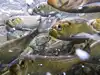
In 2012 and 2013, Maine removed two hydroelectric dams from the Penobscot River; river herring later rose from almost zero to more than six million
Maine's Penobscot River shows a remarkable environmental recovery after dam removals. Millions of river herring have returned to the waterway, which was once nearly silent. This ecological success story highlights the impact of removing industrial barriers. Atlantic salmon numbers are also gradually increasing in the restored river. The Penobscot's rebound serves as a powerful conservation case study for others.
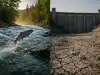
In 1942, America completed Friant Dam and diverted most of the San Joaquin River into farms; a salmon run once numbering nearly 50,000 adults collapsed
Friant Dam construction in California significantly altered the San Joaquin River's flow. This action disconnected salmon from their spawning grounds, causing their disappearance. Agricultural development thrived, but the river's ecosystem suffered environmental damage. Environmental groups campaigned for restoration, leading to a settlement and ongoing efforts. Young salmon are now being released, showing signs of return to the river.
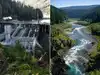
In 2011, the US began tearing down two century-old dams on Washington's Elwha River, the largest dam removal in US history at the time, freeing over 20 million cubic yards of trapped sediment
The Elwha River dams were dismantled after nearly a century of operation. This significant engineering project restored over ninety miles of river habitat. The removal released millions of cubic yards of trapped sediment into the waterway. This action acknowledged that some past progress creates future problems. The river's restoration continues to evolve over generations.

Fish are adapting to rivers shaped by dams and barriers, and that may be changing how man-made rivers function over time
For decades, river restoration has focused on returning waterways to conditions that existed before dams, weirs and large-scale human intervention. But new research suggests fish living in altered rivers may already be adapting to those environments. The findings raise a new challenge for conservationists: if fish populations are evolving in response to human-made rivers, restoring habitats alone may no longer be enough.

Scientists have discovered that cocaine-powered super salmon live longer and swim faster than normal salmon
Scientists found Atlantic salmon exposed to cocaine swam further and lived longer. This study highlights how drugs in waterways change aquatic creature behavior. This is not just pollution but a transformation of wildlife. Researchers are concerned about the wider implications for ecosystems globally. Urgent action is needed to address drug disposal and wastewater treatment.

Why Hundreds of Bald Eagles Flock to Frozen Mountains in Winter
Hundreds of Bald Eagles gather in Alaska, British Columbia, and the northwestern United States during winter. This behaviour is driven by food availability and energy efficiency, not just cold temperatures. Frozen rivers concentrate fish, making them easier for eagles to catch. These gatherings are a sign of the species' successful recovery.

Salmon on sedatives: How human meds are making wild fish swim faster — But at what cost?
A new study reveals a strange impact on Atlantic salmon. Human drugs in rivers are making them swim faster. Scientists found sleeping pills and painkillers change salmon behavior. This helps them navigate dams better. However, this raises concerns about ecosystem health. Researchers urge action to reduce pharmaceutical pollution. They want to protect wildlife from these invisible threats.

The annual migration of 'Homo NRIensis'
During winter in India, along with migratory birds like Siberian Cranes and Bluethroats, a human species called Homo NRIensis returns. These are Indians living worldwide who flock back, lightly clad, defying the local chill. Distinguished by foreign attire, accents, and accessories, they join family gatherings. The migration's essence lies in warm reunions—a unique diasporic tradition, though its continuity rests on how India feels like home for the newer generation.
Warming rivers in US West killing fish, imperiling industry
Hundreds of thousands of young salmon are dying in Northern California's Klamath River as low water levels brought about by drought allow a parasite to thrive, devastating a Native American tribe whose diet and traditions are tied to the fish. And wildlife officials said the Sacramento River is facing a “near-complete loss” of young Chinook salmon due to abnormally warm water.

What it takes to do a Salmon Run & go against the crowd in the market
Like Salmon, one species of investors who show similar skill and grit in the market are called ‘contrarian investors’. They go against the flow, taking non-consensus positions and timing their trades when the crowd is overrun by panic or euphoria.

Why Mauritius' cuisine is a melting pot of European, African and punchy Asian flavours
In Mauritius, exotic meats and robust flavours rule, epitomising the island’s happy embrace of diverse cultures.

No need to wait till monsoon for your hilsa diet
The production has dwindled from 80,000 tonne in 2001 to nearly 15,000 tonne in 2013 largely due to over-fishing in the Bay of Bengal.

Imported fish, Chakori, , replaces Hilsa on Bengali menus due to low supplies
Going by the present trend of poor hilsa availability, millions of Bengalis and others may have to settle for 'chakori' this season.
Jellyfish invasion in a warming world
Ablood-orange blob the size of a small refrigerator emerged from the dark waters, its venomous tentacles trapped in a fishing net. Within minutes, hundreds more were being hauled up.
Load More

