
SAFE HAVENS

Eurozone bond yields rise as global stock rally dents safe-haven demand
Eurozone government bond yields rose, ending a four-session decline, as recovering global stock markets reduced safe-haven demand. Higher crude oil prices heightened inflation concerns. Germany’s 10-year yield reached 3.25%, while French bond spreads remained elevated amid fiscal uncertainty. Investors awaited S&P’s review of France’s sovereign credit rating.

Dollar steady as sliding yields temper safe-haven bid
After dipping to a one-week low, the US dollar has stabilized, influenced by the recent drop in Treasury yields. The upcoming economic indicators hint at potential interest rate increases by the Federal Reserve in December. Meanwhile, the yen has seen a slight uptick against the dollar, while the euro holds steady as traders await accounts from the ECB meeting.

Volatility-weary US investors side swiped as tariff mayhem adds to tech pain
The US on Wednesday proposed a series of country-specific tariffs on goods from 14 major trading partners, including India, Japan and the European Union, while applying an additional 20% tariff on imports from China.

US Bond market down ahead of Thanksgiving holiday: Reasons why 10-year, 30-year, 2-year treasury notes fell on Wednesday
US Treasury yields declined but were off their earlier lows, as another drop in AI-related stocks that caused sharp losses in equity markets lost steam and dampened the safe-haven appeal of bonds.

Tariff shock deepens AI selloff, sends investors to safe havens
In light of soaring market volatility and new tariffs imposed by the US on products from China and India, investors are flocking to safe-haven assets. This move illustrates the deepening trade tensions affecting markets across the globe. Amidst worries about artificial intelligence stock valuations, a cloud of uncertainty persists, pushing investors to seek stability as the year draws to a close.

Gold prices hit 14-month low as US Fed rate hike fears deepen. Check details
Gold prices plunged below $3,500 per ounce on November 25, pressured by a stronger US dollar and rising expectations of Federal Reserve rate hikes. Investors await US inflation and GDP data for clues on monetary policy and bullion's outlook.
- Go To Page 1

US Treasury gains lift India bonds ahead of RBI meet
On Wednesday, Indian government bonds rallied, influenced by a decrease in US Treasury yields. The benchmark 10-year bond yield fell to 7.1641%, marking a two-week low. The Indian rupee strengthened to its highest level for the fiscal year against the dollar. Overseas investors returned as net buyers of Indian debt, purchasing over 93 billion rupees. The Reserve Bank of India's upcoming decision will significantly affect market movements and trends.

Eurozone bond yields fall as AI concerns trigger flight to safety
Euro zone government bond yields declined on Wednesday as renewed concerns over the artificial intelligence sector weighed on US stock futures, prompting investors to seek safer assets. Germany's 10-year bond yield fell to 3.235%, while lower Brent crude prices eased inflation concerns. French and Italian bond yields also declined.

India bonds inch higher as oil steadies ahead of RBI verdict
Indian government bonds have experienced a modest rise, driven by declining oil prices and consistent US Treasury yields. With the Reserve Bank of India's policy decision approaching, traders are treading carefully and shying away from large investments. The yield for the benchmark 2036 bond has dropped, suggesting a cautious market outlook.

Dollar takes breather ahead of US data on Fed path; Aussie jumps on CPI
The US dollar remained steady as traders awaited important inflation and growth data prior to December. Economists expect the Federal Reserve to increase interest rates, which is currently predicted at 97%. In Japan, service-sector prices surged to a 36-year high, while the Australian dollar rose after inflation data exceeded forecasts. Concerns about the sustainability of the AI market have impacted investor sentiment.

Jensen Huang revealed additional extramarital affairs during NVIDIA board meeting before his return as CEO: Report
Huang latest news: Nvidia CEO Jensen Huang has revealed additional extramarital affairs during a meeting with the company's board. These disclosures included more than two previously reported affairs, bringing the total to at least four. Despite concerns about his conduct and transparency, the board unanimously voted to reinstate him as CEO. Following his reinstatement, Nvidia's stock surged significantly, boosting global AI trade. Investors reacted positively, with major indices recovering from recent declines.

Nvidia, Jensen Huang impact on US Bond market: Benchmark 10-year treasury note rises, 2-year treasury yield gains, 30-year bond slips
US bond market today moved by Nvidia's decision to reistate CEO Jensen Huang as US Stock Market cheered after volatile week of sell off.

German bond yields edge higher as equity rebound eases safe-haven demand
Germany's government bond yields increased marginally on Monday as equity markets began to rebound, leading to diminished interest in safe-haven assets. In the wake of a difficult week for stocks, investors indicated a readiness to engage with riskier assets. The yield on 10-year German bonds rose by 2 basis points, signaling a fall in bond prices.

China’s yuan steadies after wild swings, but analysts warn of more volatility
China's yuan is currently stable after experiencing significant fluctuations attributed to global market conditions and dollar demand. Analysts predict ongoing volatility driven by geopolitical tensions and US interest rate hikes. Concerns over China’s equity markets and bond yields are negatively impacting investor sentiment towards yuan-denominated assets. The uncertainty surrounding US-China trade and technology relations further complicates the yuan's outlook in the near term.

Dollar edges off 19-month high after market rout; yen softens
The dollar has eased off its recent highs as positive investor sentiment rises. With traders dialing back their expectations for steep interest rate hikes by the Federal Reserve, the euro, Australian dollar, and several other currencies have exhibited modest recoveries against the USD. Following recent market volatility, prospects for a significant rate hike in December appear less likely. Meanwhile, cryptocurrencies, including Bitcoin and Ether, have seen slight downturns.

Why gold’s five-year winning streak is under threat after dramatic selloff
Gold has fallen to around $3,510 an ounce after hitting a record $5,594.82 earlier in 2026, putting it on track for its first annual loss in five years. A stronger dollar, elevated bond yields, profit-booking and weaker safe-haven demand continue to pressure prices.

From record highs to a brutal rout: What is behind the meltdown in gold and silver?
Gold demand remains resilient despite a slowdown in the 2026 outlook, with ETF inflows and economic uncertainty providing support. Silver declined 41% in six months, while gold fell 19%. Analysts identify crucial support levels as investors assess monetary policy and demand.
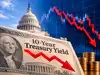
US Treasury yields drop for day and week; AI trade concern spurs safe-haven bid
US Treasury yields experienced a significant decline due to heightened investor concerns surrounding the AI trade. As a result, investors shifted their focus towards safe-haven assets such as Treasury securities. The yield on the 10-year Treasury note fell below 5% for the first time in several months. Concerns about rising company debt and spending related to AI contributed to investor unease in recent weeks.

Tech leads global stocks rout, Treasury yields fall
On Friday, global stock markets faced a harsh sell-off, notably impacting technology stocks. In response, US traders turned to safer investments as the 10-year yield sharply decreased. The Dow Jones Industrial Average took a major hit, alongside declines in the S&P 500 and Nasdaq. However, consumer staples emerged relatively unscathed within the S&P 500.

US Bond market: Why is benchmark 10-year Treasury yield witnessing biggest weekly drop since early April 2025? Check 30-year, 2-year bond prices
US Treasury yield bond market witnessed massive drop as US stock market's fall on Friday sent shockwaves.

Who was the gunman at Quinnipiac University? Varsity activates emergency alert; campuses put under lockdown after police respond to threat
Quinnipiac University took decisive action by implementing a lockdown after reports of a potential gunman surfaced. The police and emergency services promptly deployed to secure the area, ensuring the safety of students and faculty. Following thorough examinations, the lockdown was lifted, though Friday's classes were canceled. Counseling services were offered to those impacted, while authorities investigate whether the report was a false alarm intended to incite a law enforcement reaction.

Japan bond yields fall as US Treasury yields decline; foreign investors drive JGB buying
Japanese government bond yields fell on Friday, tracking a decline in US Treasury yields. Foreign investors remained net buyers of JGBs for a third consecutive month in October, purchasing 3.8 trillion yen in bonds, largely shorter-dated securities. Their buying may have contributed to the decline in yields, while global safe-haven demand amid AI-related market volatility has added further support.

Treasury rally spills over to Indian bonds, debt supply slows move
Indian government bonds saw slight gains, reflecting the upward trend in US Treasuries. Investors are keeping a close eye on the forthcoming weekly debt auction, pivotal for market movements. With retail inflation and fluctuating oil prices in play, the Reserve Bank of India may entertain further rate hikes. Although benchmark Brent crude holds steady, it remains vulnerable to geopolitical shifts, prompting caution among traders as they await auction results.

Dollar near 19-month peak as AI jitters sap risk appetite
The dollar hovers close to a 19-month peak as investors flock to safe-haven assets, prompted by concerns over AI trading. Recent US inflation statistics are raising anticipation for a potential December rate hike by the Federal Reserve. Concurrently, Japan reports stable core inflation, which is affecting the yen's position against the dollar while the euro and pound struggle to maintain footing, hitting significant lows.

Explained: 3 reasons why gold prices are stuck at a 14-month low and should you buy the yellow metal?
Gold prices remained near 14-month lows on Thursday despite oversold conditions and renewed Middle East tensions, as three major factors continued to outweigh safe-haven demand. Spot gold was little changed at $3,722.84 an ounce after touching $3,693.13, its lowest since September 2025

Japan bond yields fall as equity market jitters boost safe-haven demand
Japanese government bond yields declined as investors sought safe-haven assets amid equity market volatility and easing oil prices. However, expectations of further Bank of Japan rate hikes and weak demand for longer-dated debt could limit the decline in yields.

Is gold getting cold, as is silver?
Gold and silver have fallen sharply from their January peaks, despite continued support from central bank buying, geopolitical uncertainty and silver's supply deficit. As of November 16, gold was down nearly 25% at ₹1.37 lakh per 10 grams, while silver had lost around two-thirds of its value to ₹1.70 lakh per kg.

Safe-haven assets lose appeal as market selloffs expose risks
Traditional safe-haven assets such as US Treasuries, gold and the Japanese yen are proving less reliable as portfolio hedges amid market volatility. Rising inflation risks, geopolitical tensions and fiscal concerns are challenging their defensive appeal.

German yields set for biggest weekly rise in two months
As traders ramp up their expectations for European Central Bank interest rate hikes, yields on German government bonds are climbing steadily. This shift follows US inflation figures that were unexpectedly high, disrupting the bond market landscape. Meanwhile, global stock indices are witnessing a downturn, impacting the demand for traditionally safe assets.
Load More

