
RESEARCH STUDY

Florida scientists grew Earth microbes for 160 days in Mars-like conditions; some multiplied under low pressure in highly salty water
In a groundbreaking experiment, researchers at the University of Florida cultivated Earth microbes for 160 days in a simulated Martian atmosphere, characterized by low pressure and high salt concentration. The study uncovered that certain nutrients significantly promoted bacterial growth while others remained ineffective. Scanning electron microscopy highlighted distinctive biofilm-like formations, suggesting microbial survival in harsh conditions. These insights could be crucial for future missions aimed at identifying life on Mars.
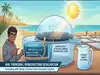
Meet Ahil Thendral, a high school student who used hemp, coconut coir and intercalated activated carbon to build a solar-powered desalination device designed to produce 4.3 litres of potential drinking water daily
Solar-powered desalination device: Using hemp, coconut coir and activated carbon, high school student Ahil Thendral has developed a solar-powered device that could make desalination less energy-intensive. Due to limited access to drinking water in his grandfather’s village, he built a small-scale prototype capable of producing 4.3 litres of potential drinking water a day from seven litres of water.

In Spain, scientists painted one blade black on four wind turbines at El Ruedo wind farm; after comparing 13 years of observations, researchers found that bird deaths declined by 74% at treated turbines
Between 2020 and 2021, the owner of El Ruedo wind farm in Cadiz, Spain, had painted one of three rotor blades black on four of its turbines. Meanwhile, another 16 turbines had all white blades and served as controls. Each day, from 2012 to 2024, they looked for dead birds under all 20 wind turbines and recorded their data.

In Idaho's Pioneer Mountains, scientists installed loudspeakers near quiet streams to mimic roaring whitewater rivers; their experiment across 20 sites revealed how natural noise influences where birds and bats live
Researchers had installed loudspeakers on towers near quiet streams. They played recordings of naturally roaring whitewater rivers. The equipment was powered by solar panels and batteries. Researchers had chosen 20 sites. They made measurements over the course of two breeding seasons. At half of these, they used the existing river noises, and in the remaining sites, researchers placed speakers that projected the sounds of a whitewater rapids.

In South Africa, scientists painted two red stripes on a single blade of four wind turbines; after 32 months of monitoring, researchers estimated an 83% reduction in bird deaths compared with unpainted turbines
Scientists in South Africa painted two red stripes on a single blade of four wind turbines to see whether the change could prevent bird collisions. After monitoring the turbines for 32 months, researchers estimated an 83% reduction in bird deaths compared with unpainted turbines.

Alaska’s grizzly and black bears are doing way more than hunting salmon and eating berries. Researchers discovered they can spread around 200,000 seeds per square kilometer per hour when they forage
A study has revealed that Alaska’s grizzly and black bears are important seed dispersers in southeast Alaska. Around 200,000 devil’s club seeds per km² are dispersed in the scat of bears while they forage. This is more than that achieved by birds. The brown bears are dominant seed dispersers initially and black bears assume this role when brown bears turn to eating salmon.
- Go To Page 1

Men lost nearly 7 inches in height in Southeast Asia over 7,000 years, study of 18,457 skeletons finds
Men in Southeast Asia lost nearly 7 inches in height over 7,000 years, from about 5 feet 10 inches to just over 5 feet 3 inches by the 1800s, a study of 18,457 skeletons has found. Researchers link the decline to population growth and poorer nutrition as farming and technology spread, though trends varied by region and more research is needed.

IIT Guwahati study identifies regional variations in earthquake activity across Northeast India
IIT Guwahati researchers have developed a new method to estimate earthquake-induced ground shaking in Northeast India, accounting for variations in seismic activity and uncertainties in historical records. The study identifies Imphal as the city with the highest estimated ground shaking among eight cities examined, offering insights for earthquake-resistant construction.
Sea otters reduce erosion of California’s coastal wetlands by 69%, says study
California's sea otters are preserving wetlands in Elkhorn Slough of Monterey County. They have decreased the rate of erosion on tidal creeks and salt marshes. The areas with high sea otter numbers have seen an average decrease in the rate of erosion of 69%, a study published in Nature said.

South Delhi homes have 50% more PM2.5 and 52% more PM10 indoors than outdoors: Study
South Delhi homes were found to have higher air pollution levels indoors than outdoors, with poorly ventilated houses recording around 50 per cent higher PM2.5 concentrations inside than outside. A study of 24 homes across four neighbourhoods also found that indoor PM2.5 levels in poorly ventilated houses were 54 per cent higher than in well-ventilated homes.
Has Noah's Ark finally been found? 4,300-year-old wood discovery raises new questions
Researchers searching for Noah's Ark in Turkey say newly tested wood fragments date back approximately 4,300 years, matching some traditional estimates for the biblical flood. The pieces were recovered from the Durupınar Formation near Mount Ararat, where a boat-shaped geological structure has fascinated explorers for decades.

New Zealand extends post-study work rights for Indian PhD graduates to 4 years
New Zealand has introduced two changes to its post-study work visa arrangements that Indian students planning to study there in 2027 should know about. As per the notice, eligible Indian citizens completing doctoral degrees in the country can qualify for up to four years of post-study work rights, an increase from the earlier three-year limit. Separately, applications for the Post-Study Work Visa and Short-Term Graduate Work Visa have moved to an upgraded online immigration platform.

Bahraich man wins 'Best Use of Energy' award at Supercomputing Conference 2026 in US
A 25-year-old researcher from Bahraich, Uttar Pradesh, has won the Readers’ Choice Award in the 'Best Use of Energy' category at the Supercomputing Conference 2026 in Chicago, US. Samarendra Rai, a PhD scholar at the University of Illinois Urbana-Champaign and an IIT Bombay alumnus, was recognised for his work involving artificial intelligence and high-performance computing for energy-related applications.

Neuroscientist says three exercises can help you grow brain cells even as an adult. Strengthening one body part can delay brain-related ageing, claims study
Research by Princeton neuroscientist Dr. Elizabeth Gould indicates that engaging in physical activity can enhance the formation of new neurons in the hippocampus, the brain area linked to memory. Neurioscientist Robert Love explained how exercise protects the brain citing her research.

US bill aims to clear hurdle to medication for people with opioid addiction
Democratic lawmakers unveiled a new bill aimed at enhancing access to buprenorphine for opioid addiction treatment. The BUPE for Recovery Act seeks to exempt buprenorphine from regulatory reporting during the opioid public health emergency. Current regulations are believed to discourage pharmacies from ordering this crucial medication. Buprenorphine is effective but underutilised, with significant stigma associated with its prescription and use.

US H-1B visa curbs could hurt American workers in non-STEM jobs, study finds
Hedge funds in the US using H-1B visas showed increased job openings in non-STEM sectors. These firms experienced better performance in investment returns linked to H-1B success rates. Research indicated that reduced visa availability negatively impacted hedge funds reliant on foreign skilled workers. Employment opportunities for domestic professionals in supporting occupations were also affected. This study highlights the broader implications of immigration policy changes on various industries.

Astronomers discover a three-star system that shouldn't exist, just 28 light-years from Earth
Astronomers discovered a unique triple-star system named Welopōʻai that challenges existing models of stellar evolution. This system includes two white dwarfs and one red dwarf situated around 28 light-years from Earth. Researchers initially sought to find exoplanets but unexpectedly identified an unusual stellar configuration. One of the white dwarfs had a mass that defied typical expectations within such systems.

Could animals one day photosynthesize? Japanese scientists fuse hamster and algae DNA to create ‘planimals’ carrying almost an entire algal genome
Japanese researchers have made a significant advancement by fusing genetic material from single-celled red algae with hamster cells, leading to the creation of hybrid cells dubbed 'planimals'. This remarkable study indicates that the algal genome can endure through many generations, even without selective advantages. Interestingly, 96% of the algal protein-coding genes were inactive initially. The scientists plan to unlock specific algal genes to impart distinctive biological functions to animal cells.

Forget daily pills, a cholesterol shot every 6 months? The heart benefits that surprised researchers
In an impressive clinical trial, the injection inclisiran has shown remarkable effectiveness in lowering cholesterol levels and alleviating cardiovascular risks. Patients with established cardiovascular disease experienced considerable advantages beyond mere cholesterol reduction. With biannual treatment, adherence to medication becomes simpler. Look out for Novartis's full report from the ORION-4 trial, which will be unveiled in early 2027, after involving over 16,000 participants in this pivotal advancement.

Thanksgiving Dinner: Too full for turkey but still want Pumpkin Pie? Scientists explain why your brain craves dessert
Ever wondered why you can barely finish Thanksgiving dinner but still find room for Pumpkin Pie? A 2025 study published in Science found that brain cells responsible for making us feel full can also encourage sugar consumption.

Why is it so hard to stop eating chips? Scientists studied 1,600 Americans to find the reason
Ever opened a packet of chips intending to eat just a few, only to finish the entire thing? Researchers believe the ingredients may help explain why. A 2026 study involving 1,664 American adults found that foods combining refined carbohydrates with fat were rated as particularly addictive.
In 2017, a beekeeper found worms chewing through plastic; now their saliva could fight plastic pollution that would otherwise take years of weathering
A big breakthrough came in October 2022. This came in a study published in the journal Nature Communications. The researchers had discovered that enzymes in the saliva of wax worms can readily degrade polyethylene. It is a common form of plastic that is used in bags and other packaging materials.

Sleeping more than 9 hours? Study finds a worrying link to death risk in heart patients
A new study suggests that adults with existing heart disease who sleep nine hours or more each night may face a higher risk of death than those sleeping seven to eight hours. Researchers followed data from 3,287 US adults and found a 51% higher risk of death from any cause among long sleepers, even after accounting for several health factors.

MIT scientists trained mice to judge moving dots on a screen; disrupting one brain circuit altered how the animals used the previous round to make new choices
An insightful study from MIT has unveiled a neural circuit connecting the pulvinar to the anterior cingulate cortex, influencing decision-making in mice based on past experiences. Researchers discovered that these animals alter their choices by recognizing patterns from previous behaviors. This vital connection suggests the pulvinar's significant role in identifying changes within visual environments, potentially informing our understanding of autism and sensory processing disorders.

A lake in Ireland kept a record of medieval life; Scientists found crops, livestock and clues hidden in its mud
Scientists studying two early medieval artificial islands in Northern Ireland used ancient DNA, chemical markers and lake sediment to reconstruct centuries of human activity. Their findings revealed evidence of crops, livestock, woodland clearance and animal activity, showing how the remains of an ancient settlement can survive in the mud surrounding it.

Working while the world sleeps? Regular night shifts may be quietly changing your heart, researchers make interesting study
Recent research uncovers alarming heart health dangers tied to consistent night shift work. The findings indicate that night shift employees experience thicker heart walls and changes in the size of heart chambers. Night shift workers should prioritise their well-being through exercise and a nutritious diet.

Wind turbines kill birds, Research suggests two things are far more deadly; scientists found a simple fix to reduce deaths
Recent studies show that painting one blade black on wind turbines can dramatically lower bird fatalities. Research conducted in Spain revealed a remarkable 74% decrease in bird deaths at turbines with painted blades compared to unpainted ones. Supporting evidence from Norway and South Africa indicates similar success rates. This simple method aims to boost the visibility of turbine blades, enhancing bird safety as the demand for renewable energy rises.

Ozempic and Pregnancy: What happened to fetal oxygen levels in a small sheep study?
A small study found reduced uterine blood flow and fetal oxygen levels after pregnant sheep received semaglutide. The preliminary findings do not establish lasting harm or show that the same effects occur in humans.

In 1997, northern France buried 31.2 tons of incinerator ash beneath a test road; 10 years later, copper, lead, and zinc had fallen to natural road levels
A comprehensive study conducted in northern France explored the application of incinerator bottom ash in road construction. With 31.2 tons of ash integrated beneath a test road, researchers monitored its stability and metal leaching over a decade. Findings indicated a gradual decline in metal concentrations, aligning with traditional materials over time.
Load More

